RIDM 2015 Review: They Will Have To Kill Us First: Malian Music in Exile

Members of the band Songhoy Blues are among the musicians who appear in the documentary film They Will Have To Kill Us First: Malian Music in Exile.

They Will Have To Kill Us First: Malian Music in Exile is a documentary about the difficulties faced by residents of northern Mali, especially the musicians, after a Tuareg rebellion in 2012 was hijacked by Islamist forces. Mosques, tombs, libraries, and ancient manuscripts were destroyed. The imposition of sharia law meant veils for women, amputated limbs for convicted thieves and a ban on all music – even ringtones on cellphones. Musicians fled cities like Gao and Timbuktu in fear for their lives. Among those who appear in the film, some went to Bamako, in Mali’s south, while others went to refugee camps in Burkina Faso.

Malian musician Fadimata Walett Oumar, who is nicknamed Disco, right, and her husband Hassan (Jimmy) Mehdi, in a scene from the documentary film They Will Have To Kill Us First: Malian Music in Exile. The film is being shown at RIDM, Montreal's documentary film festival.
Malian musician Fadimata Walett Oumar, who is nicknamed Disco, right, and her husband Hassan (Jimmy) Mehdi, in a scene from the documentary film They Will Have To Kill Us First: Malian Music in Exile. The film is being shown at RIDM, Montreal’s documentary film festival.

The people we meet include established stars Khaira Arby and Fadimata Walett Oumar (nicknamed Disco, because she was a big Madonna fan in her younger days). Disco is a longstanding member of the group Tartit, though it is not named until near the end of the film. She is also married to a high-ranking Malian soldier who changes allegiance more than once, which makes their lives somewhat complicated. The film also serves as a promotional vehicle for a younger band called Songhoy Blues, and includes footage from their U.K. tour. (Earlier this year, they toured North America, making stops at SXSW and in Toronto, too.) You can find music by Khaira Arby, Tartit and Songhoy Blues on iTunes; click on their names to go there. The film’s soundtrack will be released, but sadly, it isn’t ready yet. If you like what you heard in the film, check out Tinariwen, as well.

Khaira Arby is among the Malian musicians who appear in the documentary film They Will Have To Kill Us First: Malian Music in Exile.

Most of us will never see the wonders of Timbuktu in person, so I appreciated glimpses of them in the film. I suspect that some scenes were shot before the widespread destruction and that many of those intriguing structures no longer exist.

At 100 minutes, the film seems stretched out. I expected lots of music, since it is about musicians, after all, but got tantalizing snippets instead. There is lots of talking, and some of it is repetitive. Perhaps I am just a victim of my own expectations – the film has many positive reviews on the Internet. Sample quote from a review in the Austin Chronicle:
“Social journalism of the highest order, They Will Have to Kill Us First is by turns horrific and front-loaded with sonic heroism. It’s also one of the most vibrantly shot and masterfully edited documentaries of this or any other SXSW year.”

Full disclosure, I did watch They Will Have To Kill Us First at home via an online screener, which must have reduced its power considerably.

(Justified) spoiler: The film ends with a joyous outdoor concert in Timbuktu, with lots of happy women and children among the audience.
They Will Have To Kill Us First: Malian Music in Exile (Click on the film’s name to read more about it on the RIDM web site.)

Friday, Nov. 13, 2:30 p.m.
Cinéma Du Parc 1 (Buy tickets here)

Saturday, Nov. 14, 215 p.m.
Cinéma Du Parc 2 (Buy tickets here)

They Will Have To Kill Us First: Malian Music in Exile
Country : Mali, United Kingdom
Year : 2015
Language : English, Bambara, French, Songhay
Subtitles : English
Runtime : 100 min
Production : Kat Amara Korba, Sarah Mosses, Johanna Schwartz, John Schwartz
Cinematography : Karelle Walker
Editing : Andrea Carnevali, Guy Creasey
Sound : Phitz Hearne
RIDM (Rencontres internationales du documentaire de Montréal) runs from Nov. 12-22, 2015. Visit the web site ridm.qc.ca for more information about the festival.

Cinema Politica Mondays: Documentary film (T)error reveals FBI entrapment methods

Terror FBI

(T)error is a documentary that shows how the FBI keeps itself in business by using informers and infiltrators to create “terrorists” it can then arrest. Neat trick, huh? This has been going on for decades, but things were stepped uo considerably after 9/11. Montrealers, I suggest that you watch this film tonight, at 7, at Concordia University. Friends in other cities, I hope that you have a chance to see it, too.
There are many positive reviews of (Terror on the Internet, one is by Peter Debruge of Variety. It begins with this: “A vital expose of American law enforcement carried out with almost reckless zeal, Lyric R. Cabral and David Felix Sutcliffe’s “(T)error” pushes the boundaries of documentary ethics, plunging itself into the middle of an active FBI sting operation while playing both sides in an attempt to understand — and by extension, to reveal — how the U.S. government identifies and apprehends terror suspects.”

Debruge’s review ends this way:  “The FBI may seem all-powerful and intimidating, but by focusing on an imperfect in-the-trenches personality like (informant Saeed) Torres, who does it for the money at great cost to his own conscience, the film stresses just how fallible the system is — and the urgent need to police it more closely.”

The headline on Alan Scherstuhl’s review for the Village Voice says that the films is “Absurd And Revealing.” Yessiree! He goes on to say: “The war on terror bumbles home in Lyric R. Cabral and David Felix Sutcliffe’s amusing and dismaying portrait of incompetence and entrapment. Former Black Panther Saeed “Shariff” Torres has been pressed into service as an FBI informant, tasked with cozying up to American Muslims the Bureau finds suspicious — and then doing whatever he can to confirm his overseers’ assumptions. This time, the 63-year-old is dispatched to Pittsburgh to investigate Khalifa al-Akili, a convert Torres doesn’t believe is a threat: ‘That dude ain’t gonna bust a grape.’ ”

“Soon things go from sadly dumb to dizzyingly absurd, a surveillance-age roundelay. . . Inevitably, this tense comedy dips into tragedy, with our fearful intelligence agencies getting everything wrong and the filmmakers using their rare access to chart each mistake as it happens.”
(T)error will be shown at 7 p.m., Monday, Nov. 9, 2015, in Room H-110 of the Hall Building at Concordia University, 1455 de Maisonneuve Blvd. W. It’s a pay-what-you-can event, with suggested amounts ranging from $5 to $10.

(T)error was directed by David Felix Sutcliffe and Lyric R Cabral. Sutcliffe will answer questions afterwards, via Skype, or something like it. I already have several in mind!

For more information, visit the Cinema Politica Facebook page for the event.

Fascinating slime mould documentary The Creeping Garden returns to Montreal


Poster for the documentary film The Creeping Garden. Note the reference to Montreal's Fantasia Film Festival in the upper left hand corner.
Poster for the documentary film The Creeping Garden. Note the reference to Montreal’s Fantasia Film Festival in the upper left hand corner.

The documentary film The Creeping Garden was one of the sold-out hits of the 2014 Fantasia Film Festival. Now the film is in limited release in Europe and North America, and Montrealers can watch it again, or for the first time, at the Dollar Cinema.

I saw and enjoyed The Creeping Garden at Fantasia, and reviewed it for the Montreal Gazette. Here are the first few paragraphs of my review:
“Slime mould – each word is bad enough by itself, but the effect is much worse in combination – eww, ick, gross! Slime mould sounds dangerous AND disgusting. Parents might panic if slime mould were found in their child’s school; potential buyers would refuse a home with slime mould in it, and on top of that, it sounds as slippery as the proverbial banana peel.

“And yet, after watching the documentary film The Creeping Garden (which had its world premiere at Fantasia) I know that it is not dangerous, and I do believe that an enterprising person could turn slime mould into the next chia pet, or a modern-day version of “sea monkeys.” Somewhere, an MBA class might be working on such a project right now. If so, the first order of the day would have to be – a name change.

Transforming plasmodium., looking pretty and colourful. Credit: Steven L. Stephenson
Transforming plasmodium., looking pretty and colourful. Credit: Steven L. Stephenson (Part of a New York Times slide show “Beauty and the Blob.”)

“Using beautiful, often hypnotic images, and the words of artists and scientists (amateur and professional), The Creeping Garden introduces us to this fascinating . . . entity. Slime mould was once thought to be a plant at one stage of its existence and an animal at another, because of its ability to move, albeit slowly. (It moves slower than the slowest snail; you need time-lapse photography to see it.) For some time, slime mould was classified as a fungus, but that designation was later changed, too.

“Scientists estimate that slime mould could be as much as 600-million years old.There are more than 1,000 varieties of slime mould out there. It can look like a delicate fern, little yellow balls, grains of translucent rice, chopped up spaghetti, or a meandering river, seen from above. On the other hand, one kind goes by the common name of Dog Vomit, for reasons that are quite obvious when you look at it.

“Sometimes the film shows us slime mould as the naked eye would see it, other times we see it magnified through a high-powered microscope.

“Slime mould has attracted many fans, and they come in many varieties,too. There are those who study it in their spare time just for the joy of discovery, others who make art with it (images or music) yet others who are using it to solve real-world problems, such as the quickest way to get to a fire exit in a building with a complicated layout.”

Metatrichia vesparia, looking quite weird! Credit: Steven L. Stephenson
Metatrichia vesparia, looking quite weird! Credit: Steven L. Stephenson (Part of a New York Times slide show “Beauty and the Blob.”)

You can read my full review Creeping Garden review on the Gazette web site. (When the paper revamped its “platforms” my name got scrubbed off, but it IS my review, I assure you!)

That review includes several links, so you can learn quite a bit more about slime mould, if you want to.

This slide show from the New York Times might get you in the mood for the film.

If you want a very quiet pet, you can order your own slime mould kit from the Carolina Biological Supply Company.
The Creeping Garden is co-directed by Tim Grabham and Jasper Sharp. It’s 81 minutes long and can be seen at the Dollar Cinema, 6900 Décarie Square, in Montreal, until Nov. 12, 2015. It’s one of the cinema’s “Marquee” presentations, which means that tickets actually cost $5. Quite a good deal, really!

Public transit users can get to the Dollar Cinema via the Namur metro, via bus lines 17, 160, 161, and 166.

Visit The Creeping Garden’s web site and Facebook page for more info about the film. You non-Montrealers can see if the film is coming to your town.

RIDM 2015: Bring Me the Head of Tim Horton is one of many delights to see at Montreal’s documentary film festival

An image from Guy Maddin's film Bring me The Head of Tim Horton, one of many documentaries on the RIDM program.
An image from Guy Maddin’s film Bring Me The Head of Tim Horton, one of many documentaries on the RIDM program.

Bring Me the Head of Tim Horton – as a film title, it’s quite arresting, don’t you think? It’s one of the 144 films that will be shown at RIDM, Montreal’s documentary film festival. Rencontres internationales du documentaire de Montréal, the festival’s full name, will run from Nov. 12 to Nov. 22, 2015, at several venues in downtown Montreal, many of them conveniently located near metro stations.

The film clip from Bring Me the Head that we saw at the RIDM press conference was hilarious. The 32-minute production from Guy Maddin and Evan and Galen Johnson is a (sort of) “making of” about Hyena Road, a war film by Paul Gross. The RIDM synopsis says the film “is possibly the wildest making-of movie of all time.” I don’t doubt that for one minute!

While we’re on the subject of Guy Maddin, the festival will also show The 1000 Eyes Of Dr. Maddin in which French filmmaker Yves Montmayeur observed Maddin while he made his latest feature, The Forbidden Room, which was the closing film at the recent Festival du nouveau cinéma.
Speaking of arresting film titles, how about Imagine Waking Up Tomorrow and All Music Has Disappeared and They Will Have to Kill Us First: Malian Music in Exile. While the first one sounds like a scary thought, it’s more about redefining our relationship to music, but the second is about the all-too-real dangers of being a musician in Mali.

RIDM will show 144 films from 42 countries; subjects include austerity and the economy, surveillance, wars and conflicts, and their effect on soldiers and civilians alike, family relationships, or the lack thereof (women who are childless by choice), work, or the lack thereof, astronomy, the environment, politics, music and architecture. Many films combine several of those elements. We might recognize our own situations in one of the 49 short and feature films from Quebec.

The usual suspects: In regard to directors, Chantal Akerman, Patricio Guzman, Albert Maysles, Ulrich Seidl and Frederick Wiseman, are just a few of the names that might ring a bell.

An image from the film L.A. Plays Itself, by Thom Andersen.

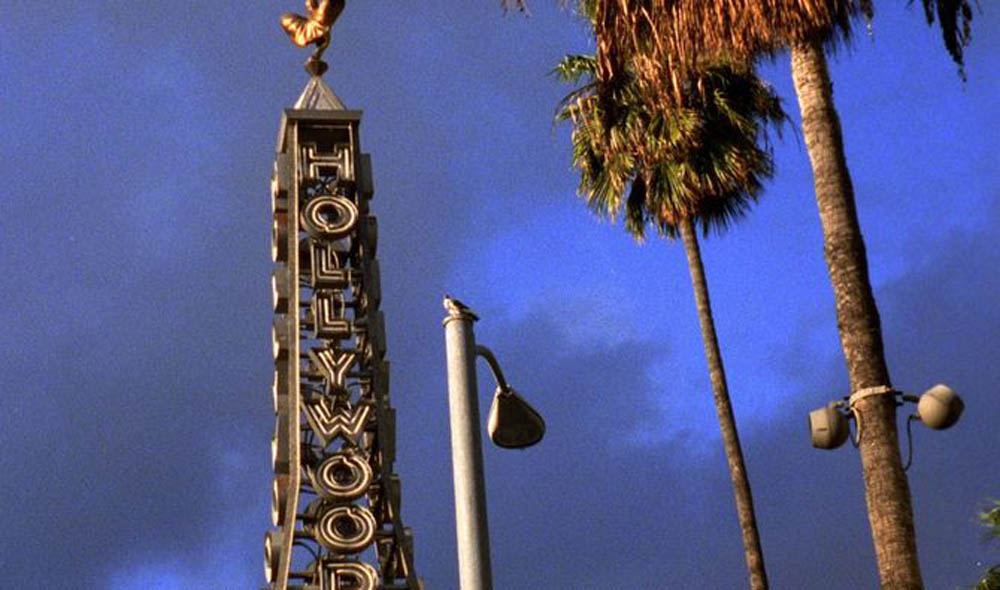
A Thom Andersen retrospective will give Montrealers a chance to see (or re-see) his wonderful, 170-minute film Los Angeles Plays Itself along with seven other Andersen works of various lengths, with the shortest and earliest being Olivia’s Place, a six-minute film about a Hollywood cafe, that was made in 1966. Thom Andersen
will give a free talk on Film, Architecture and the City at the Canadian Centre for Architecture (1920 Baile St.) at 3 p.m, on Sunday, Nov. 15, 2015.

The well-written synopses in the RIDM catalogue make everything sound wonderful, but below are just a few of the films I’m especially looking forward to (besides the ones already mentioned above). Clicking on the name of the film will take you to the RIDM web site for more information about it.

Le Bouton De Nacre: “A new philosophical essay by Patricio Guzmán, exploring Chile’s painful past using water as a metaphor. A majestic and heartbreaking tribute.” I thought Guzman’s Nostalgia for the Light, a film about memory, astronomy, the desert and the dead and disappeared of Chile, was fantastic, so I must see Le Bouton De Nacre.

Another film with a Chilean connection is Beyond My Grandfather Allende (Allende Mi Abuelo Allende) by Marcia Tambutti Allende. The director is the granddaughter of Chilean President Salvador Allende, who was overthrown on the first infamous 911, Sept. 11, 1973. Perhaps The Place, about a meteorological observatory in Poland, might be a little bit like Nostalgia for the Light. It sounds interestring, at any rate. Star*Men is about astronomers from the U.K. who went to work in the U.S. during the Cold War and the space race.

Oncle Bernard – L’anti-Leçon D’économie is about Bernard Maris, who was one of the people killed at the offices of Charlie Hebdo earlier this year. “A fascinating and almost unedited interview with the late economic analyst for Charlie Hebdo, a tireless debunker of the myths of an ever more obscure market economy.” The film is from Richard Brouillette, who made the very long but totally engrossing film L’encerclement – La démocratie dans les rets du néolibéralisme (Encirclement – Neo-Liberalism Ensnares Democracy).

Llévate mis amores (All of Me) is about Mexican women who feed the migrants who are their way to the U.S. border; Le Divan du monde is about a psychiatrist in Strasbourg, France who helps many refugees and immigrants. “The therapy sessions of an atypical psychiatrist who sees therapy as humanist and political work.”

Guantanamo’s Child: Omar Khadr. I’ve been following the story of Omar Khadr for a longtime, so naturally, I want to see the latest installment. In 2002, 15-year-old Khadr, a Canadian citizen who had been taken to Afghanistan by his father, was arrested for the death of a U.S. soldier there. Khadr ended up in the U.S. prison at Guantanamo Bay Cuba. Successive Canadian governments abandoned their legal and moral duties and did little or nothing to help him. Khadr did receive support from lawyers, journalists, filmmakers, members of Amnesty International and citizens of the world. He’s now out on parole and living in the Edmonton home of his lawyer. (Toronto) “journalist Michelle Shephard and filmmaker Patrick Reed recount the story in all its complexity, analysing the U.S. government’s position and Canada’s non-intervention. . . “the film is the first time we hear Omar Khadr speak at length, after so many years of being forced to remain silent while others discussed him.”

On a more local front, Métro gives us a behind-the-scenes look at Montreal’s subway network; it was made by Nadine Gomez (Le Horse Palace). Police Académie, by Mélissa Beaudet, follows the training of three recruits (the English title is Cop Class). Pouding Chômeurs looks at how changes to the unemployment insurance program have caused hardships for many.

There will be discussions, interactive events, installations, expositions, and nine (!) parties, including a karaoke night, during the festival. You can find links to those RIDM events here.

The films mentioned above are just a teeny, tiny sampling of the films on the RIDM schedule. You can read about all of the films, watch trailers for many and buy tickets on the festival’s very comprehensive web site, ridm.qc.ca.
RIDM takes place Nov. 12 to Nov. 22, 2015 in Montreal.

FNC 2015: Animation, among other things, onscreen for last day of Festival du nouveau cinéma

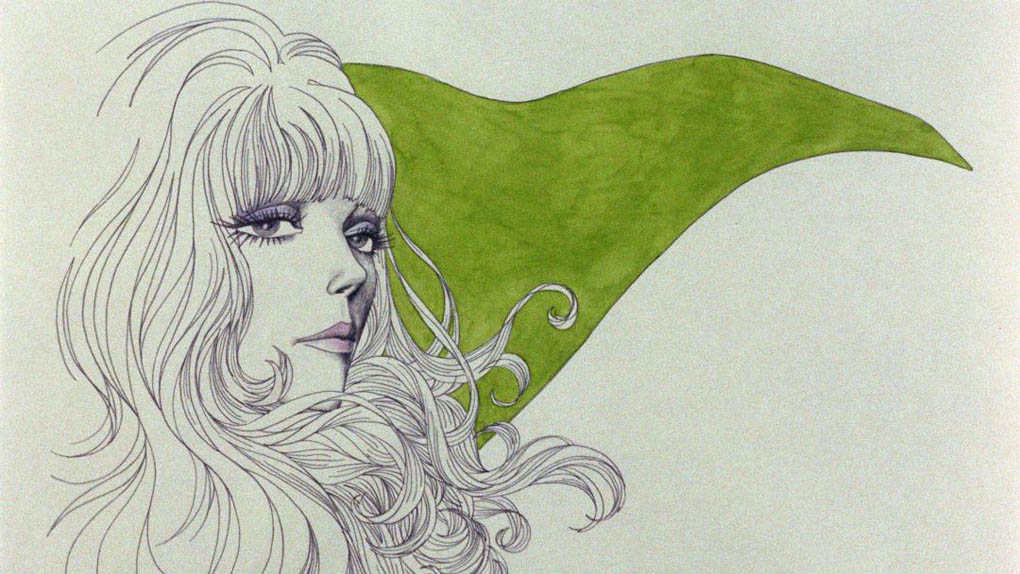
An image from the Japanese animated film Belladonna of Sadness.

The schedule for Sunday Oct. 18, 2015, the last day of the festival du nouveau cinéma includes two animated features that couldn’t be more different.
A recent film, Cafard, is about an elite Belgian armoured division in World War I. Read about Cafard here.

Cafard will be shown at 5 p.m. at the Phi Centre, 407 St. Pierre, in Old Montreal.

The Japanese film, Belladonna of Sadness, was made in 19 but never released in North America. It’s the story of a woman in medieval France who is falsely accused of being a witch. After much mistreatment by her fellow villagers, she does become one eventually, though, giving herself over to . . .the Devil!

Belladonna of Sadness of full of remarkable, flowing imagery, much, though by no means all, of a sexual nature. Some seem inspired by Tarot cards, while others reminded me of the models and actresses of the day. Read more about Belladonna of Sadness here.

Belladona of Sadness will be shown at 7 pm at Cinéma du Parc, 3575 Ave du Parc.

FNC 2015 Review: Chinese punk musicians have their say in Never Release My Fist

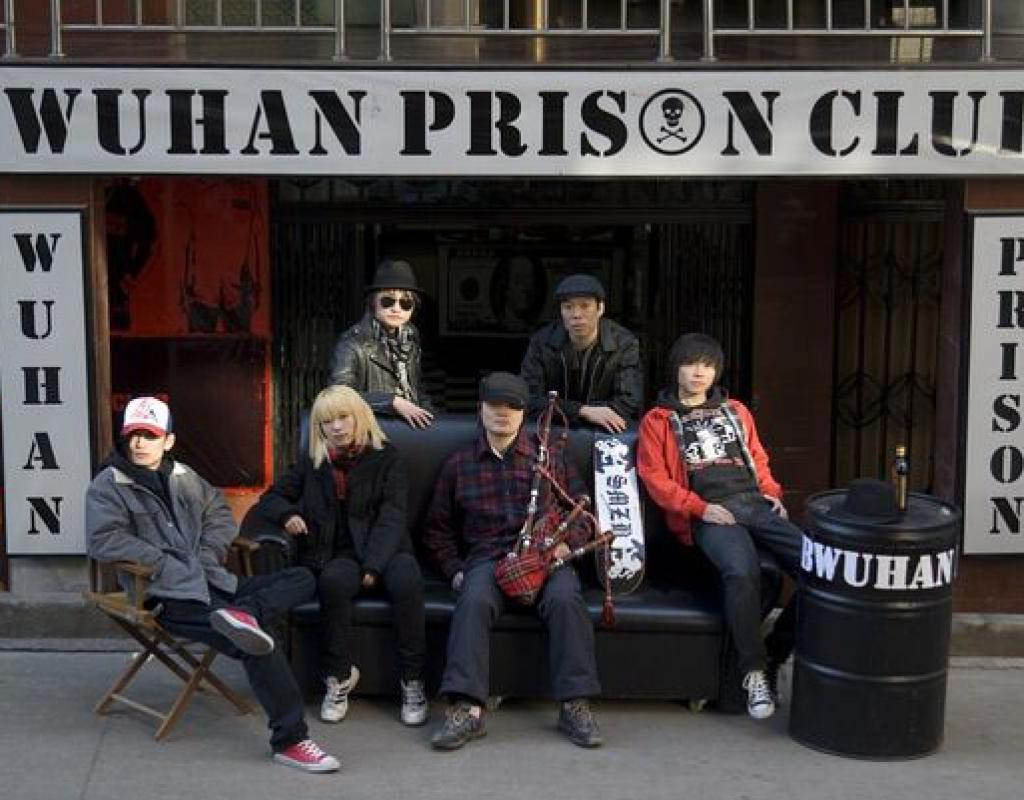
Wu Wei, standing, centre rear, with his fellow punk musicians outside his bar in Wuhan, China. Note the bagpipes! The history of Chinese punk music is explored in the documentary Never Release My Fist, by Shuibo Wang.

If you like punk music, China, or documentary films, then Never Release My Fist is especially for you. But really, I think this film would appeal to any living, breathing person with an interest in his or her fellow human beings, and how they live their lives, struggle to survive, and try to express themselves. I liked it a lot; if I didn’t have another musical commitment today, I would watch it again!

Montreal documentary filmmaker Shuibo Wang received an Oscar nomination for his NFB short, Sunrise Over Tiananmen Square. In Never Release My Fist he explores the world of Chinese punk, with particular attention paid to Wu Wei, who is often described as the father of Chinese punk. He formed his band SMZB in 1996.

Wu Wei describes himself as unemployed and aimless in the first few years after he finished high school, but he now comes across as very thoughtful and articulate man, distressed by the politics and rampant consumer culture in China. All the same, his lyrics sound quite poetic.

Wu Wei is from the city of Wuhan, the capital of Hubei province in central China. It’s a city of 10 million people known for heavy industry but it also has several universities, with as many as one million students (potential fans! Though director Wang says that most young Chinese prefer pop music).
While he benefited from some time in Beijing, Wuhan is where Wu Wei played most of his music, and it became the punk hotspot of China.

Musicians everywhere have tough lives, but the punks of Wuhan had little money to buy instruments, few places to play, and they faced government censorship as well. Text messages and email were intercepted.

An image from Never Release My Fist, a documentary film about punk rock in China. It's part of the lineup at the Festival du nouveau cinema in Montreal.
An image from Never Release My Fist, a documentary film about punk rock in China. It’s part of the lineup at the Festival du nouveau cinema in Montreal.

Wu Wei might be the main star of the film but his bandmates, former bandmates and fellow punk musicians get their share of screen time. Punk in Wuhan was not just a guy thing, either. Women played a big part, too. We see their performances and they share their sometimes harrowing stories and as well.

At some point SMZB included bagpipes and a violin to some songs, a very interesting touch! And Hou Hsiao Hsien uses bagpipes in the closing credits of The Assassin. Are bagpipes a thing in China now?

Filmmaker Shuibo Wang was able to use lots of great vintage footage that was shot before he ever met the musicians. He will attend the screening and answer questions after the film.

Festival du nouveau cinema programmer Julien Fonfrede, left, and Montreal director Shuibo Wang. (Photo copyright Maryse Boyce)

Never Release My Fist is being shown as part of the Festival du nouveau cinéma, which runs from Oct. 7 – Oct. 18, 2015. Visit the FNC web site for more information about Never Release My Fist.

Never Release My Fist
Directed by Shuibo Wang
China, Canada | 87 minutes | 2015, in Cantonese with English subtitles
Saturday, Oct.17, 2015, 17:00
Program #283
Cinéma du Parc 2, 3575 Ave. du Parc

FNC 2015 Review: Eco thriller La Tierra Roja looks at the evils of big business in Argentina

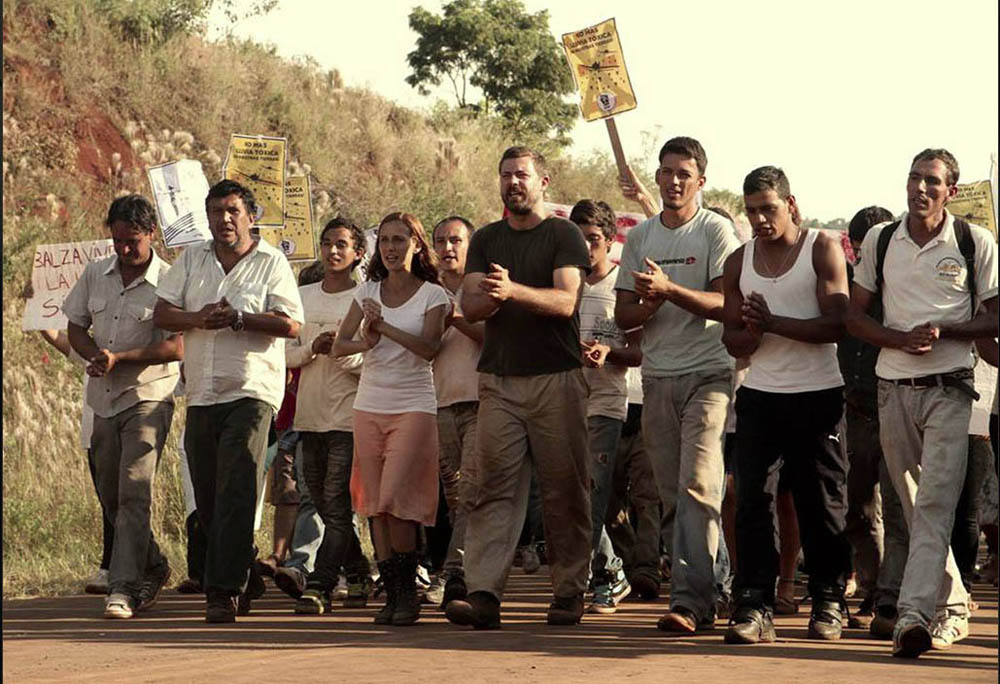
Ana (Eugenia Ram’rez Miori, in the orange skirt) and Pierre (Geert Van Rampelberg, in the black T-shirt) take part in a march against the use of toxic chemicals and the oppression of workers, in the film La Tierra Roja. It's a co-production between Belgium and Argentina that's being shown as part of the Festival du nouveau cinema.
Ana (Eugenia Ram’rez Miori, in the orange skirt) and Pierre (Geert Van Rampelberg, in the black T-shirt) take part in a march against the use of toxic chemicals and the oppression of workers, in the film La Tierra Roja. It’s a co-production between Belgium and Argentina that’s being shown as part of the Festival du nouveau cinema.

La Tierra Roja is a Belgium-Argentina co-production, shot in Argentina’s Misiones province. It’s fiction, but based on fact. Viewers in Argentina probably see it as a “ripped from the headlines” type of film.

Pierre works for a multinational company that cuts down trees and runs a sawmill and paper plant in northeast Argentina. In his spare time, he coaches a rugby team, and carries on an affair with Ana, a school teacher, who also works a small local medical centre. Pierre finds himself in an awkward position after Ana alerts him to the fact that his company’s use of herbicides is causing cancer, miscarriages, birth defects, learning disabilities and other problems among the workers and their families. The fish hauled from the river have strange bumps on their heads.

The government supports the company with subsidies; the governor will not even meet with Dr. Balza, who has been documenting all the health problems in the area.

When Dr. Balza presents the results of his research at an information meeting for the locals, Pierre’s superiors do what such people usually do – they claim that the man is lying, the chemicals are safe, and hey, what about all these wonderful jobs they are providing? (Even if they are dangerous and dirty.) Where have we heard this before? One worker points out that the company is employing 1,000 but poisoning one million. (Is that the price of progress?) After the doctor is murdered, Pierre realizes that he must take a stand.

While the good-guy/bad-guy situation is presented in a black-and-white manner (and quite justifiably so) the environemnt is quite colourful. The earth is indeed red in La Tierra Roja, in sharp contrast to the lush green forest. Ana’s house is a bright pink, and a local bar is purple. She wears an orange dress when she rides her horse to school.

La Tierra Roja is fiction, but I have seen my share of documentaries exploring similar situations in many countries of the world. We used to have a Human Rights Film Festival here in Montreal; we don’t have one any longer, but the Cinema Politica film series at Concordia University exposes problems like this on a regular basis.

La Tierra Roja has a Facebook page at   www.facebook.com/LaTierraRojaFilm/  It seems that the film was shown to residents of El Soberbio in Misiones just a few days ago. Read more about the film and other ecological problems in Argentina on that page.

La Tierra Roja
Argentina, Belgium | 104 minutes | 2015
Original version in Spanish, with English subtitles
Directed by Diego Martínez Vignatti, with Geert Van Rampelberg, Eugenia Ramírez Miori, Jorge Aranda, Alexandros Potamianos

Friday, Oct. 16, 2015, 17:00
Program #237
Cineplex Odeon Quartier Latin, Salle 10, 350 Emery St. (Berri-UQAM metro)
Visit the FNC web site for more info about La Tierra Roja

The Festival du nouveau cinéma runs from Oct. 7- Oct. 18, 2015.

FNC 2015 Review: Coin Locker Girl

Mom (Kim Hye-soo, with cigarette) and Il-young (Kim Go-Eun, centre in khaki T-shirt) in Coin Locker Girl.

The South Korean film Coin Locker Girl plunges us into a cruel and deadly world. It might not stand up to scrutiny, so don’t think about it too much, just go along for the ride.

The coin locker girl of the title was abandoned in an Incheon coin locker shortly after her birth. She is not taken to the police, or a hospital, as you might expect, she is informally adopted by some homeless people. Is this an act of kindness or does her presence make begging a little easier? We never find out. Her story only really begins for us when a crooked cop scoops her up, stuffs her in a suitcase and delivers her to “Mom,” the tough boss of Ma Enterprises, in Chinatown. Someone remarks prophetically that no good will come of this.

The little girl had been named Il-young after the number of the locker she was found in; in Sino-Korean il is one and yeong (or young) is zero. Talk about not having an identity of your own.

As a child, Il-young begs on the subway with other young children who live with Mom. (We don’t learn their back story.) By the time she reaches her teens, she is a very tough, somewhat androgynous young woman (played by Kim Go-Eun), who collects debts for Mom. Woe betide the self-styled tough guy who does not take Il-young seriously and treat her with respect. She is quite handy with fists, feet, knives or ashtrays.

Continue reading “FNC 2015 Review: Coin Locker Girl”

Reminder: Tonight you can see Benedict Cumberbatch as Hamlet, at selected Cineplex theatres

Benedict Cumberbatch as Hamlet at the Barbican Theatre, in London.

Popular actor Benedict Cumberbatch has been playing Hamlet at London’s Barbican Theatre since August. The tickets sold out in a flash.

You can see him tonight at 7 p.m. at several Cineplexe theatres in the Montreal area, in a performance that was captured earlier today. If tonight is not convenient, there will be four encore performances in November.

Since Cumberbatch and his Sherlock character are so popular I expected these screenings to sell out long ago, but it seems that tickets are still available. Many Cumberbatch fans are on record as being ready to listen to him read the phonebook, how much better to hear him recite Shakespeare, as the “melancholy Dane”?

Benedict Cumberbatch as Hamlet at the Barbican Theatre in London. Here he's clasing with Kobna Holdbrook-Smith as Laertes. (Photo by Johan Persson)sword fighting
There will be swordfighting! Benedict Cumberbatch as Hamlet at the Barbican Theatre in London. Here he’s clashing with Kobna Holdbrook-Smith as Laertes. (Photo by Johan Persson)

Evidently, there will be many costume changes, too. Hamlet is brought to us via Britain’s National Theatre Live.

Benedict Cumberbatch as Hamlet.

Follow this link to buy advance tickets from one of these theatres: Forum, Cavendish, Brossard or Kirkland.

FNC 2015: Yakuza Apocalypse has tattoos, swords, knives, fists and fangs, a stinky kappa, a fighting frog and vampires!

This frog packs a mean punch, and mean kicks. too, in Takashi Miike's film Yakuza Apocalypse. It's part of the lineup at Montreal's Festival du nouveau cinema.
This frog packs a mean punch, and mean kicks. too, in Takashi Miike’s film Yakuza Apocalypse. It’s part of the lineup at Montreal’s Festival du nouveau cinema.

Takashi Miike – that should be enough information for many of you. For others, how about yakuza vampires and Yahan Ruhian, one of the baddest bad guys from Indonesian film The Raid?

What about a fuzzy frog, adept at martial arts? That creature up there at the top of the page?

There’s a female mob boss, too, for some gender equality.

Plot, you want a plot? OK. Lily Franky plays Kamiura, one of those mythical gangsters who protects the townsfolk from harm, and only goes after other gangsters.

Recent recruit Kageyama (Hayato Ichihara) admires him immensely, and hopes to be like him one day. Little does he know how soon that day will arrive.

In Yakuza Apocalypse, Yayan Ruhian's character looks like a geeky tourist at first glance, but he soon unleashes his lethal fists and feet.
In Yakuza Apocalypse, Yayan Ruhian’s character looks like a geeky tourist at first glance, but he soon unleashes his lethal fists and feet.

Kageyama doesn’t know it yet, but Kamiura is a vampire gangster. He seems indestructible until the arrival of two mysterious strangers, who demand that he rejoin some syndicate that he previously abandoned. After his death (!) Kamiura still manages to bite Kageyama, and thereby anoint him as his successor. Mayhem ensues. It doesn’t make much sense, but it’s fun. Nothing like Audition, though!

Yakuza Apocalypse, in Japanese with English subtitles, 115 minutes long. Directed by Takashi Miike, with Hayato Ichihara, Lily Franky, Yayan Ruhian.
Wednesday, Oct. 14, 2015, 21:00
Program #178
Cineplex Odeon Quartier SALLE 10, 350 Emery St. (metro Berri-UQAM)