The documentary License to Operate introduces us to former Los Angeles gang members who were deadly enemies in their younger days but are now co-operating, through an organization called A Better LA, to break a cycle of murder and retaliation that had lasted for decades.
One man gets out his high school yearbook and tells us that most of his former classmates are dead now. He has photos from their funerals. it’s obvious that he’s lucky to still be alive himself. Another man tells of seeing five candlelight memorials for murder victims in just one evening. That was the night that he knew he had to do something to save the next generation of children.
After receiving instruction from the Professional Community Intervention Training Institute, the men do liaison work between neighbourhoods and the police and fire departments, encouraging young people to stay out of gangs and calming tensions after murders. If something happens, even in the middle of the night, they’re out there on the street, trying to keep the situation from escalating, eliminating rumours, etc.
They certainly have their work cut out for them. A Better LA says that there are more than 450 gangs in Los Angeles, and that: “ ‘Invisible lines’ drawn by gangs to designate their turf cause children to live in a constant state of fear, wondering if walking to school or crossing the street puts them in harm’s way.”
A lawyer explains that many of the children in these neighbourhoods have the same levels of post traumatic stress disorder as children living in war zones. Before the age of 16, they have lost as many as 10 friends to murder. We see doors and walls that have been riddled with bullets. It’s truly appalling.
License To Operate, directed by James Lipetzky, 101 minutes, in English
Saturday, Oct, 3, 2015 – 7 pm
Cinéplex Odéon du Quartier Latin
350, Rue Émery, Montréal (Métro Berri UQAM)
Admission is $10.
Check the Montreal International Black Film Festival web site, www.montrealblackfilm.com/ for details, the film schedule, film synopses and trailers.
The Montreal International Black Film Festival has a Facebook page, too.
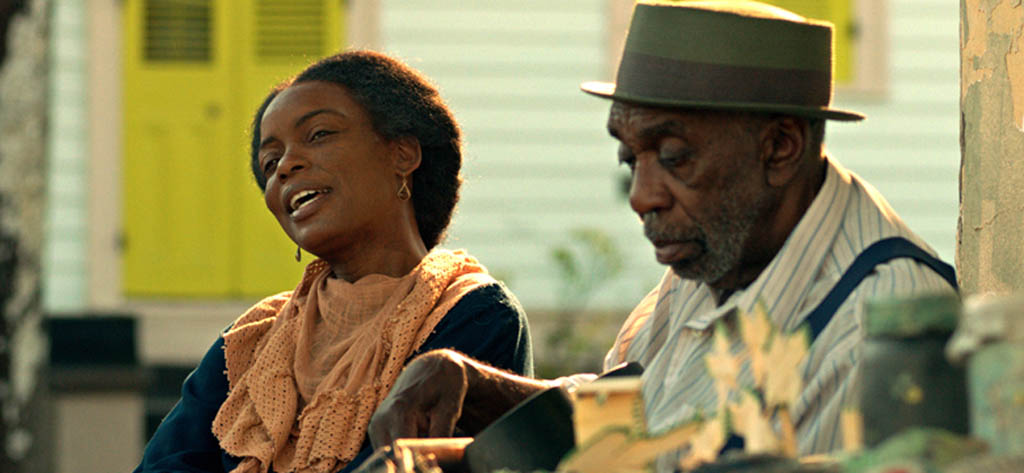
Aunjanue Ellis, left, and Bill Cobbs in Una Vida: Of Mind and Music, one of the films being shown at the 2015 Montreal International Black Film Festival.
Many Montreal film festivals show several films at the same time, which can make life difficult for fans. How to choose?
Here are brief reviews of the two films that will be shown at 7 p.m. on Thursday, Oct. 1, 2015 at part of the Montreal International Black Film Festival; I hope that they are helpful!
Una Vida: Of Mind and Music is a gentle tale that unfolds in an unhurried way. Dr. Alvaro Cruz (Joaquim de Almeida) is a neuroscientist who lives in New Orleans. Appropriately enough for someone who lives there, he likes jazz and blues. His mother has Alzheimer’s disease.
Soon after the film begins he is overcome by guilt because his mother died when he was away at a medical conference. He keeps dreaming of a time in his childhood when he got lost while chasing an elusive butterfly.
He takes time off from work to just kinda hang around. He meets an elderly musical couple – singer Una Vida, and guitarist Stompleg. They play on the street and in a small bar. He can see that the woman’s memory is failing, though her songs seem more firmly rooted in her brain than other things are. As a scientist, he is intrigued by this situation; as a human being he wants to help if he can.
Everyone seems to like Dr Cruz, except for a young woman named Jessica, who does a lousy job of helping Stompleg to look after Una Vida. She is hostile and suspicious and tells him to stay away. of course, we know that he won’t, don’t we?
Oh, for what it’s worth – Una Vida is also known as Queenie, though her real name is Maizie.
There are some nice tunes in Una Vida: Of Mind and Music, but there isn’t really much of a plot. The fortysomething actress Aunjanue Ellis, who plays Una Visa, is made up to look much older, yet her voice still sounds quite youthful most of the time. The film is based on a novel written by a real life neuroscientist Nicolas Bazan. It has many rave reviews on Amazon.com.
Una Vida: Of Mind and Music, 2014, U.S.A., 97 minutes, In English, with some Spanish dialogue when Dr Cruz talks to his mother.
Director: Richie Adams
Cast: Joaquim De Almeida, Bill Cobbs, Ruth Negga, Sharon Lawrence and Aunjanue Ellis
Screenwriter: Richie Adams, Nicholas Bazan
Producers: Richie Adams, Brent Caballero, Nicolas Bazan, Nancy Green-Keyes
Busisiwe Mtshali plays Zanele in the South African film Thina Sobabili (The Two of Us), which is one of the selections at the 2015 Montreal International Black Film Festival.
Thina Sobabili (The Two of Us) is about high-school student Zanele, and her older brother Thulas, who is raising her in the Johannesburg township of Alexandra. He is very strict and stern with Zanele, though he makes his living from robbing the homes of rich people. (We don’t actually see them do it, we just hear Thulas and his friends talk about it, and we see a bit of the loot.)
Zanele and her friend Tumi look very young in their school uniforms and white ankle socks, but Tumi is already flirting and accepting rides, meals, drinks and money from smarmy older men who own cars. She calls one of them the Minister of Finance. There are always lots of people in the street, so her behaviour does not pass unnoticed.
Thulas orders his sister to stay away from Tumi, but rebellious Zanele remains loyal to her friend. We know that this is bound to lead to trouble.
There are some very uncomfortable scenes in Thina Sobabili, and certain connections and coincidences seem too a bit of a stretch. Nonetheless, it is quite impressive, especially considering the fact that it was made on a tiny budget and shot in a mere seven days. Thina Sobabili is South Africa’s submission for the foreign-language Oscar.
Thina Sobabili (The Two of Us) 2015, 90 minutes, South Africa, in Zulu with English subtitles,
Director: Ernest Nkosi
Cast: Richard Lukunku, Emmanuel Nkosinathi Gweva, Zikhona Sodlaka, Thato Dhladla, Busisiwe Mtshali and Mpho (Popps) Modikoane
Screenplay: Ernest Nkosi, Mosibudi Pheeha
Producers: Ernest Nkosi, Enos Manthata, Mosibudi Pheeha Una Vida: Of Mind and Music
Thursday, Oct. 1, 2015, 7 p.m.
Cineplex Quartier Latin, 350 Emery St.
Thina Sobabili (The Two of Us)
Thursday, Oct. 1, 2015, 7 p.m.
Former NFB Cinema
(Judith Jasmin Annexe)
1564 St. Denis
Fabienne Colas, left, founder of the Montreal International Black Film Festival, speaks to journalists at the festival’s press conference. (Don’t let the empty seats fool you – the event was quite well attended, but many guests chose to sit at the back of the room. )
The Montreal International Black Film Festival starts tonight, Tuesday, Sept. 29, 2015 and runs until Sunday, Oct. 4.
The films include features, shorts and medium-length works, from Canada, Benin, Brazil, Bahamas, Colombia, Cuba, Dominican Republic, France, Germany, Guadeloupe, Haiti, Mali, South Africa, Senegal, Spain, Swaziland, Trinidad and Tobago, the U.S., the U.K., and Zambia.
There are dramas, documentaries, and animation, including Battledream Chronicle, the first feature-length animated film from Martinique.
In addition to the fims, there will be panel discussions, a film market and dance parties.
Guests include Martin Luther King III, musician Pras Michel, filmmakers Paul Haggis and David Belle (who will be honoured on Friday Oct. 2, 2015), filmmakers Souleymane Cissé, Moussa Touré, Abderahmane Sissako, and Pierre Magny (who will take part in a panel discussion on North-South collaboration on Saturday, Oct. 3, 2015.)
Graduates of the Ciné Institue, in Jacmel, Haiti, will present their films on Friday, Oct. 2, 2015.
Tuesday’s opening film is the documentary Sweet Micky For President, in which Pras Michel of The Fugees travels to Haiti to help the presidential campaign of musician Michel Martelly, (aka Sweet Micky). Martin Luther King III will be given a 2015 Humanitarian Award before the film screening. These events take place at the Imperial Cinema.
The closing film, on Sunday Oct. 4, is Black Panthers: The Vanguard of the Revolution, in the Hall Theatre of Concordia University. Other films will be shown at Concordia’s DB Clarke Theatre, Cineplex Quartier Latin, and the former National Film Board cinema on St. Denis St.
Admission to the opening film is $25, the closing film costs $20, and others are $10. Several packages are available as well. Check the Montreal International Black Film Festival web site, www.montrealblackfilm.com/ for further pricing details, the film schedule, film synopses and trailers.
The Montreal International Black Film Festival has a Facebook page, too.
The northern Ontario town of Attawapiskat has been in the public eye a lot over the last few years, because of its housing crisis. Victoria Lean’s documentary film, After the Last River, provides a much deeper look at the situation than you’re likely to get on a nightly newscast. The stories that she tells would be interesting (and distressing) at any time, but they are particularly relevant now, as the federal election gets nearer.
Lean visited Attawapiskat for the first time in 2008. She tagged along with her father, ecotoxicologist David Lean, who had been invited there by the Cree community to share his expertise. De Beers had just opened a diamond mine in the area and residents were worried that this would lead to an increase the already high mercury levels in the local fish that were part of their traditional diet. That’s exactly what did happen.
Canadian diamonds are marketed as ethical, in contrast to “conflict diamonds” or “blood diamonds” from Africa, but an article on the Mining Watch Canada web site says “There are no clean diamonds. Exploring for them, digging them out of the ground and selling them requires sacrifices from the natural environment, from the wildlife and fish that live on it, and from the Aboriginal people who depend on it. . .The federal, provincial and territorial regulatory frameworks in Canada are inadequate to protect the environment from long term and cumulative environmental effects.” (The film informs us that the federal government weakened environmental protection legislation when it passed Bill C-38 and C-45.)
An aerial view of the Attawapiskat River community.
Victoria Lean returned to Attawapiskat several times over the next five years. She began making a film with an ecological focus, but as she explains in her director’s notes, “it expanded to the community’s rights to education, healthcare, housing and a clean and safe environment. One of the goals of the film is to draw attention to a number of intersecting challenges.”
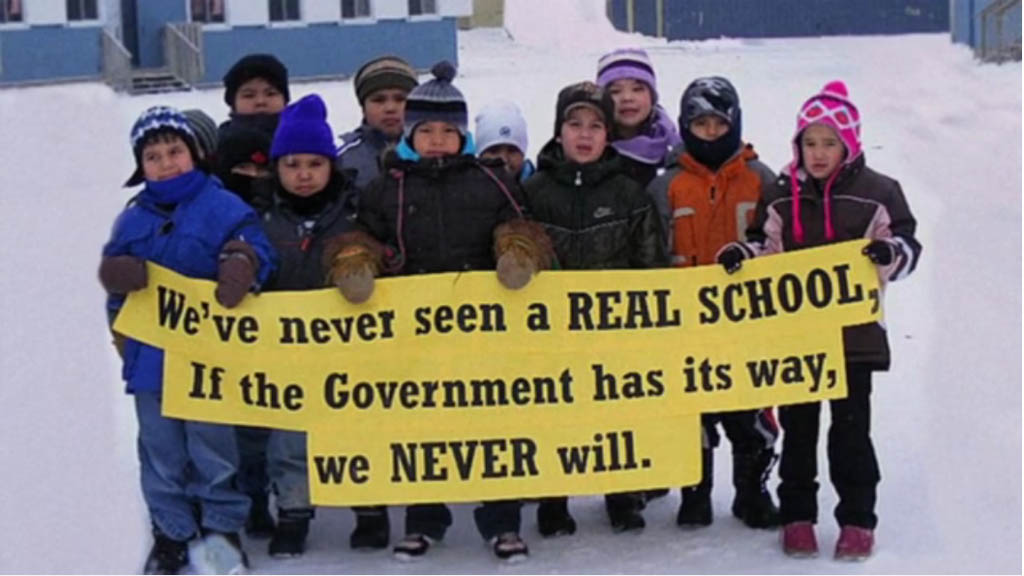
Among the things we learn in After the Last River: In the 1970s and 1980s, the federal government built homes with substandard materials, and that housing has deteriorated further since then. Many homes do not have running water; residents use buckets for toilets. Some homes are plagued with black mould. In 1979, 30,000 gallons of diesel leaked under the elementary school, which remained in use, despite bad smells and students complaining of headaches. The school finally closed in 2001, and the students were moved into portables, right next to the toxic site. They had to wait until 2014 for a new school.
Relatively recent news clips from Parliament and the Ontario legislature show that both levels of government are adept at playing the old “it’s-not-my-department” game. It’s truly maddening to watch those clips, after seeing the terrible conditions that people are living in. Old news clips shot in the north show that little has changed in decades.
Residents discussing their situation with Lean say that “People in the south think that we own diamonds and we’re rich. They don’t know what’s happening here.” “We’re not rich; it’s just the land that rich.”
The mine has not improved the lives of the people of Attawapiskat. In fact, it looks like the mine has only brought benefits to DeBeers and its immediate employees.
Amazingly enough, the amount of royalties paid by DeBeers to the Ontario government is confidential. However, through diligent digging, the CBC discovered that: “the provincial government made more money on salt royalties in 2013-14 than diamonds. De Beers Canada, which owns the only diamond mine in the province, paid $226 in royalties while salt netted the province $3.89 million in royalties.” “. . .De Beers paid little or nothing for most of the seven years its Victor mine has been in production in Northern Ontario, about 90 kilometres west of Attawapiskat.”
De Beers is said to have its eyes on 15 more diamond deposits in the area.
After The Last River
Victoria Lean / Canada / 2015 / 86 ‘ / English
Monday, Sept. 28, 2015, 7 p.m.
Concordia University
1455 de Maisonneuve West, Room H-110
Montreal, QC
Canada
Director Victoria Lean, producer Jade Blair and special guests will be in attendance. The screening is co-presented with the Sustainability Action Fund and Mining Watch Canada. The venue is wheelchair accessible.
For more information visit Cinema Politica’s Facebook page for this event.
A scene from the film Le Plaisir (Pleasure) by Max Ophuls.
The raison d’être of Le Cinéclub: The Film Society is to give people the chance to watch worthy films in their original film format, that is, not via DVD. This is not something average film fans can do at home, no matter how wonderful their setup might be.
Tonight’s presentation is Le Plaisir (Pleasure) by Max Ophuls. It’s a 1952 film in three parts, (Le Masque, La Maison Tellier, Le Modèle) all based on short stories by Guy de Maupassant about men, women and their pursuit of pleasure. Jean Servais provides narration as the voice of de Maupassant. It’s in French with English subtitles. More details about the plots can be found on the Facebook page for the screening of Le Plaisir. The Harvard Film Archive says: “Max Ophuls (1902-1957) was a supreme stylist of the cinema and a master storyteller of romance, doomed love and sexual passion. Fusing the subject of his stories with his endlessly mobile camera, he choreographed emotion, overflowing into ecstatic and extended moments that merge images of desire with desire for cinema.”
Ophuls is known for his fluid camera movement, as pointed out by Noel Murray of the AV Club who decribes the filmmakers work this way:
“short, expertly crafted scenes, in which the actors dwelled on the comic subtleties of human interaction while Ophüls moved the camera around them at odd angles, like an eavesdropper craning his neck to take it all in.”
On the review site DVD Verdict, Daryl Loomis says: “Le Plaisir is beautifully shot by Ophuls with attention to fine details. The film is packed with sweeping tracking shots and constantly changing perspectives. The lighting and camera shots are often put at opposing angles, adding to Joe Hajos already delirious music. With strong performances all around and a great sense of style, Le Plaisir is a true pleasure to watch.”
The Criterion Collection has made a DVD of the film; people who cannot attend the screening might check that out. Those who do go, and like the film, could buy it for repeat viewing. Many reviews of Le Plaisir refer to that Criterion DVD, like this one, by V.F. Perkins in Film Quarterly and this one, by Fernando Croce in Slant Magazine. This essay by Robin Wood, appears on the Criterion Collection web site. Reading them in advance will prompt viewers to be on the alert for various events and film techniques, but those who dislike “spoilers” are advised to read them after watching the film.
LE PLAISIR (Pleasure) 1952, France, 97 min. French with English subtitles) directed Max Ophuls
With Claude Dauphin, Gaby Morlay, Madelaine Renaud, Ginette Leclerc, Danielle Darrieux, Pierre Brasseur, Jean Servais and Jean Gabin.
A short film by Georges Franju will be shown before Le Plaisir
Sunday, Sept. 27, 2015 AT 6:30 p.m.
Cinéma VA-114 of Concordia University, 1395 René-Lévesque Blvd. W. (metro Lucien l’Allier, metro Guy)
General admission: $8, students and seniors (65+) $6
Diego Ibanez, left, and Mahoma Lopez in a scene from the documentary film The Hand That Feeds. Photo credit: Jed Brandt
The Concordia branch of Cinema Politica gets back into gear for the 2015-2016 school year with The Hand That Feeds, on Monday, Sept. 21, 2015.
The award-winning documentary, written, directed and produced by Rachel Lears and Robin Blotnick, follows fast-food workers in Manhattan as they struggle for decent wages, safer working conditions and respect. A brief description on the website of The Hand That Feeds reads: “Shy sandwich-maker Mahoma Lopez unites his undocumented immigrant coworkers to fight abusive conditions at a popular New York restaurant chain. The epic power struggle that ensues turns a single city block into a battlefield in America’s new wage wars.”
Mexican immigrant Lopez worked at an Upper East Side branch of a 24-hour deli called Hot & Crusty Bagel Cafe. Employees were underpaid and often verbally abused. They were not entitled to vacations or sick days. In a six-minute video “Op-doc” called Occupy Bakery that Lears and Robin Blotnick made for the New York Times, Lopez remarks that “consumers want to buy organic food, and they worry about how animals are treated. . .but why aren’t these same values applied to people?”
In the text that accompanies their video, the filmmakers state: “In the early 20th century, immigrants were at the forefront of the labor movement that helped build our middle class. Today, when the fastest growing job sectors are retail and food preparation, the struggles of low-income workers and their families matter more than ever. Turning these jobs into living-wage jobs while fixing our broken immigration system would lift millions out of poverty and benefit our entire economy by increasing consumption and tax revenue. Mr. López’s story is part of a growing wave of low-wage and immigrant workers organizing across New York City and around the country that has the potential to spark this kind of change. It’s time we admit it: America runs on the labor of the undocumented. Their struggle for rights, inside and outside the workplace, is an inseparable part of our democratic project.”
To me, it seems both moral and logical that people receive a decent salary for their hard work. And yet, a short review of The Hand That Feeds in Mother Jones magazine mentions a scene that shows “a co-worker counting out the $290 he’s just received for a 60-hour workweek. . .” Other articles about fast foodworkers in New York indicate that some work as long as 72 per week without receiving any overtime pay.
It’s important to note, as well, that Hot & Crusty was not some mom-and-pop operation, either. According to an article on the web site Waging Non-Violence, it was a “corporate restaurant chain backed by a multimillion dollar private equity investment firm.”
Many enthusiastic reviews have been written about The Hand That Feeds. IndieWire calls it “a rousing chronicle” and a “well-plotted and captivating David & Goliath story,” RogerEbert.com calls it “suspenseful and inspiring” and the Village Voice says that it’s “filmed with the urgency and suspense of a Hitchcock thriller.”
In his review, Frank Scheck of the Hollywood Reporter points out that Lopez is a “likeable, camera-friendly personality,” while Jen Chaney of The Dissolve reminds us that the fight was very much a group effort: “The victories in the effort to establish the Hot & Crusty Workers’ Association speak to what happens when multiple individuals channel their efforts toward a worthwhile cause. The employees at Hot & Crusty stage protests, organize picket lines, and circulate flyers, but their actions have the most impact when they are joined by people in the community, fired-up change agents from the then-burgeoning Occupy Wall Street movement, and members of other unions who rally behind their cause. By building the documentary around an ensemble cast, Lears and Blotnick demonstrate, in terms of content as well as filmmaking, that the voices of a few can galvanize the voices of many.”
In a scene from the documentary film The Hand That Feeds, Nazario G., left, and Felicito Tapia illustrate the principle that working together can creates powerful results. Photo credit: Jed Brandt
In a Women and Hollywood article for IndieWire, co-director Rachel Lears was asked: “What do you want people to think about when they are leaving the theater?” Her reply was: “I would hope that people leave the theater with an invigorated sense that it’s possible to stand up – individually and collectively – and create meaningful, local change that really affects either their own lives or those of others.”
If you watch the trailer for The Hand That Feeds that’s just below this blog post, you’ll see that someone has remarked; “minimum wage jobs are for highschoolers. . .” Kevin Jagernauth of the The Playlist tackles that misconception in his review of the film: “What’s most astonishing in watching the documentary is the commitment these workers have to keeping the kind of jobs that many presume are disposable, given to high turnover, or simply a waystation or rite of passage on the way to something better. What “The Hand That Feeds” admirably makes clear is that these aren’t teenagers or students earning extra cash on the side. These are men and women with responsibilities to their spouses and children, with rent to pay, and other expenses, who don’t have the luxury to quit and find something else. Each paycheck matters, but by the same token, while they are willing to work hard, there is only so far they will allow themselves to be abused, not just by management, but by a system (particularly in the food industry) that regards their efforts as minimal, unimportant, and replaceable.”
THE HAND THAT FEEDS
Directed by Rachel Lears & Robin Blotnick / United States / 2014 / 84 ‘ / Spanish – English / with English subtitles
Monday, Sept. 21, 2015, 7 p.m.
Concordia University, 1455 de Maisonneuve Blvd., W., H-110, Montreal
The screening is part of DisOrientation 2015, co-presented with Solidarity Across Borders and Concordia Food Coalition, and will be followed by a discussion with organizers and members of the Immigrant Workers Centre – Montreal. The venue is wheelchair accessible.
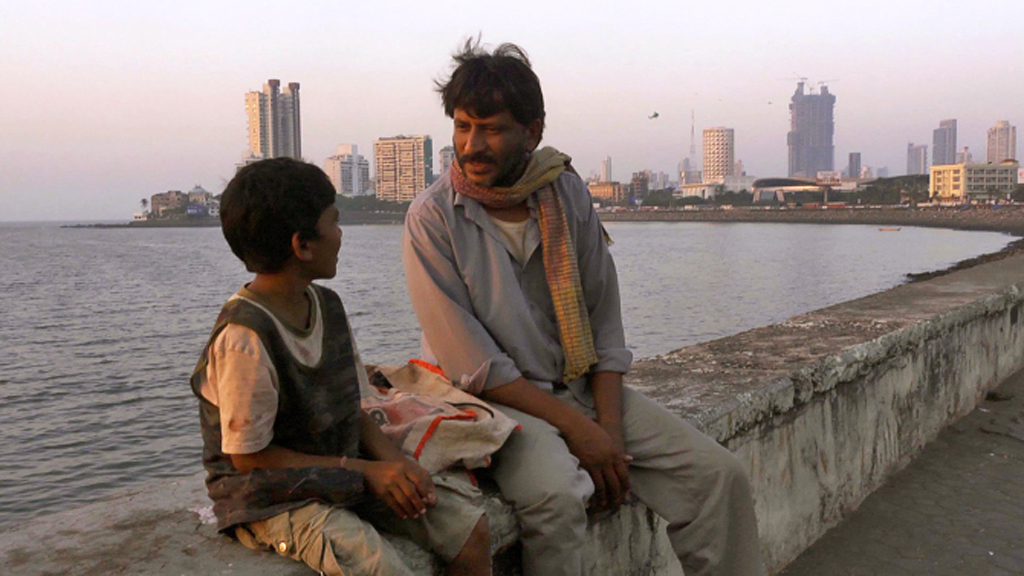
A scene from Richie Mehta’s Siddharth, one of the films that will be shown at the fifth edition of the South Asian Film Festival in Montreal.
The Kabir Centre will present the fifth edition of the South Asian Film Festival, beginning Friday, Sept, 11, 2015 with a screening of Siddharth, from Canadian director Richie Mehta.
Synopsis: “A working class father searches for his 12 year old son, who has failed to return after he had been sent to work in another town.”
In a review in Variety, Jay Weissberg wrote that the film was: “movingly handled. . .engrossing, multi-layered.” “Much of the film’s success lies in the excellent script and the superb performances. . .” Weissberg praised the work of Rajesh Tailang, as Siddharth’s father, Mahendra and Tannishtha Chatterjee as Siddharth’s mother, Suman.
“Mehta captures the noise and dust of the cities without the taint of Western poverty tourism, and he wraps things up on absolutely the right note.”
After the film, Richie Mehta will participate in a Q&A session via Skype. SIDDHARTH (2013) 82 min, in Hindi, with English subtitles.
Friday, September 11, 2015, 7 pm.
Cinema De Sève, Library Building (LB-125),
of Concordia University. 1400 de Maisonneuve Blvd. W.
Montreal (Metro Guy-Concordia).
Naoto Matsumura has a chat with one of the ostriches under his care in a scene from the Japanese documentary film Naoto Hirtoriki (Alone in Fukushima), which is being shown at the Festival des films du monde in Montreal. Naoto Matsumura looks after many of the animals that were abandoned after the 2011 meltdown of the nuclear power plant in Fukushima, Japan.
Naoto Hirtoriki (Alone in Fukushima) is a documentary portrait of Naoto Matsumura, a man who voluntarily looks after the (mostly) four-legged victims of the disaster at the Fukushima No. 1 nuclear power plant in March of 2011. These include dogs, cats, cows, and a pony. There are some wild boars prowling around, too, though they look like scroungers, not officially under his care. And then there are the two otherwordly ostriches, with their quizzical expression and powerful legs that can break ribs.
The nuclear plant went into meltdown after an earthquake and the resulting tsunami. Humans were quickly evacuated because the radiation leak made the area too dangerous for them to remain. Many people had no idea that they would be gone so long. They tied their dogs up and planned to come back for them within a day or so. But they were not allowed to come back, and shelters did not accept dogs and cats, in any case.
Some cattle were destroyed on orders of the government, others starved to death, but some were entrusted to Naoto Matsumura, and he continues to look after them to this day. In the beginning, he bought food for them with money from his small pension, now he also gets donations from supporters. He says he wishes the government would look after the animals, that would be the moral thing to do, and it would also increase knowledge about the effects of radiation. The animals are mammals, just like us, whatever happens to them might happen to humans, too.
On a technical level, Naoto Hirtoriki (Alone in Fukushima) is not perfect. Especially in the opening footage, some bright areas are bleached out, and throughout the film, the microphone picks up many distracting sounds – truck engines, and fierce winds among them. But heart is more important than technique – watch the film to see Naoto feeding and interacting with the animals and describing his feelings of obligation toward them. He tells us how the nuclear plant changed his town of Tomioka – at first it brought prosperity, and conspicuous consumption – a car for every family member! Then came the disaster. It could take 30 years to decontaminate the town; maybe it will never be safe again. He wonders if the decontamination work is really just for show. Naoto Hirtoriki (Alone in Fukushima)
Director : Mayu Nakamura
Cinematographer : Mayu Nakamura
Editor : Mayu Nakamura
Music : Saho Terao
Film production and Sales : Prod.: Mayu Nakamura, Omphalos Pictures,Tokyo 180-0002 (Japon), tél.: +80 (80) 3408 85 30 missyn510@aol.com.
Naoto Hirtoriki (Alone in Fukushima)
Saturday, Sept. 5, 2015 – 4 p.m. – Cinéma Quartier Latin 2, 350 Emery St., in Montreal. (Metro Berri-UQAM)
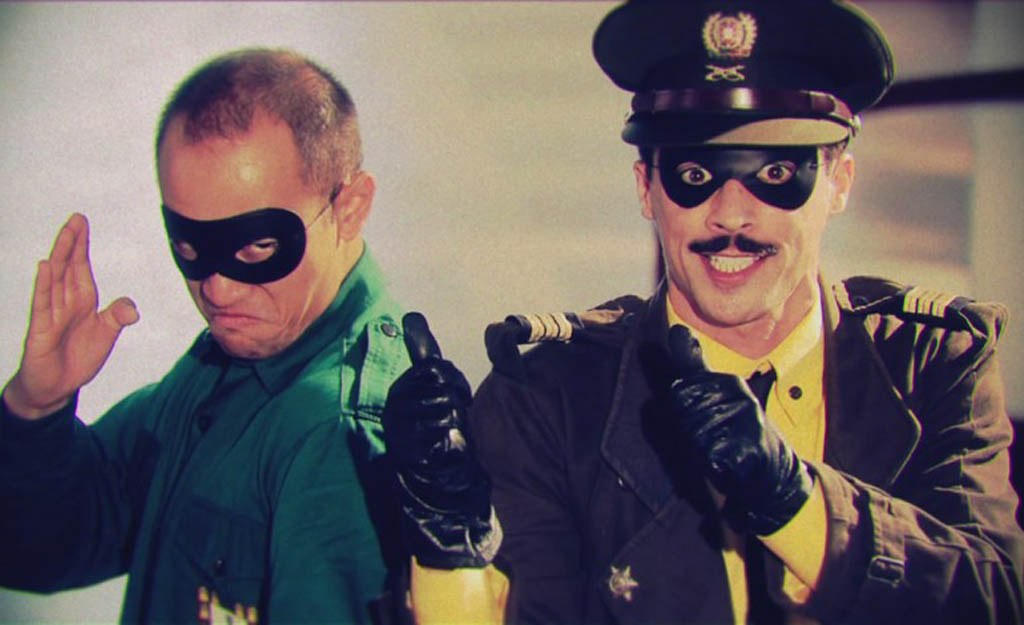
David Chan Cordeiro, left, plays Partridge Kick, and Gonalo Waddington plays the Falcon in a satirical film from Portugal, Capito Falco (The Portuguese Falcon). The film is being shown at Montreal’s Festival des films du monde.
UPDATE: I saw The Portuguese Falcon on Wednesday night, and I thought it was pretty funny! The audience seemed to enjoy it, too. I hope to write a proper review after, but just wanted to add this note, right now. On Thursday, Sept. 3, it will be shown at noon. If you work in the daytime, maybe your boss(es) would allow you to take a long lunch to watch it? It’s a thought!
Capitão Falcão (The Portuguese Falcon in English) is a satire on superheroes. Instead of defending truth and justice and the American Way, as such characters usually do, the Falcon and his sidekick defend the fascist regime of dictator António de Oliveira Salazar from commies and feminists in the 1960s.
The film was directed by João Leitão, and written by him and Nuria Leon Bernardo. Gonçalo Waddington plays the Falcon and David Chan Cordeiro plays Partridge Kick, who is more or less Robin to his Batman.
Here’s the synopsis from the web site of Festival des films du monde: “A parody of Portugal’s first superhero: Captain Falcon. A fearless defender of the fascist regime of the 1960s, Falcon, along with his Asian sidekick, Partridge Kick, defends his nation against various threats: evildoers, thieves, and above all, the Red Peril: communists! But one day, Lisbon, the capital, starts experiencing mysterious attacks, and no one is sure who’s behind it all. Will Captain Falcon save the country once again?”
I haven’t seen The Portuguese Falcon yet, but it sounds like good cheesy, goofy fun, the kind of thing more likely to be seen at Montreal’s Fantasia Film Festival. But we all like to laugh, don’t we?
The Portuguese Falcon, in Portuguese with English subtitles, is 106 minutes long.
This mysterious woman is one of the two main charcaters in the South Korean film It’s Really Kind of You.
It’s Really Kind of You is a Korean drama-thriller-mystery, which I saw at the Festival des films du monde / Montreal World Film Festival.
It’s hard for me to review it because I didn’t like it. On the other hand, I don’t like to be negative, I do enjoy Korean films in general, and I’m well aware that different people have different tastes. So, here goes!
First of all, I was confused because the film did not begin as I expected it to; a murder described in the film’s synopsis only took place once the film was well underway. Presumably, that was a flashback, though it COULD have been a dream, or a figment of one character’s imagination.
The plot is ingenious, but most of the characters range from unpleasant to despicable.
In the opening moments, the main character (played by Ok Ja-yeon, I think) is hitchhiking, in the dark, beside a country road. When a driver does stop for him, he seems so creepy and his manner is so odd, it’s hard to believe that anyone would want to give him a ride. He just stares for what seems like a very long time, then makes his request in a flat, robotic tone. He says that he was fishing and that he missed the last train; could the driver take him downtown? Well, I certainly wouldn’t! The actor conveys creepiness extremely well, but the story would be more believable if he could pretend to be charming, or at the very least relatively normal, now and then.
Nonetheless, Creepy Hitchhiking Man gets a ride from a guy who turns out to be a dog-breeder. They chat awkwardly for a while, then they fight and there’s an accident. A dishevelled woman who’s wearing just a slip shows up; she has a bruised face and haunted eyes; she does not speak. She seems traumatized and more than a little strange herself. She might, or might not, be mentally handicapped.
This woman will later be involved in some graphic sex scenes that are disturbing, go on for a long time, often take place at inappropriate times in inappropriate places, and are definitely not “artistic” in any way.
It’s difficult to say more without going into spoiler territory. The film could have ended much earlier than it did and still have been quite creepily effective. I’m sorry not to be more specific about the actors – the credits went by very quickly and I incorrectly assumed that I could find out later who played which role. The Montreal screening is a world premiere, so there isn’t much info about the film out there.
When the film was over, an audience member asked me: “Did that make any sense to you?” I told him that it did (more or less) make sense to me, but I did not like it.
BTW: An Internet search tells me that hitchhiking is not too common in South Korea. This film won’t do anything to make it more popular, that’s for sure!
It’s Really Kind of You, from South Korea, in Korean with English subtitles, 90 minutes
Director : So Jae-ick
Screenwriter : Pak Me-hyun
Cinematographer : Cho Choul-ho
Editor : Chol Hyun-sook
Cast : Ok Ja-yeon, Bae Tae-won, Choi Dae-hoon, Do Young-cha, Kim Young- hwan, Baeg Ae-gyeong, Kang In-chul
Music : Lee Jae-sin
Film production and Sales : Prod.: So Jae-ick, So-Film, #310-402, Shindo braenew 11, Yonghyun-dong, Uijeongby-si, Kyungki-do (Corée du Sud). tél.: +82 (10) 6221 07 53, jaeick10,hanmail.net.
It’s Really Kind of You will be shown on Wednesday, Sept, 2, 2015, at 6:30, in Theatre 12 of the Cinéma Quartier Latin, 350 Emery St., in Montreal. (Metro Berri-UQAM)









 Mostlymovies.ca