Theatre Review: Don’t miss Empire of The Son at the Centaur Theatre

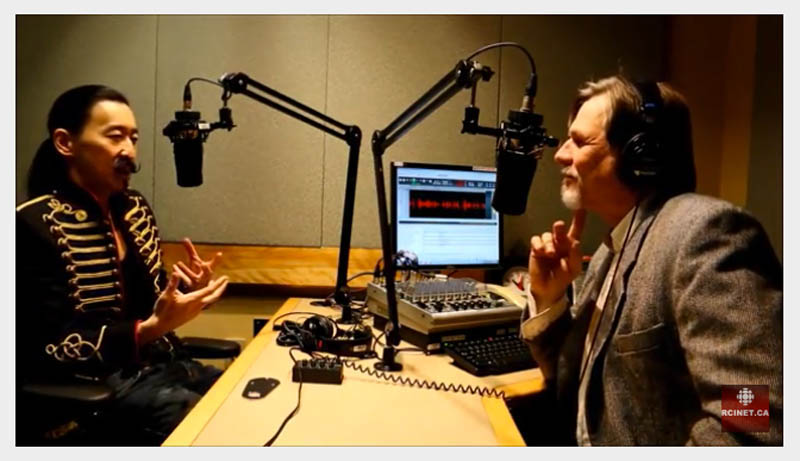
Playwright and performer Tetsuro Shigematsu, left, talks to Marc Montgonery of Radio Canada International. You can watch the video below this review.

Montrealers, do yourself a big favour and catch Tetsuro Shigematsu’s Empire of The Son at the Centaur Theatre. Saturday, Jan 14, 2017 is the last day you can see this tour-de-force. It’s storytelling at its best. The Vancouver Sun and the Georgia Straight said it was that city’s best show in 2015. I’m going to watch it again, myself.

This one-man show reminds me, in a very good way, of the work of the late monologue artist Spalding Gray, though Shigematsu is more animated, and doesn’t sit at a desk.

Shigematsu begins by telling us that he did not cry when his father died in 2015. Since crying seems to be the natural and expected thing for the modern, evolved man to do in our society, he wonders why he did not and could not? What’s wrong with him, anyway? Is it a guy thing? Is it a Japanese thing? (The Shigematsu family is descended from samurai, he says.)

He also feels regret for all the things that he did not say when he had the chance. His father had been sick for several years, but on the night when Shigematsu said “Why don’t you get some sleep, Dad,” he had no way of knowing that father would not regain consciousness again before he died.

Empire of The Son explores Shigematsu’s relationship with his father, and his father’s life before and after his own birth. (Shigematsu and his twin sister Hana are the youngest of five children.)

The Shigematsu family in London, before the birth of Tetsuro and his twin sister, Hana.

Ironies abound. Shigematsu’s father, Akira, was an announcer for the BBC in London, then for the CBC in Montreal. He explained current events to his listeners all over the world, but was extremely taciturn at home. Shigematsu’s father survived the horrors of the bombing of Hiroshima, had tea with Queen Elizabeth, and saw Marilyn Monroe sing Happy Birthday to John F Kennedy, but when Tetsuro asked him about any of those events he got short answers that indicated his father didn’t think any of it was that big a deal.

I was sad to learn that (Don’t-Call-Me-Akira) Shigematsu lost his position behind the microphone and spent his last days at the CBC delivering the mail, because of cutbacks initiated by the government of Brian Mulroney. But feelings of anger and outrage were even stronger than my sadness. Bah, Mulroney, Harper, good riddance to them! (Shigematsu did not make any kind of editorial comment about Mulroney, he didn’t say we should be angry, I came to that conclusion all by myself.)

Akira Shigematsu worked for the BBC in London before he moved to Montreal with his family.

Tetsuro, the son of a radio man, became a radio man himself, to his own surprise and amazement. How did that even happen? Fate? Osmosis? He doesn’t pose that question, but we can, if we like. (Tetsuro did want to use his father’s cool-looking, leather CBC satchel, but he hadn’t thought of doing his dad’s job.) Shigematsu shares some anecdotes about various CBC efforts to make his voice sound more “manly.”

Like much great art, Empire of The Son is both universal and particular. You might well cringe when Shigematsu relates some of the snarky, flippant things he said to his father in his teenage years. Did you say similar things yourself? Did someone say such things to you?

Chances are, viewers will be able to relate to many incidents, they will recognize themslves and their own family dynamics.

Years ago, I saw Rising Son, in which a younger Shigematsu talked about his father, his family, himself, experiences at school, stupid stereotypes about Asians, and a trip he took to Japan. It was a good show with lots of laughs, but Empire of The Son is on a whole other level of artistry. Is it corny and clichéd if it compare one to grape juice and one to wine? Yeah, probably. But it will have to do for now.

While death, dying and crying might sound sad and depressing Empire of The Son contains many light moments. While the show is mostly about Shigematsu and his father, he has some heartwarming, truly poetic things to say about his three sisters. You should hear them for yourself, I won’t spoil them.

Empire of The Son has some clever props that help to tell the story, something that Rising Son did not have. There’s a fascinating combination of high tech and low tech happening there. Shigematsu manipulates a digital camera to project images of a little bathtub, a tiny boat made from a paper and a toothpick, a miniature skateboard, or the destruction of Hiroshima itself, onto a screen behind him.

You might want to see Empire of The Son with parents, siblings or friends, depending on who might be available to you. If all your friends and family members are busy, do not hesitate, go by yourself. Don’t miss Empire of The Son. You will thank me later!

Budding writers and actors would appreciate it, too, I think.

Finally, I must point out that at a mere $16 tickets to Empire of The Son are a real steal. Theatre can be expensive, and tickets for this show cost $50 elsewhere. (In Vancouver, the entire run sold out before the show even opened.)

Empire of The Son of the Son will be at the Centaur Theatre Thursday, Jan. 12, Friday, Jan. 13, and Saturday Jan. 14, at 7:30.

The Centaur Theatre is in Old Montreal at 453 St. François-Xavier. Place d’Armes is the nearest metro station. At another time of year, I could say “run, don’t walk,” but that might be unwise, with the weather and the state of the sidewalks being unpredictable.

You can buy tickets online, though there is a $2 service charge.


Empire of the Sun is a touring production of the Vancouver Asian Theatre. It will be at the Factory Theatre, in Toronto from Wednesday, Jan. 18, until Sunday, Jan 29, 2017.
 

Sommets du cinéma d’animation 2016: Review of animated film Fox Fears

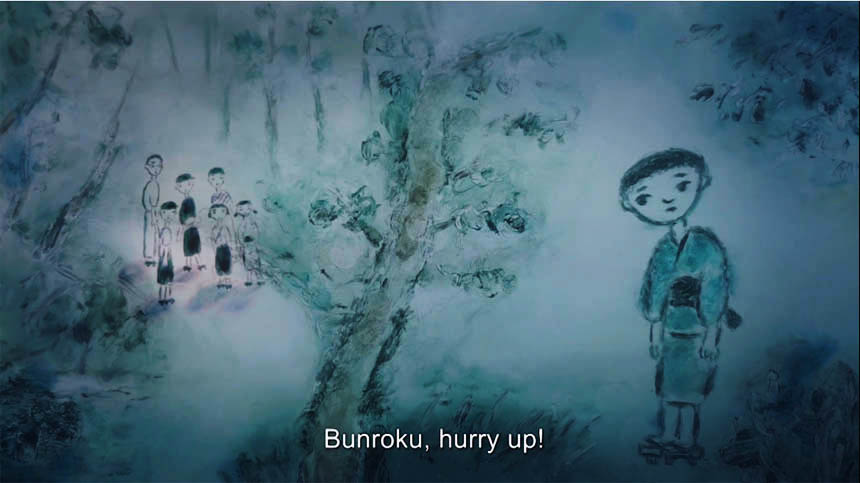
In this scene from the animated film Fox Fears, Bunroku can't keep up with his friends because he is wearing his mother's clogs.
In this scene from the animated film Fox Fears, Bunroku can’t keep up with his friends because he is wearing his mother’s clogs.

The mystery of the night, primordial fears, the power of a mother’s love – those are some of the ingredients in Fox Fears (Kitsune Tsuki)
a lovely short animated short from Japan. (Nothing to do with the nefarious U.S. TV network!) Director Miyo Sato made Fox Fears using sand and paint on glass.

The story begins the way a low-key horror film might. A young boy named Bunroku narrates the story. Under a bright moon, he was walking to a night festival with his friends, but he couldn’t keep up with them because he was wearing his mother’s clogs. (Not the right size, I guess. What happened to his own shoes? Too small? They broke?)

He and his friends stop at a clog shop so he can buy new ones. While they are in there, we hear distant music from the festival – flutes and drums. One flute sounded a bit like a wolf’s howl, to me. After the boy makes his purchase, a mysterious old woman appears and tells them that buying clogs after dark means you will turn into a fox. Don’t they know that? “Lies!” they shout, and head off to the festival, with its lanterns, banners, floats and music. (I would have liked to spend a few more seconds at this festival!)

Bunroku tells us that his friends would always see him safely home, and yet somehow this night, they do not. He imagines foxes and their shadows stalking him all the long, long way home. Once he gets there (guess that’s a spoiler, sorry!) he tells his mother what happened and she reassures him there’s nothing to worry about. She uses the word “lies,” as well. Maybe superstition is too big a word and too big a concept for a little kid. Not to mention folklore or mythology.

But Bunroku needs further reassurance. “But what if I DID turn into a fox?” His mother has an answer to that. He has more complicated questions and she has more detailed answers. I won’t spoil all that for you. One of the imagined scenarios is tragic and might bring the susceptible to tears.

Bunroku and his mother, from the Japanese animated film Fox Fears.

Even thought they are having a theoretical, late-night, drowsy chat about shapeshifting, it is very clear that Bunroku’s mother would do anything and everything to keep him safe. That’s what good mothers everywhere do. It’s quite an amazing thing!

References and my reactions: It is possible that I am seeing things in Fox Fears that director Miyo Sato did not intend. Who knows, really. But, one way or the other, those things added to my enjoyment of the film.

Fox Fears has a dreamy, timeless quality. I don’t remember seeing any cars, buses, trucks, cellphones. If not for a light bulb seen at Bunroku’s home, and the Western clothes on some characters, the story could have taken place hundreds of years ago.

I find it cute that he’s wearing his mother shoes. I used to wear my mother’s boots when I was quite young (I had big feet!) That made me feel closer to her, not to mention that her boots were prettier and more stylish than mine.

The clog shop looks isolated, on the edge of the forest. That reminded me of so many films, Japanese ones in particular, where magical (and/or evil) places only exist at night. In the light of day, there is nothing there at all. Or just some ruins. The people who seem to live in those places are really ghosts or demons. Eat or drink what they give you and you will be under their power forever. Does that clog shop even exist in the day time?

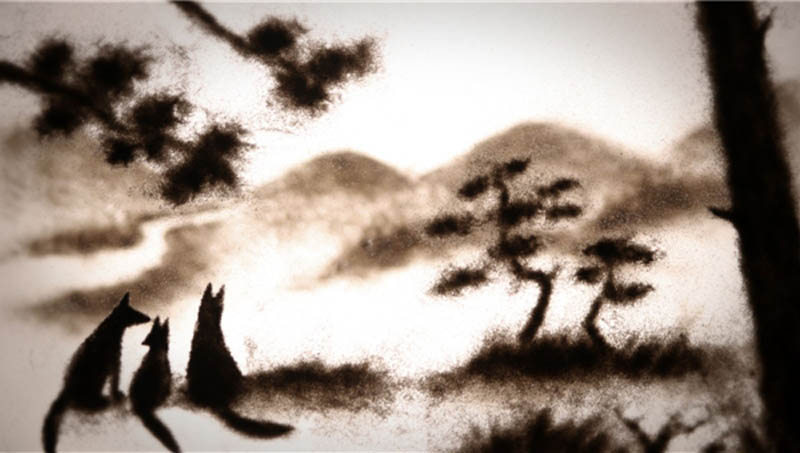
A fox family in sihouette in the animated film Japanese Fox Fears. Director Miya Sato created the images using sand and paint on glass.

Foxes and fox spirits figure in Japanese folklore and films; I’ve read some of those stories and seen some of those films. They appear in Chinese and Korean tales and films too, though the details vary.

I saw Fox Fears (Kitsune Tsuki) at Les Sommets du cinéma d’animation de Montréal 2016, at the Cinémathèque Québecoise.

Fox Fears (Kitsune Tsuki)
Animation (PG)
Director: Miyo Satori
Length: 7 min., 38 sec
Language: Japanese
Subtitles: English
Completed date: 2015


Sommets du cinéma d’animation 2016: Review of the documentary Oscar

A screen grab from Oscar, an NFB/ONF documentary about jazz pianist Oscar Peterson. The film was directed by Marie-JosŽe Saint-Pierre.

In the 12-minute NFB/ONF documentary Oscar, filmmaker Marie-Josée Saint-Pierre uses animated sequences, archival footage, photos, news clippings and other documents, radio and TV interviews with Montreal-born jazz pianist Oscar Peterson to chart his career and to depict the loneliness of life on the road and the toll it takes on a marriage, on the relationship between a father and his children and on musical performance, too. (Peterson was only 19 when he married for the first time. He tells an unseen interviewer that he should have waited until he was at least 40.)

A telegram reads: “I miss you Daddy. When are you coming home?” We also see a divorce document – genuine or recreated, I don’t know – that lists the respective parties as “Oscar Peterson” and “Mrs. Peterson.” That’s how it was in those days, married women didn’t even have a name of their own. More cringe inducing is a radio segment from 1944 in which announcer Jeff Davis calls 18-year-old Peterson a “coloured boy with amazing fingers.”

Oscar Peterson had a regular gig at Montreal's Alberta Lounge.
Oscar Peterson had a regular gig at Montreal’s Alberta Lounge.

In addition to talk about the hardships of touring, we see daytime and night-time photos of Montreal back in the 1940s, are reminded how popular our city was with U.S. tourists, and revisit the tale of how U.S. impresario Norman Granz was riding in a Montreal taxi when he heard Peterson on a live radio broadcast from the Alberta Lounge. Granz instructed the driver to take him there right away.

When he was still a young man, Oscar Peterson shared a bill at Carnegia Hall with his idols Ella Fitzgerald, Dizzy Gillespie and Ray Brown.

In the next sequence, Granz has taken Peterson to Carnegie Hall, where he plays on a bill that includes Ella Fitzgerald and Dizzy Gillespie. (Granz was Peterson’s manager for most of his life; a New York Times obituary for Granz says that Peterson named one of his sons after him. Google tells me that late in life Peterson had a daughter named Celine. Was she named for our national songbird? Anybody know?)

An animated depiction of CBC radio host Peter Gzowski is astounded when Peterson tells him that he thinks ahead while he’s playing, or more precisely, that he plays behind his thinking.

Needless to say, Oscar contains lots of Peterson’s music, too, a bonus for old fans and newly created ones.

Oscar is part of a three-film selection called Animating Reality 1: Familiar Faces, that will be shown on Sunday, Nov. 27, at 1:15 p.m., as part of the Sommets du cinéma d’animation film festival, at the Cinémathèque Québecoise, 335, de Maisonneuve Blvd. E.

NOTE: Casino, a 4-minute film by Montreal director Steven Woloshen, uses music by Oscar Peterson. Casino is among the films in the International Competition – Programme 3, that will be shown at 3 p.m. on Sunday, Nov. 27, at 1:15 p.m., at the Sommets du cinéma d’animation.


Sommets du cinema d’animation: ‘If you scan an octopus, be sure you really clean your scanner well afterwards’

joan-gratz-blue-clay

You don’t hear about scanning tentacles everyday; neither do you get to talk to an Oscar winner. But some of us did both yesterday (Friday, Nov. 25, 2016) when filmmaker Joan Gratz gave a master class at the Les Sommets du cinéma d’animation here in Montreal. We learned a lot and laughed a lot, too.

Gratz’s Mona Lisa Descending a Staircase won Best Animated Short at the 65th Annual Academy Awards in 1993. (Snow White announced the award. Seriously! Gratz did not mention this herself, but I saw it on YouTube.)

I had seen it before, but did not realize that she had created the images with clay. Gratz explained how she does that, and showed us many of her other films, including Kubla Khan, Puffer Girl, and Pro and Con.

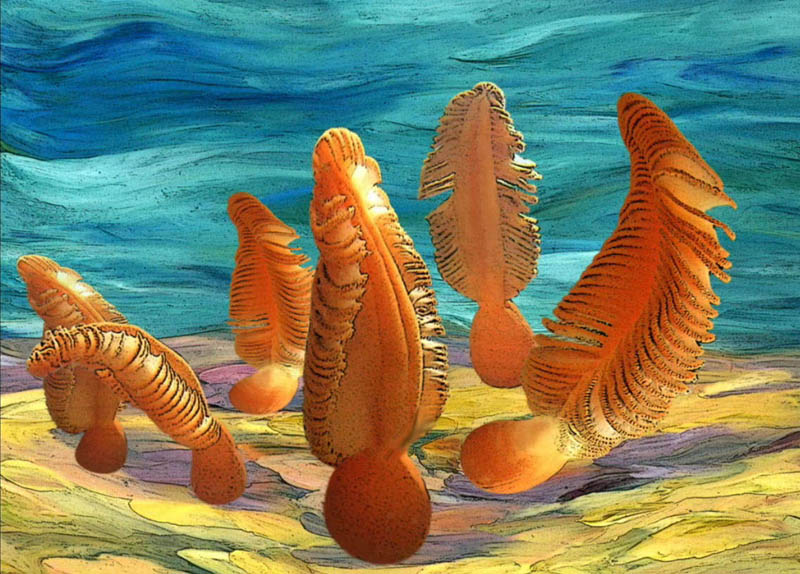
An image from the animated film Puffer Girl, by Joan Gratz.


Animator Joan Gratz has written and illustrated books, too.

Meanwhile, you can see her latest film Primal Flux, as part of the International Competition 3 selection, at Sommets du cinéma d’animation, on Saturday Nov. 26 at 5p.m. and Sunday Nov. 27 at 3 p.m. Both screenings will be in the Salle Principale of the Cinémathèque Québecoise.

Cinémathèque Québecoise
335, de Maisonneuve Blvd. E.
Montréal, Québec, H2X 1K1
Berri-UQAM Metro

There’s lots to see and do at Les Sommets du cinéma d’animation in Montreal

A frame from Diane Obamsawin's film Here and There. Is Obamsawin a Habs fan?
A frame from Diane Obamsawin’s film Here and There. Is Obamsawin a Habs fan?

The 15th edition of Les Sommets du cinéma d’animation, at the Cinémathèque québécoise, will squeeze many activities into a mere five days.
The film festival’s schedule includes short and feature-length animated films from around the world, master classes, and a free stop-motion workshop for children (I’m jealous!).

Canada’s venerable nation Film Board (NFB/ONF) is well represented and there are competitions for student films, from Montreal, Quebec, elsewhere in Canada and abroad.

Admission to the films: $10 for adults, $9 for students, seniors and those 4-16 years old.

At Les Sommets du cinema dÕanimation, filmmaker Joan Gratz will demonstrate her signature technique, claypainting.

Among the other presentations: Finding Work in the Animation Industry; The secrets behind virtual monsters and creatures; Money and Eyeballs (How to get funding and exposure for your films); Round table discussion (How do journalists and critics work in a community as tight-knit as animation?); A Near-Perfect History of Animation. The Animation lecture cost $9, but the other events listed above are free.
There are two master classes: A 90-minute Master Class with Joan Gratz, who “will present her films and reveal the secrets behind her signature technique, claypainting” is free.

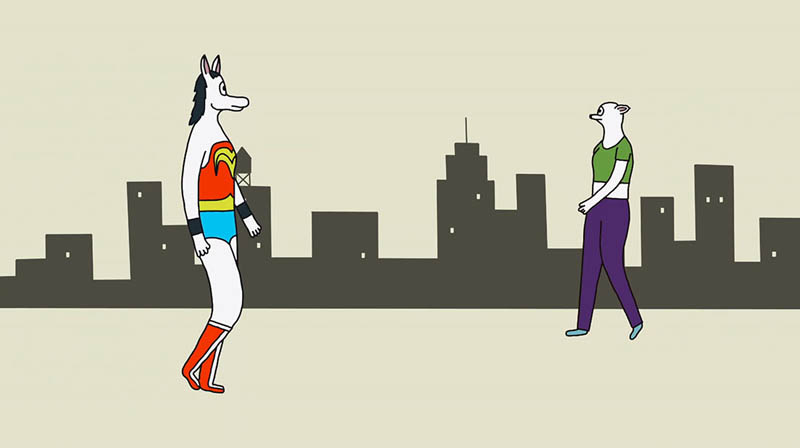
A frame from Diane Obamsawin's film I Like Girls. Mathilde, right, says that her first girlfriend was "half horse, half Wonder Woman."
A frame from Diane Obamsawin’s film I Like Girls. Mathilde, right, says that her first girlfriend was “half horse, half Wonder Woman.”

A ticket for a five-hour Master Class with Diane Obomsawin is $9.

Visit the web page of Les Sommets du cinéma d’animation here.

The catalogue of Les Sommets du cinéma d’animation is here, in PDF form.

Les Sommets du cinéma d’animation, Nov. 23 to 27, 2016

Cinémathèque québécoise
335, de Maisonneuve Blvd. E.
Montréal, Québec, H2X 1K1
Berri-UQAM Metro

Review of Window Horses: The Poetic Persian Epiphany of Rosie Ming

Ann Marie Fleming's animated film Window Horses: The Poetic Persian Epiphany of Rosie Ming is incredibly colourful.
Ann Marie Fleming’s animated film Window Horses: The Poetic Persian Epiphany of Rosie Ming is incredibly colourful.

It is cold here in Montreal. We had the first snow of the season on Monday the same day that I saw Ann Marie Fleming’s animated film, Window Horses: The Poetic Persian Epiphany of Rosie Ming. It was like the proverbial breath of fresh air – warm, welcoming, colourful, joyful, musical, magical, mesmerising and marvelous! It’s about the love of family, love for words and music and other good things. It’s also about more complicated stuff like history, dissent, exile, reconciliation and finding your own voice. So many elements, but they all work together well, as in a symphony, or (corny reference, sorry) a beautiful carpet. Window Horses is a treat for the eyes and ears that will touch your heart. (Not exaggerating!)

The film’s French title is La vie en Rosie : L’épopée persane de Rosie Ming – a different cultural reference, while the alliteration remains.

Rosie Ming is a young Vancouver woman of Chinese and Iranian parentage. She was raised by her loving Chinese grandparents and still lives with them. (Rosie has the voice of actress Sandra Oh and a stick-figure body. That body is the alter ego of director Ann Marie Fleming. The other characters look like more conventional human beings.)

Rosie loves Paris even though she has never been there. After self publishing a slender book of her poems (My Eye Full, Poems by a Person Who Has Never Been to France) Rosie is surprised to receive an invitation to a poetry festival in Iran.

Her best friend Kelly (voice of Ellen Page) tells Rosie that she MUST make the trip. (Kelly did not even know that Rosie wrote poetry, so she’s a bit hurt that Rosie kept that info to herself.)

Rosie Ming is drawn as a stick figure in the film Window Horses: The Poetic Persian Epiphany of Rosie Ming. Rosie loves Paris, but there's a map of Iran under her Paris poster.
Rosie Ming is drawn as a stick figure in the film Window Horses: The Poetic Persian Epiphany of Rosie Ming. Rosie loves Paris, but there’s a map of Iran under her Paris poster.

Rosie’s grandparents are happy that their little girl has been honoured; they are less enthusiastic when they learn that the event is in Iran. But once Rosie has decided to go, they can’t dissuade her. (Grandpa Stephen is played by Eddy Ko, Grandma Gloria is played by Nancy Kwan. THE Nancy Kwan, of The World of Susie Wong, Flower Drum Song, etc.)

As the airplane starts its descent to the airport, all the women cover their hair with scarves. Rosie outdoes them, going full chador. (Throughout her visit, she is told: “You don’t have to do that, you know.”)

When Rosie tells the customs officer that she is attending a poetry festival in Shiraz, he says that he is a poet, too. Everyone in Iran is a poet!

Even though she is quite young and has only written one book, Rosie is treated with warmth and respect by everyone at the festival, apart from snarky German guest Dietmar, who usually has his nose buried in his phone.

Don McKellar and Sandra Oh enjoy themselves recording the voices of Dietmar and Rosie, for the film Window Horses: The Poetic Persian Epiphany of Rosie Ming.

(Canadian actor and director Don McKellar provides the voice of Dietmar. “I have angst. I’m doomed,” he says.) Other guests include Chinese exile Di Di and U.S. poet Taylor Mali. (Mali is a real-life person.)

Rosie knows about Rimbaud, Baudelaire and other French poets; in Shiraz her hosts introduce her to the verses of Iranian poets Rumi, Hafiz (also spelled Hafez) and Saadi. The last two were both sons of Shiraz.

Window Horses is full of beautiful sequences; here are two. We hear the call to prayer coming from a minaret. The sounds are represented by colourful ribbons that fly through the air. Soon an enraptured Rosie is floating with them. (This sequence was made Kevin Langdale, who is the lead animator and designer of the entire film.) A sequence describing the life of Hafiz is exceptional, with complicated paper cut-outs, whirling calligraphy, etc. Bahram Javaheri, a Vancouver-based Iranian filmmaker, made the cutouts and Michael Mann assembled and animated them using Adobe’s After Effects software.

The Iranian poet Hafiz, right, listens to his father recite poetry in a scene from Ann Marie Fleming's animated film Window Horses: The Poetic Persian Epiphany of Rosie Ming. Bahram Javaheri, a Vancouver-based Iranian filmmaker, made the paper cutouts and Michael Mann assembled and animated them using After Effects software.
The Iranian poet Hafiz, right, listens to his father recite poetry in a scene from Ann Marie Fleming’s animated film Window Horses: The Poetic Persian Epiphany of Rosie Ming. Bahram Javaheri, a Vancouver-based Iranian filmmaker, made the paper cutouts and Michael Mann assembled and animated them using After Effects software.

(People come from all over Iran to visit the tomb of Hafiz; Rosie visits it, too. We learn that Iranians consult books of his poetry to answer questions about their lives – open any page, and his ancient words will have meaning in the present-day situation. This made me think of people consulting the I-Ching back in the 1960s.)

Rosie does not know much Mandarin beyond “ni hao,” yet she is moved to tears by Di Di’s untranslated poem. Even though she does not know the words, she feels their meaning and the emotions behind them. In a flashback scene, Rosie’s parents meet and bond immediately over their shared love for Rumi. When Rosie’s father recites a Rumi poem in Farsi, Rosie’s mother cries crystal tears.

When Rosie's parents meet, her future mother, Caroline, is reading a book by Rumi. Caroline cries when Rosie's future father recites a Rumi poem in Farsi.
When Rosie’s parents meet, her future mother, Caroline, is reading a book by Rumi. Caroline cries when Rosie’s future father recites a Rumi poem in Farsi.

Despite much warmth and happiness in Rosie’s life, and in her visit to Shiraz, there is an undercurrent of melancholy, with gusts to bitterness. Her mother is dead, and her father abandoned her when she was 7 years old. How could he do that? Many people in Shiraz knew her father, and they tell her he was a very good man. At first, Rosie does not want to hear anything about him, but then she, and we, make some surprising discoveries about him. To reveal more would be to spoil things.

Window Horses is among the two opening films of Les Sommets du cinéma d’animation, 15th edition, at the Cinémathèque Québécoise. It will be shown Wednesday, Nov. 23, 2016. at 7 p.m. (Oooops, the screening is now sold out.) Window Horses will get a general release in Canada in 2017.

Read more about Window Horses on the Cinémathèque’s web site.

RIDM 2016: Sundance Now has got a deal for you!

Here are just a few of the music documentaries available from Sundance Now.

Going to Montreal’s documentary film festival RIDM today? It’s the festival’s last day for this year.

If you go, consider having a chat with the people from Sundance Now. They have tables at all or most of the RIDM locations.

You can get a 37-day free trial of the video-on-demand service from them. If you sign up on the Internet you will only get one week. Sundance Now specializes in documentaries, but it has fiction films, and TV shows, too. You can watch them on iOS, Apple TV, Android, Roku,
Chromecast, or the web.

While it doesn’t have as many films as Netflix does, (not yet anyway) once a film is added to the Sundance Now collection, it remains in it – it isn’t deleted a few weeks or months later. That’s a plus, right?

If you don’t like the service, just cancel it before the 37 days are up.

RIDM 2016: Review of documentary film El Futuro Perfecto

In a scene from the hybrid documentary El Futuro Perfecto, Zhang Xiaobin, centre, and her fellow students in a Spanish language class prove that they understand the meaning of the word "ojos."
In a scene from the hybrid documentary El Futuro Perfecto, Zhang Xiaobin, centre, and her fellow students in a Spanish language class prove that they understand the meaning of the word “ojos.”

Xiaobin is a young woman of 17 who moves from China to Buenos Aires to join her parents.

Signing up for Spanish lessons allows her to make friends, expand her horizons and contemplate many possible futures.

Each student in the class is given a Spanish name (she gets Beatriz). They can play at new identities – a nurse from Barcelona, a business woman from Colombia, a lawyer from Montevideo.

They read questionable statements from their text book, “If I marry a rich man, I won’t have to work.” (Tsk, tsk!)

They practice mildly stilted dialogue exercises, inviting each other to meals or to the movies. Outside the classroom, Xiaobin uses those phrases when talking to Vijay, an immigrant programmer from India, and they really do go places together. They still act like they’re practicing, though. They order orange juice, and then decide to leave a few minutes later without even tasting it. “Should we go? “Let’s go.” The audience in the cinema laughs.

After the film, a friend said that the person who played Vijay was not a good actor. I’m not sure about that. I think he might have played his part exactly the way director Nele Wohlatz wanted him to.

The dialogues in their text books will sound familiar to anyone who’s ever taken a language class, but some of the overwrought things Vijay says sound like they’re from a melodramatic telenovela.

Kitty content: After a few dialogues about cats, kittens start to appear in the homes of some of the students.

El Futuro Perfecto is not a typical documentary at all. It’s some sort of hybrid thing – drama/documentary/improv, based on the real-life experience of star Zhang Xiaobin. Many parts are quite funny, too. I would have been happy to spend more time in the world of El Futuro Perfecto, but it’s only 65 minutes long. Maybe writer/director Wohlatz and her cast said every thing that they wanted to say within that time frame. If so, kudos to them for not dragging things out.

Learn more about El Futuro Perfecto or buy tickets on the web site of RIDM, Montreal’s documentary film festival.
El Futuro Perfecto, 65 minutes long, in Spanish and Mandarin with English subtitles.
Director: Nele Wohlatz
Cast: Zhang Xiaobin , Saroj Kumar Malik , Jiang Mian , Wang Dong Xi , Nahuel Pérez Biscayart
Producer: Cecilia Salim
Cinematography: Roman Kasseroller, Agustina San Martín
Sound: Nahuel Palenque
Editing: Ana Godoy
Production: Murillo Cine

El Futuro Perfecto
Sunday, Nov. 20 at 2:30 p.m., Cinémathèque Québécoise, Salle Principale, 335 de Maisonneuve Blvd E.

RIDM 2016: Review of documentary film NUTS!

The documentary NUTS! uses animation, photos, old film footage and newspaper clippings to tell the story of medical charlatan Dr. J.R. Brinkley.

The documentary film NUTS! tells the story of Dr. J.R. Brinkley (1885-1942). He became a very wealthy man by selling his alleged medical expertise, along with his dubious potions and questionable procedures.

J.R. Brinkley was a pioneer in three fields – medicine, business and radio. He became rich and famous as the “goat-gland doctor.” He claimed to cure impotence and infertility by implanting goat testicles, or pieces of them, into his male patients, who then went on to father “miracle babies.” A public relations man saw to it that articles about Brinkley appeared in newspapers across the U.S. It was suggested that one of these miracle babies might grow up to be another Lincoln, Edison or Shakespeare. Men flocked to Brinkley’s clinic in the tiny town of Milford, Kansas for the surgery and paid hundreds of dollars for it.

Brinkley gave health advice, sexual and otherwise, on his own radio station, KFKB, which was one of only four commercial stations in the U.S. at the time. He received thousands of letters from listeners and answered them on a show he called Medical Question Box, which ran several times per day. He recommended his own elixirs, which could be ordered from the station or bought from many pharmacists. KFKB grew from 500 watts in 1923 to 5,000 in 1927. In between his talks, the station ran lectures, French lessons, and played country music instead of the staid “potted palm music” of more conventional stations. This increased the popularity of country music.

NUTS! artfully combines animation with archival footage, photos, and newspaper articles about Brinkley. He’s often seen in a white suit, like Col. Sanders of Kentucky Fried Chicken fame. Like a wealthy entrepreneur of our own day, Brinkley also ventured into politics. He ran for governor of Kansas twice, and got lost of votes. When his broadcasting license and his license to practice medicine were revoked in Kansas, he moved to Texas where he built a palatial estate and set up a one-million-watt radio station over the border in Mexico. (Many years later, the DJ Wolfman Jack would broadcast his shows from that station.)

Brinkley bought fancy cars, airplanes, three yachts and even hired a filmmaker to document a family cruise to the Galapagos Islands. Brinkley, wife Minnie and son John are seen toting guns and looming over dead creatures. They caught five turtles, too. Green Turtle Soup!

Most of the film describes Brinkley’s life as just one roaring success after another, the same way his prolific biographer-for-hire Clement Wood did in the book The Life of a Man. The only thing that kept his life from being totally perfect were some little skirmishes with hidebound naysayers in the American Medical Association and elsewhere who were determined to halt the course of progress, etc., etc. They called him a quack.

The financial success was real, but unfortunately for many of his patients, Brinkley WAS a quack, much better at selling than he was at surgery, but somehow it took years for the general public to find that out. He had gone to medical school, but it was an unaccredited one, and he did not complete the course.

In 1939, in a very unwise move, Brinkley took his nemesis, the editor of the Journal of the American Medical Association, Morris Fishbein, to court, accusing him of libel. Brinkley lost the case and his reputation was shattered. Injured patients (or their survivors) sued him for damages. By 1941 he was bankrupt, and in 1942 he died of a heart attack.

NUTS! is quite fascinating just as it is, but I would have liked to know more about all the harm Brinkley did. The Internet helps with that, though. A review of the book The Fraudulent Life of John Brinkley, by Pope Brock says that hundreds of his patients died. That being the case, I find it amazing that he couldn’t be stopped sooner.

We might like to think that we live in a more sophisticated age these days, but there are all too many quacks out there, and the Internet is even more powerful tool than a one-million-watt radio station.

Minor Canadian connections that don’t appear in the film: When he was separated from his first wife, Brinkley kidnapped his young daughter and fled to an unspecified location in Canada, for an unspecified period of tiime. Later, after he achieved fame and fortune, Brinkley liked to fish in Nova Scotia. Oh, not particularly a Canadian thing, but Brinkley was also a bigamist.
NUTS!
Country : United States
Year : 2016
Duration : 79 min.
Director: Penny Lane
Editing : Penny Lane, Thom Stylinski
Production : Caitlin Mae Burke, Penny Lane, James Belfer, Daniel Shepard
Writer : Thom Stylinski
Sound Design : Tom Paul

You can see NUTS! Saturday, Nov. 19, 3:30 p.m. as part of RIDM, Montreal documentary film festival.
Cinémathèque Québécoise – Salle Principale
Director Penny Lane will attend the screening, which will be presented with French subtitles.

Last minute news! RIDM Honours Leonard Cohen with free screening of 1965 documentary about Montreal’s late poet and musician

Caffeine and music! Two of life's essentials. Leonard Cohen with coffee and a harmonica, in a shot from the 1965 NFB documentary film, Ladies and Gentlemen. . .Mr. Leonard Cohen.
Caffeine and music! Two of life’s essentials. Leonard Cohen with coffee and a harmonica, in a shot from the 1965 NFB documentary film, Ladies and Gentlemen. . .Mr. Leonard Cohen.

Tonight, Friday, Nov. 18, 2016, at 7 p.m., RIDM, Montreal’s documentary film festival, in association with with the National Film Board of Canada (NFB/ONF), will present a free screening of the 1965 NFB documentary, Ladies and Gentlemen… Mr. Leonard Cohen by Donald Brittain and Don Owen.

In the black-and-white film, a 20-year-old Cohen returns to Montreal “to renew his neurotic affiliations.” The film includes scenes of streets that have probably changed a lot since those days. An email from RIDM says the film is a “casual portrait” of Cohen. “We see him reading his poetry for a rapt audience, alone at home, or socializing with family and friends.”

The film will be shown, free of charge, at RIDM Headquarters (3450, St. Urbain St., near the corner Sherbrooke St.). “A limited number of seats will be available,” (because the rooms are not huge!) The atmosphere will be very special, I’m sure!
Read more about RIDM on the festival’s web site, ridm.qc.ca

Leonard Cohen in his bath tub. Notice the Esquire magazine. Product placement? What's that on the window ledge? Could it be. . .a transistor radio? Ask an old person.
Leonard Cohen in his bath tub. Notice the Esquire magazine. Product placement? What’s that on the window ledge? Could it be. . .a transistor radio? Ask an old person.