Fantasia 2015 Review: Princess Jellyfish is wonderfully cute and fluffy fun

Rena Nonen, left, and Masaki Suda are the main stars of Japanese film Princess Jellyfish. The film is based on the multiple-volume manga Kuragehime. Princess Jellyfish is being shown at the 2015 Fantasia Inernational Film Festival in Montreal.

NOTE: Princess Jellyfish will be shown at 4 p.m., Saturday, July 25, 2015, as part of the Fantasia International Film Festival in Montreal.

OMG!!! The plot of Princess Jellyfish is as unbelievable as your average fairy tale (or Japanese or Korean TV drama) but who cares? It’s so much fun! I was happy to make the old “leap of faith” and just go along for the ride. I can imagine the laughs and cheers in the Hall Cinema right now! Go see it if you can!

Princess Jellyfish is based on Kuragehime, a 15-volume manga that first appeared in November 2008. (An 11-episode anime was shown on Japanese TV in 2010.)

OK, that plot, as briefly as possible. Several nerdy women of assorted ages and interests live in Amamizukan, an old Tokyo apartment building. They call themelves The Sisterhood, though they could also be called otakus and NEETS (Not in Education, Employment or Training.)

Tsukimi (Rena Nonen, centre) with her fellow nerds in the Japanese film Princess Jellyfish. The film is based on the multiple-volume manga Kuragehime.

Our main character, Tsukimi (Rena Nonen) who wants to be an illustrator, is obsessed with jellyfish. The walls of her room are covered in sketches of them. Ms. Banba studies trains and their schedules. Chieko is interested in traditional Japanese culture and always wears kimono; Mayaya is into the epic Chinese historical novel Romance of the Three Kingdoms (and toys assocated with it). Lady Jiji likes “elderly dandies.” Mme. Juon Mejiro is the most important person in the building; she is a manga artist who is never seen. She’s like some kind of oracle – the residents slip questions under her door, and she answers the same way. She has banned men from the building. The others have no problem with that, because men make them so uncomfortable anyway. So do fashionistas. They turn to stone (petrify!) when in the presence of either.

Kuranosuke (Masaki Suda), the cross-dressing son of a politician, meets this gang after helping Tsukimi out of a jellyfish-related jam. She tells them that his name is Kurako; his clothes, makeup and wig are convincing enough that they accept him as a woman. Somewhat surprisingly, they don’t say anything about his deep voice until well into the film. Kuranosuke explains to Tsukimi that he wears women’s clothing because he cares about fashion and has no interest in going into politics. Under his wig he has fashionably blond hair; at school the girls flock around him, eager for his attention.

The nerds of Princess Jellyfish live here, in Amamizukan. Nice, isn't it? They have to band together to keep the building from being demolished.
The nerds of Princess Jellyfish live here, in Amamizukan. Nice, isn’t it? They have to band together to keep the building from being demolished.

Developers want to tear down Amamizukan, and other nearby buildings, to improve the area, and make it all shiny and modern. (Some might wonder, “if it ain’t broke, why fix it?”)
Kuranosuke’s father assumes that supporting development will improve his political fortunes.

The Sisterhood is not happy about this at all, but they seem resigned to it; they have always felt powerless. Kuranosuke encourages them to make an effort to fight back, and not to just accept the decisions that others have made.

There are many themes in Princess Jellyfish. Among them: evil politicians and developers, which is connected to the old “you can’t fight City Hall” trope; feeling like an outcast, finding a place to fit in, the long-lasting scars of being bullied, longing for absent mothers. Some really old U.S. movies with Judy Garland and Mickey Rooney had a “we’ll put the show on right here in the barn!” trope and Princess Jellyfish has a modern approximation of that.
Note for K-drama fans: Chieko is in charge of the building while her mother is in Korea. As Chieko puts it, “she went there to chase Lee.” That would be actor Lee Byung-hun. In the manga Chieko’s mother is chasing Bae Yong-joon (Yon-sama) who became a huge star in Japan and elsewhere, because of his role in the popular Korean TV drama Winter Sonata. The Korea Times has more information about the Yon-sama phenomenon.

BTW: Masaki Suda plays Karuma Akabane in Assassination Classroom, another film, based on manga and anime, that was shown at Fantasia this year.

PRINCESS JELLYFISH
Director: Taisuke Kawamura
Screenplay: Toshiya Oono, Akiko Higashimura
Cast: Rena Noonen, Masaki Suda, Hiroki Hasegawa, Chizuru Ikewaki
Company: Asmik Ace Entertainment

Saturday, July 25, 4 p.m., Concordia Hall Theatre, 1455 de Maisonneuve Blvd. W.


The Fantasia International Film Festival runs from July 14-Aug. 4, 2015. Read more about the festival at fantasiafestival.com

 

Fantasia 2015 Review: Possessed – animated mayhem and a diabolically good time!

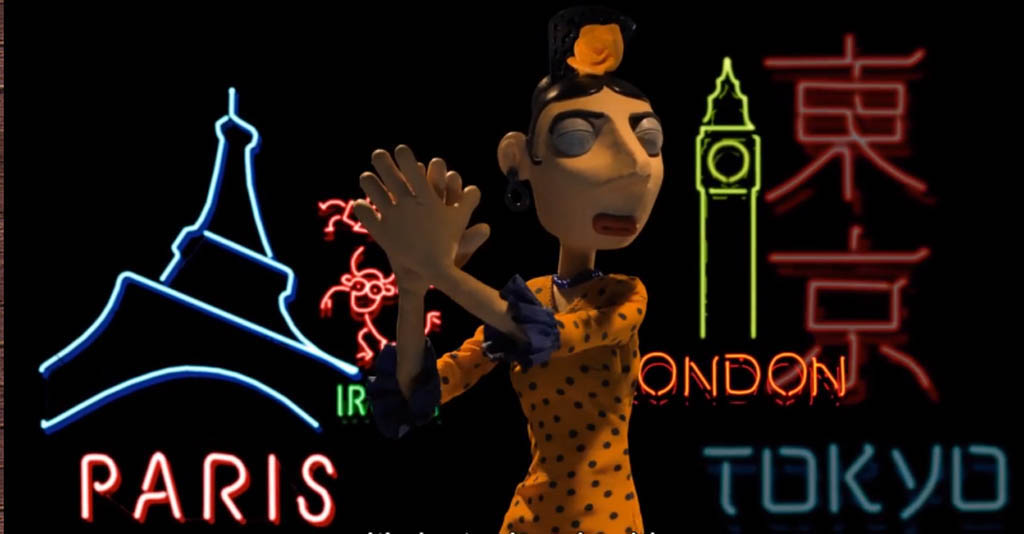
Damian is possessed. He needs an exorcist! Scene from the Spanish claymation film Possessed (Pos eso) one of sveral animated films being shown at the 2015 Fantasia International Film Festival in Montreal.
Damian is possessed. He needs an exorcist! Scene from the Spanish claymation film Possessed (Pos eso) one of several animated films being shown at the 2015 Fantasia International Film Festival in Montreal.

Possessed (Pos eso) is an irreverent claymation horror comedy from Spain. It spoofs The Exorcist, The Omen, Poltergeist and more; skewers hypocrisy, religion, celebrity culture, gossip tabloids and trash TV. It has amazingly detailed sets.

It includes the “you lookin’ at me?” speech from Taxi Driver, a reference to The Day The Earth Stood Still, flowers like the ones in Little Shop of Horrors, a musical duel in the Underworld and the sight of Exorcism For Dummies in a priest’s briefcase. It’s the goriest, most splattery animated film I’ve ever seen. All these things make it quite appropriate as the almost-midnight movie for Friday, July 24 at the 2015 Fantasia International Film Festival.

Trini is a world-famous flamenco dancer, with a dead husband and a possessed son, in the Spanish animated film Possessed (Pos eso).

Little Damian is the son of renowned flamenco dancer Trini and beloved bullfighter Gregorio. (The story of this couple sounded so familiar – it reminded me of a docudrama about a real-life dancer that I saw years ago.) Damian has been acting quite strange since his father died in a freak (cough, cough) accident. He does the old head-spinning thing from The Exorcist; the shrink who comes to analyze him is sent away totally befuddled. His mother and grandmother don’t know what to do.

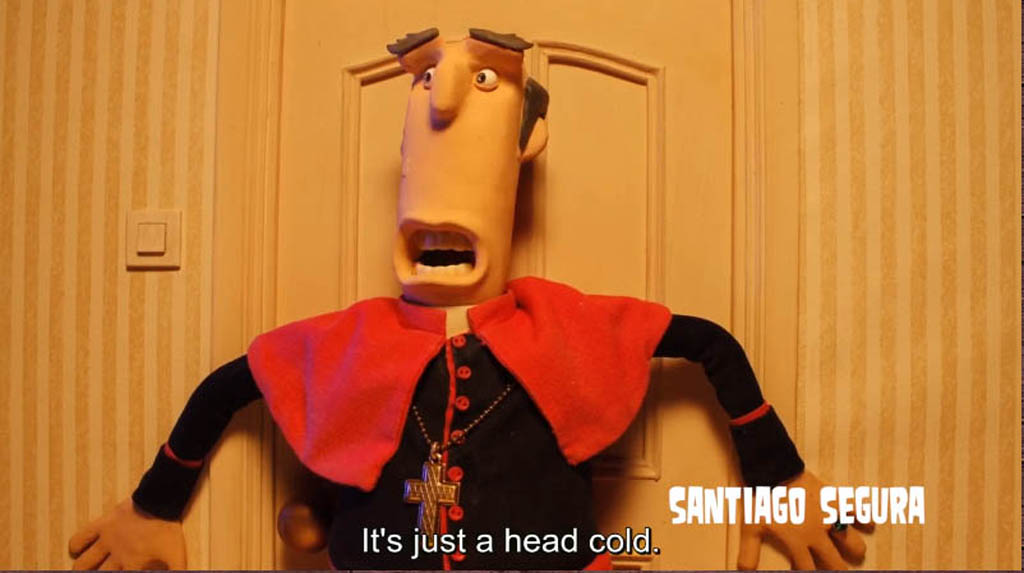
A visit to a gypsy provides the answer – Damien is possessed, but Father Lenin has the power to free him. First they will have to find him, though – Father Lenin has lost his faith, left the church and is hanging out under a bridge. His horrible boss, the  bishop (who has the voice of Santiago Segura)  is the man reason for that.

Actor Santaigo Segura, who plays a corrupt cop in the Torrente film series, has all the evil roles wrapped up in the animated film Possessed (Pos eso). He plays an evil and corrupt bishop, the possessed boy Damian and Satan himself.

Many people are thanked in the credits of Possessed; they include animator Bill Plympton, musician Slash, and the band Metallica.The film is dedicated to the memory of Ray Harryhausen, master of stop-motion animation and to flamenco guitarist Paco de Lucia. How often do those two names appear together?

The Spanish animated film Possessed (Pos eso) includes a musical faceoff in hell - the devil and his drumsticks vs Trini's feet, stomping out flamenco rhythms. Trini is driven by the love of a mother and powered by the elusive duende.
The Spanish animated film Possessed (Pos eso) includes a musical faceoff in hell – the devil and his drumsticks vs Trini’s feet, stomping out flamenco rhythms. Trini is driven by the love of a mother and powered by the elusive duende.

Possessed (Pos eso)
Director: Sam
Screenplay: Rubén Ontiveros, Sam
Voice cast: Anabel Alonso, Josema Yuste, Santiago Segura, Nacho Vigalondo
Company: FilmSharks

Friday, July 24, 2015, 11:55 p.m., J.A. de Sève Theatre, in the J.W. McConnell Building of Concordia University, 1400 de Maisonneuve Blvd. W.


The Fantasia International Film Festival runs from July 14-Aug. 4, 2015. Read more about the festival at fantasiafestival.com
 

Fantasia 2015: Review of Hong Kong badminton film Full Strike

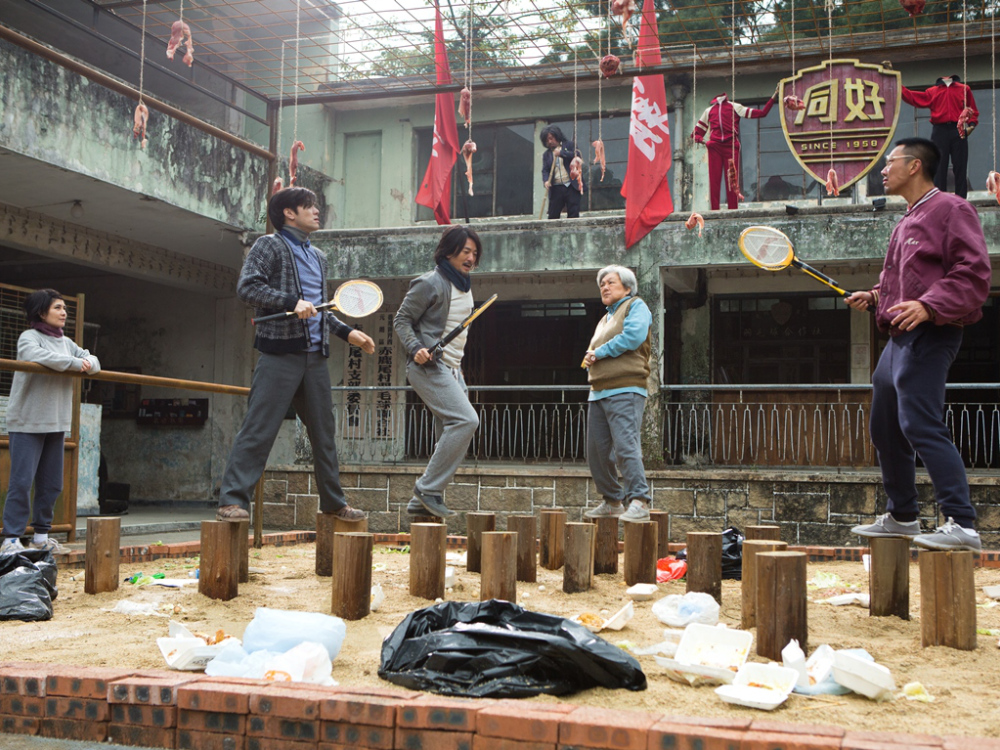
Badminton training in the Hong Kong sports comedy Full Strike, one of the films being shown at the 2015 Fantasia International Film Festival.

Full Strike is a Hong Kong badminton comedy. There are many laughs in it, but for the first 30 minutes or so, the colour palette is a dark and depressing blue-green, here are some miserable moments and lots of yelling. Don’t be discouraged, things do get brighter!

Josie Ho plays Ng Kau Sau, also known as “Beast Ng” a former badminton champion who lost her status because of her bad temper. Now she’s miserable and constantly being criticized by her family members, who call her lazy and useless.

One dark and stormy night she sees a meteor (or something) shaped like a badminton birdie. An alien (or possibly a homeless man dressed in plastic bags) chases her onto an abandoned badminton court. There are some scary guys lurking in the shadows, too.

She phones her brother for help. Next thing you know, we’re at the police station. Turns out the building she was in belongs to her brother and uncle and they’ve rented it to three vicious criminals, who have just finished 10-year sentences for robbing a jewelry store. They will open the One Spirit Badminton Club. Their leader is Lau Dan (Ekin Cheng).

The criminals swear they are turning over a new leaf. Beast’s cousin, Suck Nipple Ng, who also plays badminton, and has returned to Hong Kong after 30 years in North America, thinks that’s just a story and that they plan to steal antiques from his nearby home. He wants Ng to sign up for lessons at the club so she can spy on them. This puts her in an awkward spot. She wants to take up the sport again, because the birdie meteor and the alien feel like a message from above that she should do so. But are those crooks still dangerous, or are they sincere about reforming? There’s no doubt that her cousin and his badminton-team minions are totally obnoxious people. Whose side should she be on?

Saying too much more about the plot would be going into spoiler territory, but you can expect slow-mo walking, training montages that include using knives, cleavers and meat, besides the usual racquets, to increase strength and achieve good form, philosophical speeches about “ebb and flow,” the declaration that “if you’re not good at something, the more people laugh at you the more you have to do it,” AND prodigious projectile vomiting from the drunken-master Champion Chik.

All that training has a purpose – to win the Fantastic 5-Asia Badminton Tournament, to prove to everyone (including themselves) that the former crooks have now become athletes.

Anyone who watched Robbery and Kung Fu Killer at Fantasia might recognize a face and a place in Full Strike. Eric Kwok, who played the Big Boss in Robbery, is Suck Nipple Ng’s badminton coach. Suck Nipple Ng has a garden full of large, antique statues. (I think some of the statues represent the animals of the Chinese zodiac.) That same garden appears as a meeting place in Kung Fu Killer.

FULL STRIKE
Hong Kong, 2015, 108 min., DCP, Cantonese, with English and Chinese subtitles
Director: Derek Kwok, Henri Wong
Screenplay: Derek Kwok, Story Joe Chien, Yim Ka-Yee, Yan Pak-Wing
Cast: Josie Ho, Ekin Cheng, Ronald Cheng, Andew Lam, Susan Shaw
Company: Distribution Workshop

Friday, July 24, 2015, 6:20 p.m.
Concordia Hall Theatre, 1455 de Maisonneuve Blvd. W.


The Fantasia International Film Festival runs from July 14-Aug. 4, 2015. Read more about the festival at fantasiafestival.com

 

Fantasia 2015 Review: Roar is worth seeing for its “are you serious?” factor

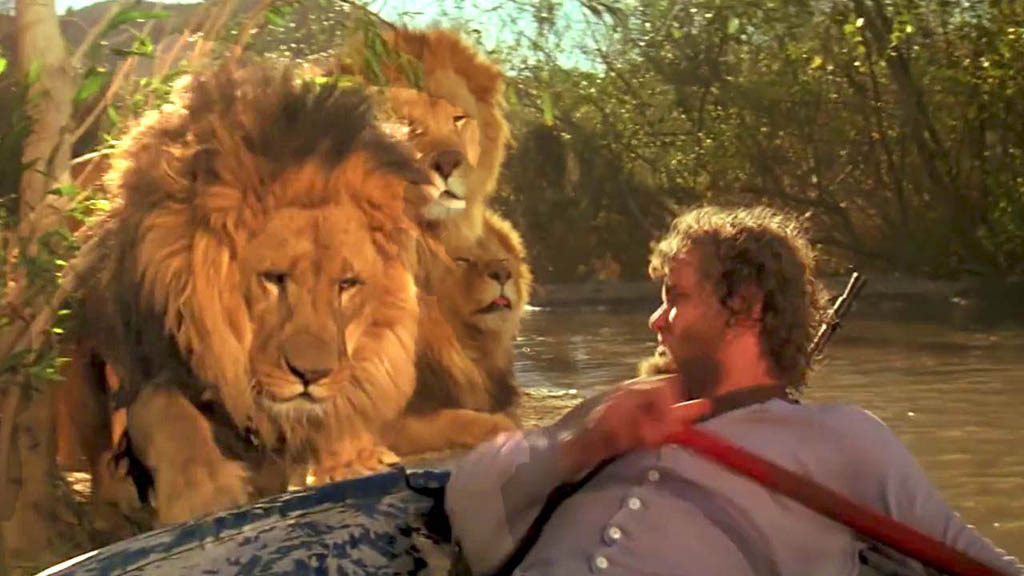
"Time for lunch yet?" Just some of thre lions to be seen in the re-released 1981 film Roar, which was shown at the 2015 Fantasia International Film Festival in Montreal.
“Time for lunch yet?” Just some of the lions to be seen in the re-released 1981 film Roar, which was shown at the 2015 Fantasia International Film Festival in Montreal.

Roar is not one of those “so bad that it’s good” films. No, it’s a “WHAT were they thinking?” kind of film.

If you enjoy looking at large cats, like lions, tigers, panthers, cougars, cheetahs, and jaguars, (and the occasional elephant, added for variety, I guess) as they roar, run, play, fight, lounge around, “talk,” yawn or sleep, then Roar is for you. There are more than 150 big cats in the film – you could probably spend several weeks, and thousands of dollars, on a safari and not see so many animals. Don’t expect much of a plot, though, much less a “narrative arc.” As if.

Roar was made by Noel Marshall, who was executive producer of The Exorcist. I guess he made lots of money from that, because he and his wife Tippi Hendren (famous for her role in Alfred Hitchcock’s film The Birds) were able to buy all those cats in the film. Marshall is in Roar, as is Hendren, her daughter Melanie Griffith, and his sons, John and Jerry. The film was released in 1981, though few people saw it then. It has since taken on new life after being re-released by Drafthouse Films.

The story is set in in Africa, though it was filmed in California. Marshall plays Hank, some kind of research guy, who is studying wild cats – and not from a distance, either. In early scenes we see lots of cats, making themselves at home inside and outside his sprawling house, and frightening some unexpected visitors. Three years earlier, when he had received a grant for his research, he abruptly flew to Africa, leaving wife and children behind. Now they are coming for a visit. (They conveniently share this information for our benefit. Paraphrase: “Gee, Dad sure took off fast after he got that grant! It’s three years since we’ve seen him now.”)

Hank knows that they’re coming too, but for whatever reason, he doesn’t head to the airport until long after their arrival. Meanwhile, tired of waiting around, they have taken a bus, and arrive at his place before he even reaches the airport (such as it is).

"Hey, wait for us!" Hank (Noel Marshall) thinks that he's going somewhere in that boat, but the lions have another idea, in a scene from the 1981 film Roar.
“Hey, wait for us!” Hank (Noel Marshall) thinks that he’s going somewhere in that boat, but the lions have another idea, in a scene from the 1981 film Roar.

Somehow, they don’t notice all the cats right away. . .but then they DO! For the next hour or so, wife and children will scream, wave their arms around and run away from the cats, who will chase them, of course. The thing is, Noah lives (all by himself, up until now) in a house with several storeys and many rooms, which permits LOTS of running. Upstairs, downstairs, from one room to another; there are more doors slamming than in your average French farce. And almost every room seems to have multiple doors, too.

Then there’s the roof. . . run to the roof, find more cats up there, run back downstairs, or jump off or fall off that roof, into the river. . .and more than once, too! When they aren’t running, the humans are trying to hide – in cupboards, in closets, in metal lockers, in rain barrels, even in the fridge – after taking the food out first.

If they want to come in, I don't think that the door is going to stop them. Scene from the 1981 film Roar.
If they want to come in, I don’t think that the door is going to stop them. Scene from the 1981 film Roar.

Meanwhile, between bad luck and his own stupid behaviour, things are not going well for Hank and his friend Mativo (Kyalo Mativo) either. Tigers climb into their boat (made me think of Life of Pi!) which makes it capsize. Then an elephant tears the boat to pieces, because. . . he felt like it, I guess. Hank and Mativo borrow bicycles, but wreck them pretty quickly. Hank somehow convinces a man to lend him a car, but he wrecks a tire by driving too fast. Almost ends up going off a cliff! The man is a menace, and an idiot, too!

There’s a strange character who might be satirical, or maybe not? He’s a bad-tempered member of the grant committee, who makes a visit to the compound and does not like what he sees. This guy decides that the big cats are dangerous and should all be shot. Not sent somewhere else, or even put in cages, but just shot. Boom! Dead! Our villain, obviously. There’s something weird about his gruff voice, with its hard-to-place accent, and it also sounds like it was added later, in post-production. If you’ve ever watched a badly dubbed foreign film, you have probably heard this voice before, or one very much like it.

The yelling and screaming and running was exhausting to watch and made Roar feel much longer than its 102 minutes. Ten or even 20 minutes could easily have been lopped off, I’d say. But maybe it qualifies as an “historical document” now. Roar would make excellent home viewing for people who enjoy sketching. Pause at almost any point, and you would have a selection of big cats in a variety of positions to choose from. Roar was an interesting experience – I’m not sorry that I watched it once, but I wouldn’t watch it again, except to do some sketching myself.

Family portrait: Husband, wife, lion, in a scene from the 1981 ilm Roar.s
Family portrait: Husband, wife, lion, in a scene from the 1981 film Roar.

ROAR
Director: Noel Marshall
Screenplay: Noel Marshall
Cast: Noel Marshall, Tippi Hedren, Melanie Griffith, John Marshall, Jerry Marshall, Kyalo Mativo
Company: Olive Films

Seen at the 2015 Fantasia film Festival in Montreal, Quebec, Canada

The Fantasia International Film Festival runs from July 14-Aug. 4, 2015. Read more about the festival at fantasiafestival.com
 

Fantasia 2015 Review: Korean police thriller A Hard Day

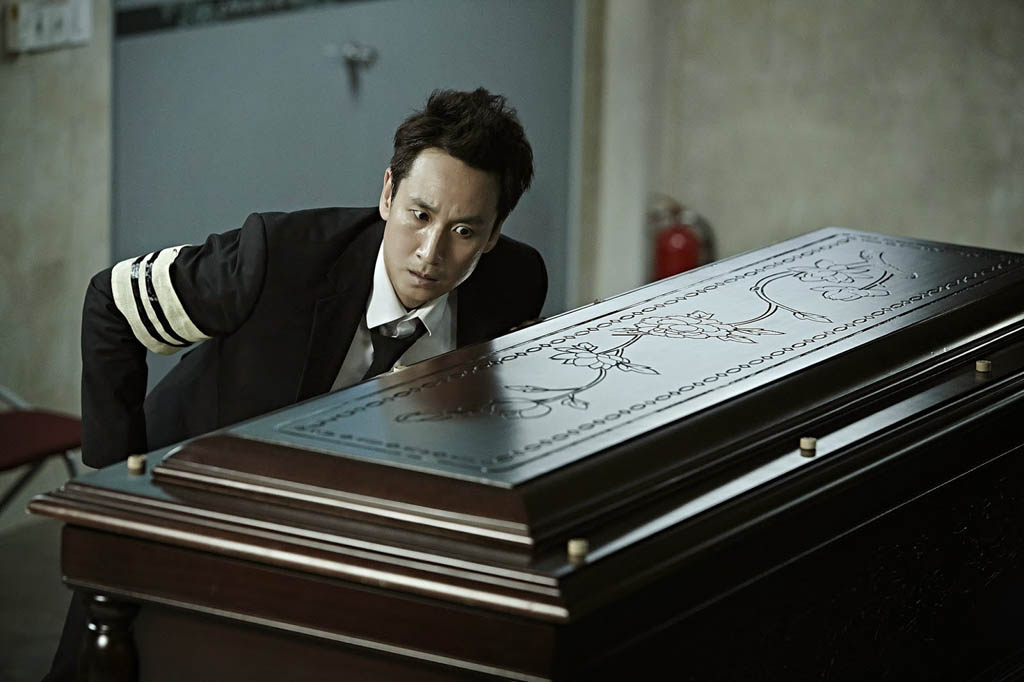
Homicide detective Ko (Lee Sun-kyun) is startled by the unexpected sounds coming from his mother's coffin, in the Korean film A Hard Day.
Homicide detective Ko (Lee Sun-kyun) is startled by the unexpected sounds coming from his mother’s coffin, in the Korean film A Hard Day.

As a policeman, Ko Gun-su (Lee Sun-kyun) ought to know that talking on the phone while driving is unwise. But the calls keep coming. His sister wants to know why he bolted from the funeral-home visitation for their mother, and when is he coming back, anyway? His very young daughter wants cake.

Meanwhile, his fellow (crooked) cops want to know if he will make it back to the station house before the guys from Internal Affairs get there. There are incriminating items in his locked desk.

Ko is really flustered, and the road is dark. He almost hits a dog. Before he recovers from that scare, he hits something else – a man this time. And that man is now dead. In a panic, he throws the body in the trunk. He does not notice the surveillance camera on a nearby post. He does not get to the office before Internal Affairs.

Ko and his fellow officers, including his chief, have been accepting bribes, and now Internal Affairs has proof. That’s bad enough, but now Ko is getting calls on his office phone and his cellphone, from someone who seems to know way too much about his unfortunate accident. And that someone wants to know where the body is.

In the Korean film A Hard Day, Detective Ko gets call after call - his phone won't stop ringing,
In the Korean film A Hard Day, Detective Ko gets call after call – his phone won’t stop ringing,

A Hard Day? You’d better believe it! The film’s title is very well chosen. Ko might not seem like a sympathetic figure at first, but he’s an angel compared to his monstrous mystery caller.

While Ko is often tongue-tied when it comes to explaining himself, he is quite wily and inventive. He won’t be giving up without a fight.
A Hard Day is full of twists, turns, high tension and dark humour. It was a big hit at the Directors Fortnight at Cannes 2014, and has won eight awards in South Korea alone. I enjoyed reading reviews from Cannes so much that I wrote a blog post back then, expressing hope that the film would come to Montreal as soon as possible. I didn’t realize that it would take more than one year.

A HARD DAY
Directed by Kim Seong-hun, with Lee Sun-kyun, Cho Jin-woong, Shin Jung-geun, Jung Man-sik.
Monday, July 20, 2015, 17:15, Concordia Hall Theatre, 1455 de Maisonneuve Blvd. W
Monday, Aug. 3, 2015, 12:30, J.A. de Sève Theatre, 1400 de Maisonneuve Blvd. W.

The Fantasia International Film Festival runs from July 14-Aug. 4, 2015. Read more about the festival at fantasiafestival.com


Fantasia 2015 Review: The Arti: The Adventure Begins

The Arti-C, centre, a wood-and-metal mechanical man, is the title character of The Arti: The Adventure Begins, an animated film from Taiwan that's being shown at the 2015 Fantasia International Film Festival. On the left is Mo, on the right is his sister Tong. The Arti-C was invented by their late father.
The Arti-C, centre, a wood-and-metal mechanical man, is the title character of The Arti: The Adventure Begins, an animated film from Taiwan that’s being shown at the 2015 Fantasia International Film Festival. On the left is Mo, on the right is his sister Tong. The Arti-C was invented by their late father.

Martial-arts fighters with lightning moves, the clang of swords, the whoosh of garments, special effects and. . . puppets?

Does that ring a bell? Fantasia International Film Festival veterans might remember a wonderful gem from Taiwan called The Legend of the Sacred Stone. For me, it was one of the most impressive films at Fantasia in 2000. Well, the organization behind that film, the Huang family’s Pili Puppetry, is back at Fantasia with The Arti: The Adventure Begins. (奇人密碼-古羅布之謎)

The Arti of the title is actually Arti-C, a wood and metal mechanical man with movable eyebrows and Astroboy ankles. He is like a sibling and a servant for brother-sister orphans Zhang Mo and Zhang Tong, and he’s controlled by a sort of wearable console on Mo’s arm.

Zhang Mo wears the controls for wood-and-metal mechanical man The Arti-C on his left arm.

The film is set in ancient China and contains many familiar themes, in addition to the orphan one. For example: being outcasts/misunderstood while carrying on a father’s work, a desire to restore the family honour and that father’s reputation, going on an adventure to unfamiliar and dangerous lands. The younger sister, Tong, is the “feisty female character” who is quite handy with weapons herself. Mo looks a bit like a manga character, with his hair falling fashionably in his face.

The Arti-C runs on a mysterious power called The Origin, which seems to be petering out. So Mo, Tong and the Arti-C go searching for The Origin’s source. While they are still at the local market, which seems like quite a multinational sort of place, a red-haired woman named Kameedia just blatantly invites herself along on their adventure.

Mechanical musicians in The Arti: The Adventure Begins, an animated film from Taiwan thats on the program of the 2015 Fantasia International Film Festival.

In the course of that adventure, they will cross a desert, ride giants camels and insects, get caught in a sandstorm, visit the luxurious palace of the King of Loulan, enter the Arti-C in a martial-arts tournament against many impressive foes, and meet several scary creatures, human and otherwise.

There’s an environmental message, and a “why can’t we all get along” one, too. Before I read any background material about the film, I could tell that Avatar was one of its inspirations.

Stick around when the credits start to roll and you’ll see the creation of the puppets, the sets (some with green-screen backdrops), scenes being shot, and some of the many, many people involved in making the film. The Arti: The Adventure Begins seems to indicate the possibilities of sequels if this first film is popular enough.

The elaborate details of The Arti: The Adventure Begins are quite amazing. Here is a close-up look at a sword.

BTW and FYI: I was curious about the history of mechanical men. While researching that, I came across an interesting article on a Stanford University web site. The title is Man-machine and Artificial Intelligence and it’s written by Bruce Mazlish. It’s adapted from Mazlish’s own book, The Fourth Discontinuity: The Co-evolution of Humans and Machines, Yale University Press, 1993.

Here’s a paragraph from that article: “The wealth of mechanical toys cited in ancient China is awesome. In addition to the flying machine mentioned earlier, mechanized doves and angels, fish, and dragons abounded; automated cup-bearers and wine-pourers were prominent; and hydraulically-moved boats, carrying figures of singing girls, animals, and men in motion are said to have amused the emperors. Of particular interest are the chariots that moved of themselves-auto-mobiles-attributed by legend to the scientist Mo Ti in the fourth century BC. Were they actually wheelbarrows, or “pedicarts”? A mechanical man of jade is reported, as well as all kinds of wooden dolls, gold Buddhist statues, and puppet orchestras.”

Is the Mo Ti mentioned here the same Mo of the film? Maybe not, but maybe the name was inspired by him?

The Arti: The Adventure Begins, will be shown once, on Sunday, July 19, 2015, at 13:00 (1 p.m.) in the Hall Theatre, 1455 de Maisonneuve Blvd. W., in downtown Montreal. The monsters aren’t so scary that you couldn’t take your children!

The Arti: The Adventure Begins
Sci-Fi / Fantasy/ Animation, Taiwan, 2015,102 min, DCP, Mandarin, with English subtitles
Director: Huang Wen Chang
Screenplay: Huang Liang Hsun
Voice cast: Huang Wen Tze, Ricky Hsiao, A-Lin
Company: Golden Network

The Fantasia International Film Festival runs from July 14-Aug. 4, 2015. Read more about the festival at fantasiafestival.com/2015/

2015 Fantasia Film Festival Review: Hong Kong film Robbery

Derek Tsang, left, and J. Arie  in a scene from the Hong Kong film Robbery. They play convenience-store employees whose lives are in danger when they are help hostage in the store. Robbery will be shown at the 2015 edition of the Fantasia International Film Festival in Montreal.
Derek Tsang, left, and J. Arie in a scene from the Hong Kong film Robbery. They play convenience-store employees whose lives are in danger when they are help hostage in the store. Robbery will be shown at the 2015 edition of the Fantasia International Film Festival in Montreal.

The Hong Kong film Robbery will make you think more than twice about a late-night visits to the dep (or convenience store, for you non-Montrealers).

Robbery is a very black comedy, that’s to say, many parts are hilarious, but several people do end up dead. I was expecting the laughs, but not the deaths. Surprise!

In an early scene, Robbery’s main character, Lau Kin Ping, (played by Derek Tsang, 曾國祥) seems like a slacker, and a stoned one at that, but you can’t blame him much; he’s just one more poor guy in the cutthroat world of Hong Kong. After watching Bruce Lee’s advice to “Be like water, my friend,” Lau remarks that he’s 32, the same age the martial-arts actor was when he died, and adds: “I’m just a joke.”

Late one aimless night, Ping impulsively applies for a job in a 24-hour convenience store; he’s hired right away. The store is called Exceed. You know, as in “excessive.” This name is no accident, my friends.

The storeowner is played by Lam Suet (林雪). Anyone who’s seen more than a handful of HK films will probably know his face. He usually plays gangsters, and he often plays them for director Johnnie To. As the boss he’s quite cranky and insists that his employees push sell that night’s special, a $5 package of Pop Rocks. (Don’t freak out, one Hong Kong dollar is only worth 82 Canadian cents. Pretty good deal, actually!)

Ping’s co-worker, Mabel, is played by pop singer J. Arie. Ping is embarrassed because she’s better than he is at scanning etc., and she’s kind of smug about it, too, despite this, they soon establish a rapport.

Ping barely has time to settle in before his first customer arrives. One thing leads to another, very smoothly too, and before you know it, there are three unstable, unpredictable criminals, with assorted weapons, in the store. They are NOT working together, either. Far from it. Ping, Mabel, their boss and one unlucky customer are trapped in the store with these dangerous loons. Hmmmm, I wonder if they use the expression “Murphys’s Law: in Hong Kong?

Every time a new customer walks in, crooks and hostages try to act perfectly, excruciatingly, normal until that customer buys something and leaves. Lots of laughs and tension in those episodes. The film could have ended after the arrival of several police officers – but then it would have been a short, not a feature.

Derek Tsang, left,  as a newly hired convenience-store clerk and Lam Suet as his cranky boss in a scene from the Hong Kong film Robbery. Robbery will be shown at the 2015 edition of the Fantasia International Film Festival in Montreal.
Derek Tsang, left, as a newly hired convenience-store clerk and Lam Suet as his cranky boss in a scene from the Hong Kong film Robbery. Robbery will be shown at the 2015 edition of the Fantasia International Film Festival in Montreal.

There’s lots to like in Robbery – writer/director Fire Lee (aka LEE Ka Wing, or Ka Wing LEE) has fun with film clichés like macho posturing, super-observant people: training montages; walking in slow-motion, defusing a bomb, while seconds tick by on a conveniently large display; people pretending to be someone they’re not, and/or being perceived as someone they’re not; the old Mexican standoff (people standing in a circle pointing guns at each other), etc. Several flashbacks put a whole new light on the characters. And then there are the platitudes like this one: “Pain is good. . . pain is a feeling, it lets humans know they are alive.” Not to mention: “But you have ME!”

Quibbles: One female star has to wear a skimpy outfit in her scenes at the store, and perform an amateur strip tease, along with other humiliations. In regard to the outfit, writer/director Fire Lee might claim that he was showing: 1) how people judge a book by its cover; 2) the person who forced her to do these things is a very evil dude; 3) that he was mocking a cliché. Maybe, but to me this is just pandering to a segment of the male audience. Before anyone asks if sex is bad while deaths are OK, I’d say that the film could have been quite funny without either.

Somewhat random info and thoughts connected to Robbery: Fire Lee wrote the script for revenge flick Sasori, which was shown at Fantasia in 2008.
Actor/director Derek Tsang is the son of actor Eric Tsang. Derek Tsang is 35 now, and might have been 34 when Robbery was made, though he looks much younger. Derek Tsang went to the University of Toronto; he used to live in Vancouver.

J. Arie’s real name is Rachel Lui. She’s an accomplished piano player who also has a degree in law (to make her traditional parents happy.)
The berets that the Hong Kong police wear look quite dashing. Are their shirts really so form-fitting?

Robbery will be shown at the Fantasia International Film Festival, which runs from July 14 until Aug. 4, 2015.

Read more about it on Robbery’s page at the Fantasia web site.

Robbery: Written and directed by Fire Lee ( Ka Wing Lee)
Starring: Derek Tsang, J.Arie, Lam Suet, Feng Tsui Fan, Philip Keung, Anita Chui, Eric Kwok, Aaron Chow, Edward Ma
In Cantonese with English subtitles
90 minutes long

Saturday, July 18, 2015 at 18:45, and Tuesday, July 28, 2015, at 15:10, in the J.A. de Sève Theatre, 1400 de Maisonneuve Blvd. W.


Korean romantic comedy Catch Me (Steal My Heart) puts more emphasis on comedy than romance

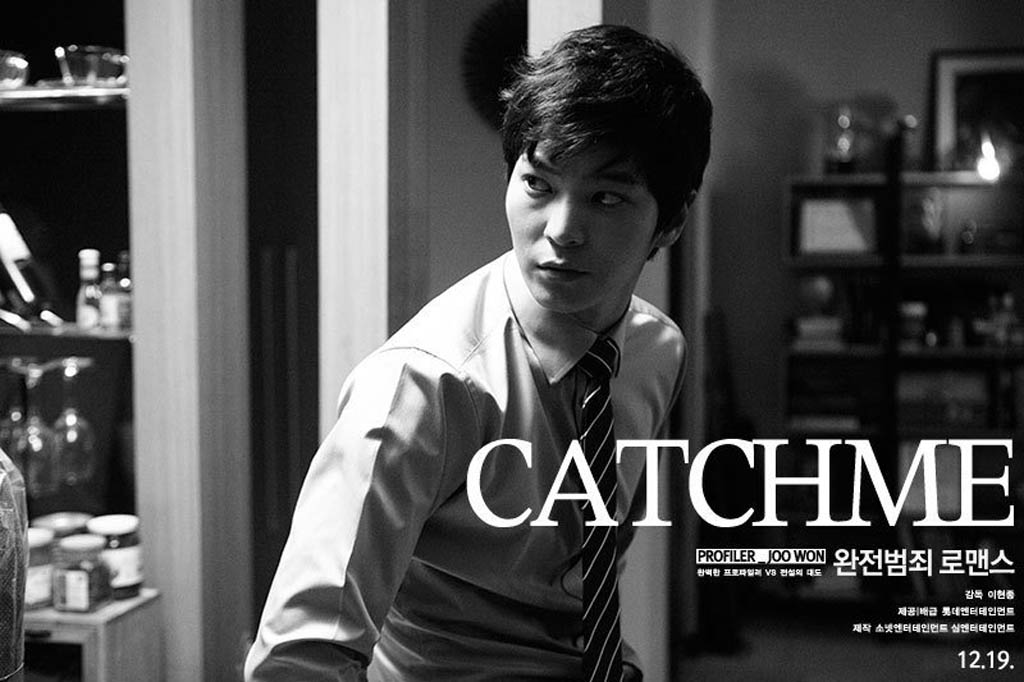
Joo Won in the Korean romantic comedy Catch Me (Steal My Heart).

The main characters in Catch Me (Steal My Heart) are Lee Ho-tae, and Yoon Jin-sook.
Lee is a smug police profiler, who sweeps into rooms and immediately starts pontificating. We see snippets of his dramatic lectures, when he tells his fellow cops that crimials are heartless monsters. His boss seems to appreciate him, as do his immediate co-workers, though there’s a rivalry happening with some other cops in the division. Lee is full of himself, for sure, but he isn’t evil, and since he’s played by the incredibly charming Joo Won, how could anyone possibly dislike him? Seriously. I dare you to even try it! (More about Joo Won later.) Those who are already fans might like to know that he sings a bit in this film, too.

Lee and his men have been trying to catch a serial killer for ages. Mere seconds before they move in to arrest him, their suspect is knocked over, not once, but twice (!) in a hit-and-run accident. (He survives, BTW.) Lee is mightily annoyed by this. His professional pride is hurt, and his boss teases him that the accident makes the unknown driver the real hero, instead of Lee, even though vehicular-almost-homicide is usually frowned upon.

Lee vows to find the driver, and his search leads him to the rather fancy home of Yoon Jin-sook. When her beauty-treatment mask falls off, he realizes that she’s the former girlfriend he has not seen in 10 years. Surprisingly, she does not resist arrest; she’s quite willing to go to the police station with him. They get into his car, he starts to drive there. . . but between one thing and another, they do not go to the station, he does not turn her over to his colleagues. (The police HQ looks really familiar to me. I’m wondering it that’s because it appears in many films, or did I possibly walk by it when I was in Seoul?)

Lee gives Yoon Jin-sook (remarkably chaste) shelter in his apartment while he tries to figure out what to do next. (Yoon Jin-sook is played by Kim Ah-joong, who is probably most famous for her role in 200 Pounds Beauty. In that film she plays a talented backup singer who embarks on a severe diet/fitness regimen and has lots and lots of plastic surgery to impress some guy. . .or to prove that he’s a shallow hypocrite. Possibly both? It’s been a few years since I saw it. Kim Ah-joong was also in the TV dramas Punch, Sign and The Accidental Couple.)

Back to the plot: When he returns to work, Lee is asked why he hasn’t brought the driver in yet; he also sees surveillance footage that suggests Yoon Jin-sook has committed other crimes – she is a suspect in a series of big-time art thefts. (Strange that she is so clumsy behind the wheel, in the kitchen and when handling Lee’s expensive action figures – dolls by another name! – yet she can be so light-fingered with precious vases, etc. Well, that’s comedy for you. Nobody slips on any banana peels in this film, though a few scenes come quite close.)

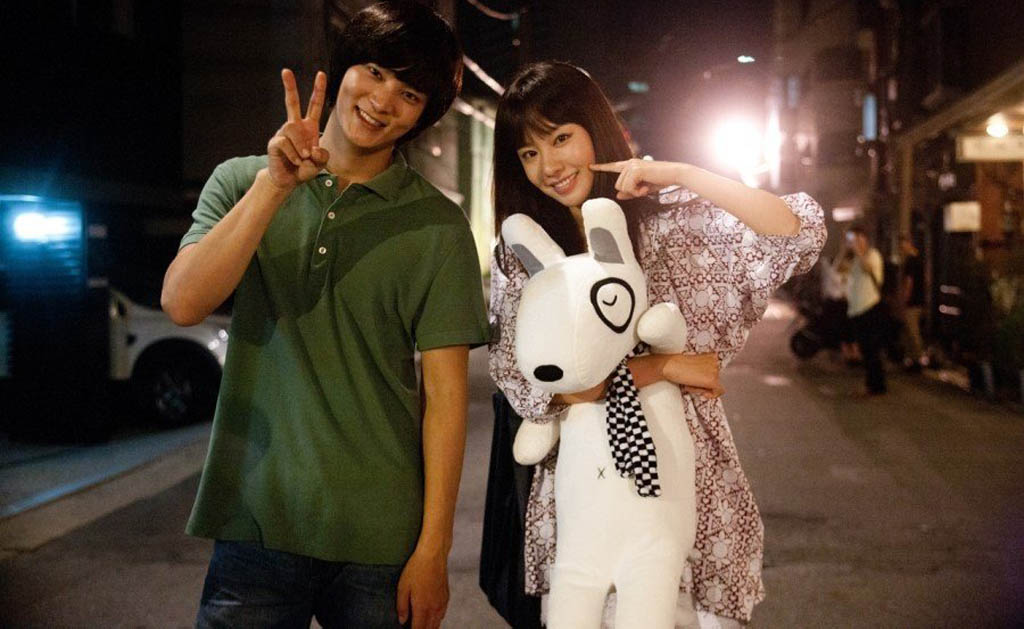
Joo Won, left, and Kim Ah-joong examine "love locks" in the Korean romantic comedy Catch Me (Steal My Heart).
Joo Won, left, and Kim Ah-joong examine “love locks” in the Korean romantic comedy Catch Me (Steal My Heart).

Back at Lee’s apartment, the two get reacquainted, and, through flashbacks, we learn, among other things, how they met, why Yoon did not show up for their 100-days-of-being-a-couple anniversary date (fans of Korean films and K-dramas will understand the importance of the 100-day-anniversary) and why Lee, an art student, decided to become a police officer. Most of these flashbacks are funny. Not all of them, though.

Awww! Are they cute or what? Joo Won, left, and Kim Ah-joong in a flashback scene in the Korean romantic comedy Catch Me (Steal My Heart).

So, a few more words about actor Joo Won. He has lots of fans, all over the world and all over the Internet. He was in many popular TV dramas, including Cantabile Tomorrow, Good Doctor, 7th Grade Civil Servant, Bridal Mask, Ojakgyo Family, and King of Baking, Kim Takgu.

While watching the first few minutes of Catch Me I was reminded of my fave, Kang Dong-won. It’s far from a “separated at birth” situation, and the similarity is easier to see when his face is in motion (especially his eyes) as opposed to frozen in a photo. When I Googled Joo Won I realized that this resemblance was a popular discussion topic, and that I had even read about it before. I just hadn’t remembered Joo Won’s name since I hadn’t seen any of his work yet.

In most of his scenes in the Korean romantic comedy Catch Me (Steal My Heart),  actor Joo Won wears casual clothes or a nice suit, but here he wears the police uniform of his charcacter Lee Ho-tae. I can imagine all his fan girls saying "Oppa! Arrest me now!"
In most of his scenes in the Korean romantic comedy Catch Me (Steal My Heart), actor Joo Won wears casual clothes or a nice suit, but here he wears the police uniform of his charcacter Lee Ho-tae. I can imagine all his fan girls saying “Oppa! Arrest me now!”

https://www.facebook.com/events/374012026140914/
As for the film in general, if you Google Catch Me (Steal My Heart) you can easily find some negative reviews. And I’ll grant you, the plot is pretty feeble (though no worse than many others) but the film is still good for many hearty laughs, especially if you watch it with a group. I saw it at a free public screening, presented by Ciné-Asie, at MAI on Jeanne-Mance St. The audience included males, females, young, old, Asian and non-Asian and everybody there seemed to be having a very good time.

The evening got off to a great start with several wonderful tunes from singer Griot, and guitarist Yellow Beats. While they played together on this occasion, they also have separate musical identities. The songs they played reminded me of the K-indie music I heard in cafés during my South Korean vacation. That was no accident, apparently they worked closely with the Ciné-Asie staff to choose just the right tunes to share with us. Their efforts were rewarded with very enthusisatic applause. I certainly hope to see and hear them again.

While the date has not been chosen yet, Ciné-Asie will probably show the very popular South Korean historical costume drama The Face Reader in August. Song Kang-ho (송강호) plays the face reader of the title, Kim Nae-kyeong, a man who can “read” a face the way others read a book. He sees through any kind of fakery to a person’s true character (clever, stupid, honest, corrupt, humble or haughty) and, by extrapolation, predict his/her future actions. Because of this talent, Kim finds himself in the middle of dangerous court intrigue.

You might know Song Kang-ho from his work in Snowpiercer, The Attorney, Secret Reunion, The Show Must Go On, The Host, Memories of Murder, Sympathy for Mr. Vengeance, Joint Security Area, The Foul King, Shiri, The Quiet Family. And that’s just a sampling, not his entire output! (Note to self: Write reviews for some of those films. Share links to reviews that I wrote a long time ago for the Montreal Gazette.)

Consider “liking” Ciné Asie’s Montreal Monthly Asian Film Screening (MAFS) Facebook page so you’ll be notified when a date is chosen for The Face Reader. The room has a limited seating capacity, so people will be asked to RSVP via email. (Sadly, the “monthly” part of the page’s name is no longer valid. But we can always hope for a change in the future, right?)
BTW: Ciné-Asie also organizes the AmérAsia Montreal Asian Film Festival (www.amerasiafestival.com), Korean Film Festival in Canada (www.koreanfilm.ca).


See Guy Maddin’s surreal documentary film My Winnipeg, Saturday afternoon at the Cinémathèque Québécoise

Guy Maddin's film My Winnipeg includes a surreal story about racehorses who were trapped in a river when they fled a fire in stable. The horses remained there, frozen in place, until spring arrived. The frozen horses even became a local tourist attraction!
Guy Maddin’s film My Winnipeg includes a weird tale about racehorses who were trapped in a river when they fled a stable fire. The horses remained there, frozen in place, until spring arrived. The frozen horses even became a local tourist attraction!

Montrealers! You can experience the wonderful film My Winnipeg this afternoon, for the first time or as a repeat visit, at the Cinémathèque Québécoise. And I strongly suggest that you do just that!

With My Winnipeg, director Guy Maddin made something that’s both very intriguing and very hard to classify. That’s par for the course with Maddin, though. (The first Maddin film I saw was Tales of the Gimli Hospital. So strange! I did not write about it at the time. Maybe some day.)

My Winnipeg combines elements of history, myth, fantasy, personal memoir and docu-drama. Even with that description, I’m probably leaving many things out, since it’s been a few years since I saw this 2007 film. Watching it was like being a guest in someone else’s fascinating, foggy dream. It was mesmerizing and occasionally hilarious, though Maddins delivery remains deadpan throughout.

Among the things I remember: Maddin talks about insomnia, his childhood home, a large network of secret alleyways that covers the city, without appearing on any maps, the brutally cold winter that saw race horses fleeing a burning barn only to die in the river, where they remained, frozen stiff, until spring came. Walking onto the ice to “visit” the horses became a popular thing to do.

Winnipeg is the capitol of Manitoba; Maddin takes us to the provincial legislature where he talks about Freemasons and examines the alleged symbolism and significance of the building’s architectural elements and the statue of the Golden Boy on the building’s dome.

In scenes set in Maddin’s childhood home (over a beauty parlour) elderly U.S. actress Ann Savage portrays his mother. Many early viewers thought that she WAS his mother. I believe that she won an award or two for her work. (I’ll try to verify that.)

Other things I remember: An old-fashioned looking map (like something from a film or TV show made back in the 1950s) showing Winnipeg as the centre of the world with various lines converging there, a visit with an astronomer, some kind of Nazi parade during World War II (it was part of a civil defence exercise, in case Canada was invaded by Germany).

My Winnipeg is a treat and it’s made by a Canadian, too. What’s not to like?

(Disclaimer: In the interest of speed, I have written this post based entirely on my memory of the film – except for the part about when it will be shown, the address of the Cinémathèque Québecoise, etc. After posting I’ll do some research and modify this post if necessary. And I’ll add some quotes from favourable reviews. I know they won’t be hard to find, because I’ve read them before.)

I’m back, with some review snippets. My Winnipeg has 119 reviews on imdb.com, though sadly, many of the links are broken, including the one to the review written by Al Kratina, my blogleague at the Montreal Gazette’s Cine Files. Tsk! Technology is not always our friend.

Esteemed film critic Roger Ebert liked My Winnipeg a lot. Here are some excerpts from his review: “If you love movies in the very sinews of your imagination, you should experience the work of Guy Maddin. . . If you hear of one opening, seize the day. Or search where obscure films can be found. You will be plunged into the mind of a man who thinks in the images of old silent films, disreputable documentaries, movies that never were, from eras beyond comprehension. His imagination frees the lurid possibilities of the banal. He rewrites history; when that fails, he creates it.”

“(1) Shot for shot, Maddin can be as surprising and delightful as any filmmaker has ever been, and (2) he is an acquired taste, but please, sir, may I have some more?”

Mark Kermode of The Observer says: “Fans of early David Lynch will find a kindred spirit in Maddin’s surreal monochrome vision, while his infatuation with the archaic mechanics of early cinema yields peculiarly modern dividends.”

“The narrative tone is sonorously ‘factual’, yet how much of this alternative history should we believe? . . .Is there really a surreptitious taxi trade serving backroads and alleyways that do not appear on any maps, crisscrossing the city over a maze of hidden rivers through which the true blood of the locals flows?”

Kermode’s final verdict? My Winnipeg is “poignant, truthful and hilarious.”

A.O. Scott of the New York Times says:  “After seeing “My Winnipeg,” Guy Maddin’s odd and touching tribute to his hometown, I was tempted to do some further research.”

But . . .”Fact-checking “My Winnipeg” would be absurd, since the film, which combines archival documentary images with freshly shot, antique-looking passages, is more concerned with lyrical truth than with literal accuracy. And even though I suspect that some of its more outlandish assertions are at least partly grounded in fact, Mr. Maddin is engaged less in historical inquiry than in hallucinatory autobiography, ruminating on the deep and accidental relationship between a specific place and an individual life.”

As “My Winnipeg” conjures it, the bond between city and filmmaker is ambivalent and reciprocal. Much as he may dream of taking that one-way rail journey to somewhere else, Mr. Maddin can no more spurn Winnipeg than it can disown him.”

“. . . unleashing his eye and imagination on the prosaic, sad reality of an ordinary North American town, he proposes an alternative account that is mysterious, heroic and tragic. His Winnipeg is a place where ghosts commingle with regular citizens and may in fact be the true native spirits.”


See My Winnipeg (2007) 35 mm, directed by Guy Maddin, 80 minutes long, in the original English version, on Saturday, June 13, 2015 at 5 p.m., at the Cinémathèque Québécoise, 335 de Maisonneuve Blvd E., (metro Berri-UQAM)

You can watch a trailer for My Winnipeg on the Cinémathèque’s web site. That trailer is not bad, but the excerpt below, about the secret alleys, will give you a better idea of the mood of the film.

Just a warning about the Cinémathèque’s web site – the page for “Today at the Cinémathèque'” says that the 5 p.m. film is La nuit du rêveur. What? A change in schedule? I feared that I had written this post for nothing. But no, La nuit du rêveur is the French name of the film. This version does not have French subtitles, though. This screenings is part of a series called Les nuits du cinéma, which runs until June 20, 2015.

Tickets at the Cinémathèque Québécoise are $10 for adults, $9 for students and seniors. Admission is FREE for those 16 years old and younger. How great is that?


FIFA 2015: See Escape From Moominvalley for beautiful paintings by Tove Jansson

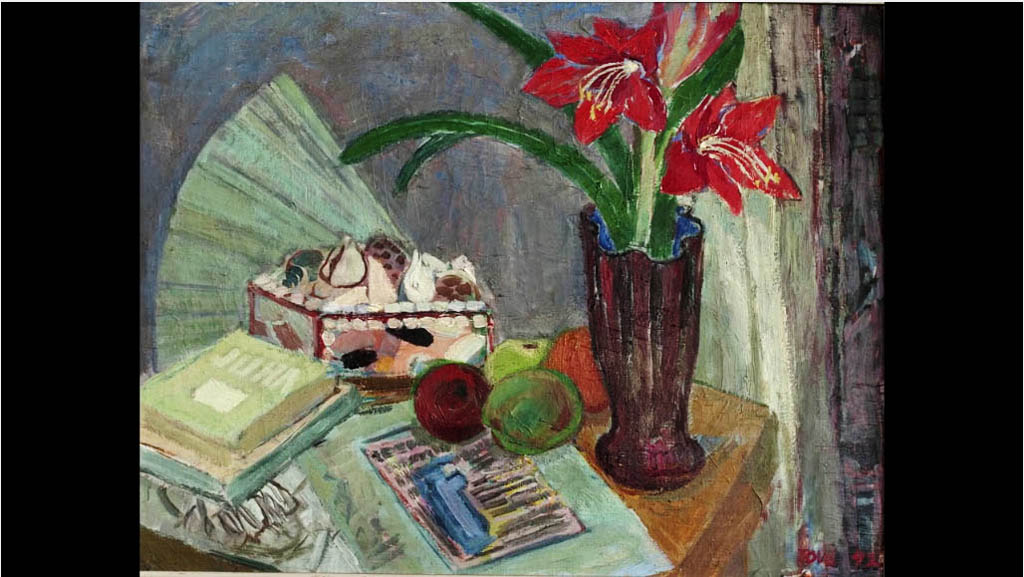
A still life by Tove Jansson, from the documentary film Escape From Moominville.

No need to be a Tove Jansson fan, or to know anything about her to enjoy Escape From Moomin Valley, it’s such a visual pleasure.

Tove Jansson (1914-2001) a member of Finland’s Swedish minority, achieved fame and presumably, fortune, through Moomins, creatures of her own invention who look vaguely like upright hippos. Moomins appeared in children’s books and a long-running comic strip; they are available as figurines, plush toys and printed on assorted bags, mugs, aprons, pencil cases, notebooks, etc. (Local publisher Drawn & Quarterly printed a large volume of her work in 2006.)

Artist and author Tove Jansson as a young adult, from the documentary film Escape From Moominville.

Jansson wrote short stories for adults and plays, as well, but she always considered herself a painter first and foremost. That’s what she wrote on her tax return, according to Escape From Moomin Valley.

Jansson came from an arty family; her father was a sculptor, her mother a graphic artist. She was expected to be an artist and a good one, too.

The film uses lots of photos, sketches, paintings and extracts read from Jansson’s letters and diaries to fill us in on her family life (she often argued with her father) her friends, her art classes and her travels. She studied in Stockholm and Paris, and visited Dresden, Brittany and Florence. Probably many other places, too. She was a forceful character and her art is wonderful to look at. Her studio is quite impressive, too. You might be jealous!

A still life by Tove Jansson, from the documentary film Escape From Moominville.

Jansson speaks briefly in the film and there are many remarks from her brothers, niece, and childhood friends.

Escape From Moominvalley is being shown as part of a double bill with the 55-minute film J.R.R. Tolkien: des mots, des mondes. A review of that is coming up! There’s a connection, too – while I don’t remember it in Escape From Moominvalley, Jansson illustrated a Swedish edition of The Hobbit.

Sunday, March 29, 2015, 1:30 pm, J.A. de Sève Theatre, McConnell Library Building, Concordia University, 1400 de Maisonneuve Blvd. W.

Escape From Moominvalley
Finland, Denmark, Sweden / 2014 / Color / 58 Min / Finnish S.T. English

A still life by Tove Jansson, from the documentary film Escape From Moominville.

Escape From Moominvalley
Realisation: Charlotte Airas
Script: Charlotte Airas, Kimmo Kohtamäki
Cinematography: Timo Peltonen
Sound: Pietari Koskinen
Editing: Kimmo Kohtamäki
Music: Pessi Levanto
Narration: Ylva Ekblad
Participation(s): Sophia Jansson, Per Olof Jansson, Boel Westin, Erik Kruskopf, Boris Konickoff, Tuula Karjalainen
Producer(s): Kaarle Aho
Production: Making Movies
Distribution: Making Movies
The Festival International du Film sur l’Art, known as FIFA, runs until Sunday, March 29, 2015. Visit the web site www.artfifa.com for more information