Review of De Palma, a documentary about the U.S. filmmaker

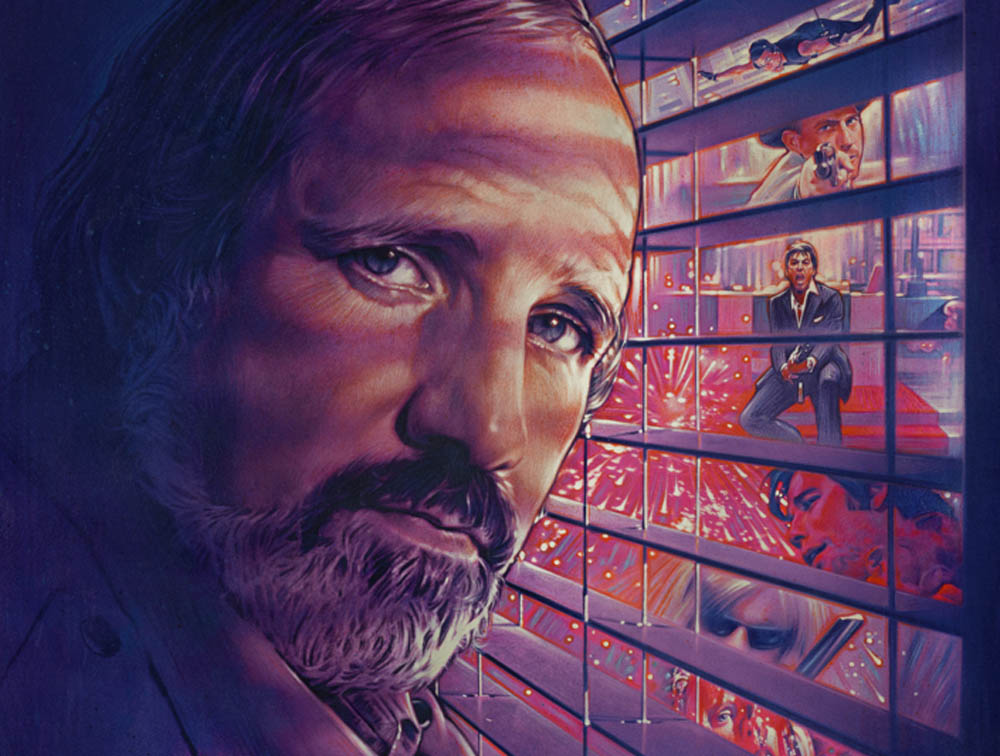
Detail from the poster for the documentary De Palma, directed by Noah Baumbach and Jake Paltrow.

In the documentary film De Palma, U.S. director Brian De Palma, 75, sits in front of a dark fireplace and talks. He’s just brimming with stories. He must have a great memory! De Palma first told those stories to his friends Noah Baumbach and Jake Paltrow over dinner, then he agreed to tell them again in front of a camera. (I had assumed that De Palma was shot at De Palma’s home but apparently not, it was done at Paltrow’s.)

According to a New Yorker story, the footage was shot over one week back in 2010. Baumbach and Paltrow don’t appear onscreen. Neither do actors, film-company execs or film profs. We just get De Palma’s own words and they’re plenty interesting enough.

De Palma shares stories about his family (his dad was a surgeon, so De Palma got used to seeing blood), his academic education (a Quaker school, then physics, math and Russian! at Columbia University) his cinematic education (Hitchcock and French New wave in New York’s cinemas) his films and his filmmaking contemporaries – guys like Martin Scorsese, George Lucas, Francis Ford Coppola, and Steven Spielberg. Laughs abound; Spielberg was the first person De Palma met who had a phone in his car – cue goofy, playful footage from back in the day.

We learn that Orson Welles and Robert De Niro caused De Palma grief when they wouldn’t or couldn’t learn their lines. Apparently, Sissy Spacek worked as a set dresser before De Palma put her in Carrie (1976).

We get clips from De Palma’s well-known films, like Carrie (1976), The Fury (1978), Dressed to Kill (1980), Scarface (1983), Body Double (1984), The Untouchables (1987), Carlito’s Way (1993), and from earlier ones, going as far back as 1962 horror short Woton’s Wake.

(Molly Haskell’s review of Woton’s Wake in the Village Voice made me think of Guy Maddin’s films: “After a brilliant opening-credit sequence in which the unfolding of an illegible “Old English” (or Norse) manuscript is accompanied by a madrigal-like theme announcing the terrors of the monster Woton, the film flies off in all directions, mixing camp, horror, and parody, real locations and expressionistic settings.” That’s Maddin all over, no? I wonder if they have ever met?)

De Palma also includes bits from Murder à la Mod (1968), Greetings (1968) The Wedding Party (1969) and Hi, Mom! (1970). The Wedding Party was Robert De Niro’s first film; Jill Clayburgh was in it, too.

De Palma’s Phantom of the Paradise (1974) was a bigger hit here in Canada than it was in the U.S., and it was extra popular in Winnipeg. He has other Canadian connections, too, though they aren’t mentioned as such in the documentary. Margot Kidder played a “French-Canadian model” in Sisters (1973) and Snake Eyes (1998) was partially shot in Montreal.

In his reluctance to compromise, De Palma has much in common with Guillermo del Toro, who was in Montreal recently to accept an award from the Fantasia International Film Festival. He spoke to fthe public twice while he was here.
Montrealers can watch De Palma at Cinema du Parc, 3575 Ave du Parc.
The film is directed by Noah Baumbach and Jake Paltrow; it’s in English and it’s 107 minutes long.


Fantasia 2016 Review: If Cats Disappeared From the World

Aw, can't you just imagine that soft fur against your face? Takeru Satoh is the main human star of the Japanese film If Cats Disappeared From the World.
Aw, can’t you just imagine that soft fur against your face? Takeru Satoh is the main human star of the Japanese film If Cats Disappeared From the World.

If Cats Disappeared from the World? Noooo! That’s a very distressing thought! But the Japanese film that carries that title is nothing short of magical. Everything works.

The script is based on a best selling book, Sekai kara Neko ga Kieta nara by Genki Kawamura. Takeru Satoh, the star of the live action Rurouni Kenshin trilogy, is excellent as the main character. He’s a handsome guy with big eyes, but I bet some special lighting was used to make him look extra luminous here.

Satoh plays a 30-year-old postman (he’s really 27 and he looks younger) who has been living from one day to the next without thinking too much about the future. After a tumble from his bicycle, his doctor tells him that he has an inoperable brain tumour and he could die any day. Then a guy who isn’t Death, but might be the Devil, shows up and tells the postman that he will die tomorrow, unless he’s interested in a deal. No contracts signed in blood or anything like that, though. Every day from now on the Devil will make some useless thing (in his cranky opinion) totally vanish from this world – how about starting with telephones? – and as long as the postman agrees, he can have one more day of life.

Don’t worry if that sounds weird, silly or stupid, it’s just a way to show us flashbacks and to get the postman and the audience thinking about memories, the things that are truly important to us, the totally random way we might have met someone who became a lifelong friend, and how much films, (and cats!) enrich our lives.

In the film If Cats Disappeared From the World, the postman (Takeru Satoh) and his girlfriend (Aoi Miyazaki) would talk on the phone so late into the night that when they went out on dates they were too tired to stay awake.
In the film If Cats Disappeared From the World, the postman (Takeru Satoh) and his girlfriend (Aoi Miyazaki) would talk to each other on the phone so late into the night that when they went out on dates together they couldn’t stay awake.

Most of the film was shot in the hilly port city of Hakodate, in Hokkaido, but there is also a bright, sunny interlude in Buenos Aires, Argentina, and a visit to the magnificent Iguazu Falls. And several cute kittens. There’s a scene early in the film where the postman is riding his bicycle while the kitty sits in the bike’s retro straw basket, looking adorable as all get out. Just about everyone in the cinema said “Awwwwww!”

If Cats Disappeared from the World could easily have turned out corny, or sickeningly sweet, but no one made a misstep. We were promised tears but I managed to hold mine in, just barely.The one and only screening at the Fantasia International Film Festival in Montreal was sold out and everyone there applauded heartily when the film was over. A few sniffles were heard. If you get a chance to see If Cats Disappeared from the World you should leap at it, and grab it with your paws and claws!

If Cats Disappeared from the World, directed by Akira Nagai, written by Genki Kawamura.
With Takeru Satoh, Aoi Miyazaki, Gaku Hamada, Eiji Okuda and Mieko Harada.

BTW: Takeru Satoh can also be seen in Bakuman, a film about two high school students (told you he looked young!) who write a manga. It’s very entertaining. You can watch Bakuman at Fantasia at 6:40 p.m. on Saturday, July 30, 2016 in the Hall Theatre, 1455 de Maisonneuve Blvd. W. Read more about Bakuman on the Fantasia web site. Fantasia continues until Wednesday, August 3, 2016.

Fantasia 2016 Review: Seoul Station

Arriving soon on a track near you - zombies! An image from the Korean animated film Seoul Station, written and directed by Yeon Sang-ho. The film is being presented at the Fantasia International Film Festival in Montreal.
Arriving soon on a track near you – zombies! An image from the Korean animated film Seoul Station, written and directed by Yeon Sang-ho. The film is being presented at the Fantasia International Film Festival in Montreal.

Want some social commentary with your zombies? Anyone who’s seen Yeon Sang-ho’s earlier, animated films The King of Pigs and The Fake would be expecting as much.

Seoul Station is an animated prequel to the live-action feature Train to Busan. (Zombies are notably slow-moving, so I guess that’s why they need a train!) Both films are on the menu at the Fantasia International Film Festival and both feature hungry zombies.

Before those zombies show their scary faces we see how quickly bystanders lose their sympathy for a sick, elderly man when they realize that he’s “just a homeless.”

I’m willing to bet that “a homeless” is not sloppy subtitling, but a way to indicate that the more fortunate citizens see the man in question as just a smelly problem, and not a fellow human being. He is defined by his status alone, and has no other identity for them. His work, back when he still had some, would have helped to make Korea the successful country that it is today, and since military service is compulsory for all able-bodied men, he served his country that way, too. Now he’s just one of the many people, mostly men, who spend their days hanging around Seoul station, where the train and subway lines meet, and sleep there at night.

Despite being in the same predicament, there’s no unity among the station dwellers – they only seem to care about people who come from the same part of the city or the country that they do. In this, they are just like the more prosperous citizens, who like to deal with people from their own home towns, from their universities, etc.

The old guy is slow-moving, weak and sweaty. It is obviously a hot day, but maybe he’s suffering from something more than the heat? His younger friend struggles mightily to get help for him, but nobody cares. When the friend can’t find the old guy where he left him, he searches all over until he discovers that the old guy has become Zombie No. 1. (Or is that Zombie 0?)

At the same time, runaway Hae-sun and her boyfriend Ki-woong are way behind on their rent and facing eviction. Rather than look for a job himself, he’s hanging out at an Internet café, playing games and creating an online escort ad so he can pimp out Hae-sun. She says she’s not having any of that and stomps off. As a newly homeless person, she might have to join the others at Seoul station. There aren’t enough shelters to meet the need, so the authorities let the homeless sleep in the station if they stay quiet.

Hae-sun’s tough-guy father sees the ad, tracks down Ki-woong and they try to find his “little girl” while keeping one step ahead of the zombies.

The police and the military are called out, but they’re worse than useless because they haven’t got a clue about who’s really dangerous and who needs their protection. It wouldn’t be the first time.

Montrealers can see Seoul Station at 5 p.m. on Wednesday, July 27, 2016 at the Hall Theatre of Concordia University, 1455 de Maisonneuve Blvd. W. as part of the Fantasia International Film Festival.

The film’s live-action sequel Train to Busan, will be shown at 11:30 a.m. on Sunday, July 31, also at the Hall Theatre.
The first Fantasia screening, on Thursday, July 21, was sold out.

Seoul Station, written and directed by Yeon Sang-ho, with the voices of Ryu Seung-ryong, Shim Eun-kyung and Lee Joon, is 92 minutes long, in Korean with English subtitles.

Fantasia 2016 Review: The Bacchus Lady (죽여주는 여자)

So-young (Youn Yuh-jung) takes her friends on a day trip to the Demilitarized Zone in this scene from the Korean film The Bacchus Lady.

Bacchus is a Korean drink, originally sold as a general health tonic, but now marketed as an energy drink much like Red Bull or Guru.

So-young (Youn Yuh-jung) the 65-year-old Bacchus Lady of the title, sells the drink to men who gather in Seoul’s parks. If they want sexual services, too, she takes them to a by-the-hour hotel close by. Many of her customers are long-time regulars, friends, really, and want conversation and a cuddle more than sex.

So-young does this work out of economic necessity. There’s no social safety net for her. She doesn’t have a family to help her, she doesn’t have a state pension, nor a company pension. (While she had been a prostitute before, on a U.S. army base, she had also worked in a factory.) The job market is tough for everyone, of all ages, and it seems that the only other work she could get is picking up cardboard for recycling. One woman who is seen doing that work looks very old and very frail. In a better world she would be at home drinking tea with her feet up.

So-young’s life is really hard, but she carries on, as she always has done. The friendship of her landlady and one of the neighbours helps; they are the closest thing she has to family. They share laughs, drinks and some happy times. Her customers seem less resilient, even though they are better off financially. One could assume that these widowers were pampered by their wives all their lives; now they are bored, lonely and don’t know how to look after themselves. In past times, these men could expect to live out their days in the home of their eldest sons, but things have changed and parents and grandparents are no longer given the respect and deference they once had. The children and grandchildren move to other cities, even other countries, to further their careers and they leave their elders behind, seemingly without a thought.

When some of these men can no longer bear to live in this new world, they ask So-young to help them leave it, and this begins another chapter in her life.

The film also looks at other marginalized people in a way that seems relatively natural and uncontrived. So-young’s landlady is a transgender woman and her neighbour is a guy with a prosthetic leg. So-young gives shelter to a young boy who’s half-Filipino, half Korean. Through her efforts to help him, we learn that mixed-race children face discrimination in Korea and their non-Korean mothers are often exploited and unaware of their rights.
The Bacchus Lady is fiction but it is based on reality. Reaction to the film will vary from viewer to viewer but I see it as an excellent argument for better social services and an unconditional basic income for everyone. Basic Income Canada Network and Basic Income Earth Network (BIEN) are two websites with articles about that concept.

The Bacchus Lady (죽여주는 여자)
Written and directed by E J-yong
Cast: Youn Yuh-jung, Chon Moo-song, Yoon Kye-sang, An A-zu, Choi Hyun-jun

In Korean with English subtitles, 110 minutes long.

Montrealers can see The Bacchus Lady on Monday, July 25, 2016 at 7:25 p.m., at the J.A. De Seve Theatre of Concordia University, 1400 de Maisonneuve Blvd. W. Visit the Fantasia International Film Festival web site for more information.

Fantasia 2016 Review: Inerasable

A writer (Yuko Takeuchi) and a student (Ai Hashimoto) seek information from a Buddhist priest in the Japanese film Inerasable, directed by Yoshihiro Nakamura. Inerasable is being shown at the Fantasia International Film Festival in Montreal.

A novelist (Yuko Takeuchi) has been writing short horror stories based on suggestions sent in by her readers. She gets a letter from Ms. Kubo (Ai Hashimoto), a student who has heard strange noises coming from her bedroom; swishing noises that sound like someone sweeping the tatami.

The nameless author remembers getting a similar letter a few years ago. . .when she finds it, she discovers that it was from a tenant in the same building. And that woman’s young daughter had acted as if she could see something. . . up near the ceiling. Then Kubo learns that another former resident of the building committed suicide shortly after moving somewhere else. (His landlady has a creepy story about the last time she saw him.)

Kubo and the writer start working together, trying to figure out what drove the man to kill himself. They look at old photos, land records and maps, and talk to old timers in the neighbourhood to learn about previous buildings where Kubo’s apartment block now stands, and the people who lived and sometimes died in them.

They go farther and farther back in time, and travel to other cities, too. They hear stories of apparent madness, fatal accidents, murder, and more suicides, all connected in some way. Restless spirits seem to be everywhere.

At one point, a young man who knows all about the ghost stories, rumours and gossip on Kyushu Island  casually mentions that the locals think just hearing those stories will leave you cursed. Oh, oh! “Ah, a classic ghost story rule!” (or words to that effect) says the writer’s husband, knowingly.

Director Yoshihiro Nakamura also made Fish Story (2009), Golden Slumber (2010) See You Tomorrow, Everyone (2013) and The Snow White Murder Case (2014), which were all shown at previous editions of Fantasia. See Inerasable at the Fantasia international Film Festival on Friday, July 22, 2016, at 5 pm in the Hall Theatre of Concordia University, 1455 de Maisonneuve Blvd. W.

Inerasable

Directed by Yoshihiro Nakamura,  written by Kenichi Suzuki, based on a book by Fuyumi Ono.

Cast: Yuko Takeuchi, Ai Hashimoto, Kentaro Sakaguchi, Kenichi Takito, Kuranosuke Sasaki,  107 minutes, in Japanese with English subtitles.

Fantasia 2016 Review: The Alchemist Cookbook

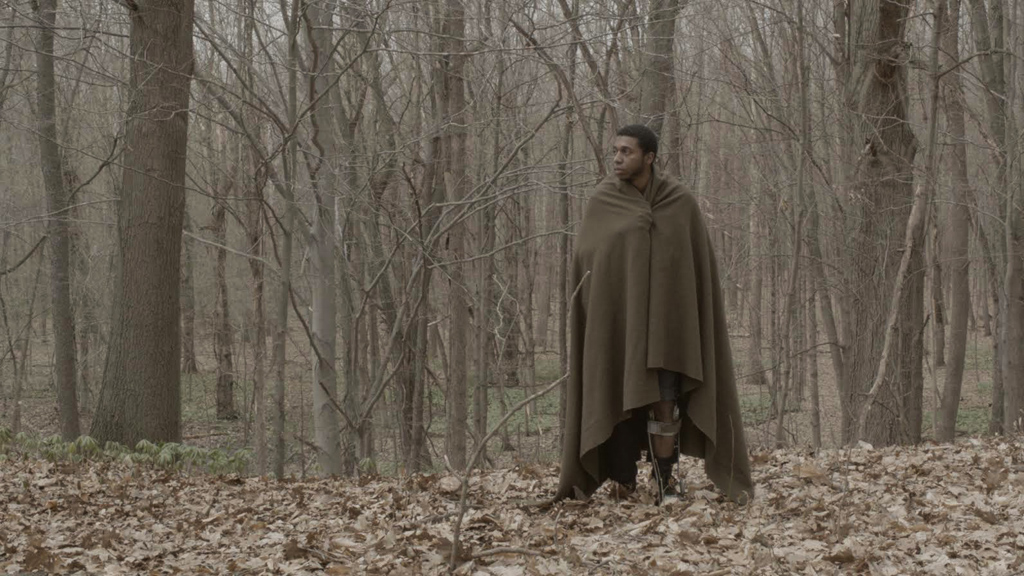
Ty Hickson plays would-be alchemist Sean in Joel Potrykus's film The Alchemist Cookbook. The film is being shown at the Fantasia International Film Festival in Montreal.
Ty Hickson plays would-be alchemist Sean in The Alchemist Cookbook, written and directed by Joel Potrykus. The film is being shown at the Fantasia International Film Festival in Montreal.


Sean (Ty Hickson) is a young man living in an old-fashioned trailer in the middle of the leafless woods, with his cat, Kaspar, as his only companion. Sean spends his days eating Doritos and cooking mysterious substances in his makeshift lab. With the gas mask and all, you might think he’s running a drug lab, but no, the quantities are way too small for that and he’s trying new things all the time.

A chat with his friend Cortez (Amari Cheatom), and the film’s title itself tell us what Sean’s really up to; the age-old quest to “turn dross into gold.” And he does have a book of some sort. It might contain recipes – or they might be closer to spells, incantations. And about that cat – have you heard of “familiars”?

Even though Sean has a gas mask, he doesn’t always wear it. Who knows what nefarious things he might be taking into his lungs and his brain? We’re given a clue that his hold on reality might have been weak to begin with – he takes medication for something, and he’s devastated when Cortez forgets to bring more. Because of this, we can’t know if the events we see onscreen are real or just Sean’s interpretations of reality.

Sean likes to play his music loud while working and he has wide ranging tastes that include rap, opera and Christmas tunes that sound like they were taped off the radio back in the 1940s. He’s got the Christmas lights to go with them, too!

Sometimes Sean sits in a rowboat on a small lake, sometimes he sets traps for small animals. (Are opussums weird looking, or what?) We have no idea how long Sean has been out there in the woods, and by now, maybe he doesn’t either, though there are a lot of scratches on a tree, that might or might not mark the passage of time. They could just as well be messages to the creatures that live in the woods. We don’t know what those creatures are but we hear them bellow now and then.

The Alchemist Cookbook doesn’t have a lot of conventional plot, but actor Ty Hickson can hold our attention very well without one. His interactions with Amari Cheatom spice things up further.

The Alchemist Cookbook, written and directed by Joel Potrykus, with Ty Hickson, Amari Cheatom, 82 minutes long, in English. See it at the Fantasia International Film Festival Thursday, July 21, 2016. at 5:10 at the J.A. de Sève Theatre of Concordia University, 14500 de Maisonneuve Blvd. W.

DirectorJoel Potrykus will be there to answer questions, discuss his influences, and maybe challenge audience members to do something out of the ordinary.

Fantasia 2016 Review: Psycho Raman

Nawazuddin Siddiqui plays a serial killer in the Indian film Psycho Raman (also known as Raman Raghav 2.0) The fim is being shown at the Fantasia International Film Festival in Montreal.

Psycho Raman (aka Raman Raghav 2.0) is one tense film. Ramanna is a serial killer, and actor Nawazuddin Siddiqui gives a bone-chilling performance in the part. He kills people because he likes to – men, women, children, it doesn’t matter, he doesn’t make any distinctions. The things that he says, and the look in his eyes when he says them, are extremely unsettling.There’s no telling what he might do next. And when he makes circles with his fingers and looks through them, as you would with binoculars. . .all I can say is Eeek! (The pose reminded me of the poster for The Look of Silence, Joshua Oppenheimer’s second documentary about genocide in Indonesia.) Ramanna takes his alias from Raman Raghav, a real-life serial killer in the 1960s.

The character is so disturbing that I felt uneasy watching him, as if my very presence in the theatre was some kind of approval for his (fictional) actions.

We see Ramanna swing a tire iron, and other weapons, but, mercifully, we don’t see them land on his victims. (And that’s just fine with me!) The guy is totally terrifying all the same – a perfect example of less is more.

Raghavan (Vicky Kaushal) is a crooked, violent, doped-up policeman, who got his position via family connections. The guy is so addicted and so callous that he snorts cocaine at the scene of a triple murder. One night, Ramanna sees Raghav kill someone for no reason. He’s convinced that they’re kindred spirits and wants to meet Raghav, maybe even work together? The film switches back and forth between their two worlds.

Ramanna keeps tracks of his victims in a little notebook. There’s no indication that Raghavan does the same, but I couldn’t help but wonder who had the bigger body count.

Like several other films in this year’s Fantasia lineup, Psycho Raman was well received at the Cannes Film Festival.

Psycho Raman (Raman Raghav 2.0), directed by Anurag Kashyap, written by Anurag Kashyap and Vasan Bala.
Cast: Nawazuddin Siddiqui, Vicky Kaushal, Vipin Sharma, Amruta Subhash, Sobhita Dhulipala, Ashok Lokhande, Harssh A. Singh
127 minutes long, in Hindi with English subtitles.

See Psycho Raman on Wednesday, July 20, 2016, at 5 p.m., in the de Seve Theatre of Concordia University, 1400 de Maisonneuve Blvd. W.

Fantasia 2016 Review: The Wailing

Poster for the Korean horror film The Wailing.

“An old stranger appears in a peaceful rural village, but no one knows when or why. As mysterious rumours begin to spread about this man, the villagers drop dead one by one. They grotesquely kill each other for inexplicable reasons. The village is swept by turmoil and the stranger is subjected to suspicion.”
– Synopsis from the press kit for The Wailing.

Dread, murder, unexplainable events, irrational behaviour, gossip, rumours, nightmares, fear of the other, a large, fierce dog, big, black crows and mesmerizing rituals. That’s what you get in Korean horror film The Wailing (aka Goksung, 곡성).

I’ve wanted to see it ever since I read the rave reviews from the Cannes Film Festival. It did not disappoint! (The Cannes critics liked director Na Hong-jin’s earlier films The Chaser and The Yellow Sea, too.)

The Wailing is set in the beautiful, misty mountains of rural Korea, where people still live in old-fashioned homes with tile roofs. It looks like the kind of place where nothing much happens from one decade to the next.

A string of gruesome murders disrupts the tranquility and we watch as policeman Jeon Jong-gu (Kwak Do-won) tries to figure out if and how they could be connected. While a newspaper headline blames the disorienting effects of poisonous wild mushrooms for the first murders, Jong-gu wonders if some kind of virus might be going around? (The presumed perpetrators all had horrible rashes.)

There's a lot of rain in The Wailing; it increases the feeling of dread.
There’s a lot of rain in The Wailing; it increases the feeling of dread.

Then there’s gossip about a strange Japanese man (Jun Kunimura) who lives in the forest. Some people are convinced that he’s evil, and responsible for the deaths, directly or indirectly. Supposedly he’s been seen wandering in the woods, half naked, chomping on dead animals. One woman says he’s a ghost, feeding on the spirits of the living. Any stranger could come under suspicion in an isolated community, but Japan’s earlier occupation of Korea would further complicate the way the locals view this interloper. Whoever or whatever he might be, a visit to his dwelling proves that he’s not just your everyday recluse.

Policeman Jeon Jong-gu is neither the suave, super cop of some films, nor the corrupt, crooked one of others, rather he’s an Everyman type; pudgy, and a bit of a doofus. After he gets a pre-dawn call to investigate the first murder scene he lets his wife and mother-in-law talk him into eating breakfast first – a few minutes more or less won’t make any difference to the dead, right? His boss and the other cops are not impressed when he finally shows up. Slacker!

Jong-gu seems rather indifferent to his wife (then again, this is not a romantic comedy) but he dotes on his cute young daughter, Hyojin (Kim Hwan-hee). Then she develops a rash too, and starts acting so much out of character that possession seems like a real possibility. When Jong-gu looks at her school notebook, it’s full of strange scribblings and scary drawings. (Have you seen The Babadook?) It also looks like it’s been mauled by a creature with long, sharp claws.

A mudang (shaman) is called in. The shaman is played by Hwang Jung-min and he’s great. I’ve seen shamanic rituals in many other Korean films but the ones here are exceptional, especially the second, longer, night-time one. (I read an article online that some people on the film set thought Hwang really was possessed.)

Hwang Jung-min plays a mudang, or shaman in the Korean film The Wailing.

The Wailing is NOT one of those films where the villain confesses everything, or some expert explains it all before the credits roll. If you go with friends you could have some very interesting post-film discussions about what really happened, who was good and who was evil. The Internet is full of contradictory theories, with some people essentially saying “I’m right because I’m Korean!”

If you read those theories, bear in mind that director Na Hong-jin told the Korea Times: “I mulled over the ending and decided I had to leave it open.”

A final note: Sadly, we Montrealers don’t get to see many Korean films outside of film festivals. If you like the sound of The Wailing try to see it at Fantasia because it will be more impressive there, on a big screen, with a great sound system and the famous, enthusisatic Fantasia audience. Furthermore, some scenes take place at night or in murky interiors – you’ll be able to see them much better in the cinema.

The film is 156 minutes long, but doesn’t feel like it.

The Wailing
Goksung
곡성
Director: Na Hong-Jin
Writer: Na Hong-Jin
Cast: Kwak Do-won, Hwang Jung-min, Jun Kunimura, Kim Hwan-hee, Chun Woo-hee
In Korean with English subtitles, 156 minutes long, showing at the Fantasia International Fim Festival Monday, July 18, 2016 at 9:35 p.m., in the hall Theatre, 1455 de Maisonneuve Blvd. W., Montreal.

Review: B-Movie Lust & Sound in West-Berlin 1979 -1989

In a scene from the documentary film B-Movie Lust & Sound in West-Berlin 1979-1989, Mark Reeder gives TV presenter Muriel Gray a tour of West Berlin in 1983.

B-Movie Lust & Sound in West-Berlin 1979-1989 – it’s long and unwieldy, but it’s also quite straightforward, unlike some film titles. It doesn’t need to be decoded or anything.

B-Movie is a documentary film with three directors (Klaus Maeck, Jörg Hoppe, Heiko Lange) and one guide – Mark Reeder, a musician and one-time record store employee from Manchester, England, whose interest in German music took him to Berlin in the late 1970s.

The directors had access to many film clips from the era, including some by Reeder himself, and they use Reeder’s experiences and his narration to tie everything together. Actor Marius Weber plays Reeder in some re-enactments. Mark Reeder is 58 now, but his voice still sounds youthful and enthusiastic, like that of a person still in his 20s.
And lest we think the film is only about looking backwards, Reeder told The New Statesman “Artists still come to Berlin searching for something, whether they stay for a few months or a few years. And this film is about inspiration. Not nostalgia.”

Footage includes day and night streetscapes, violent demonstrations, musical performances, interviews and visits to music clubs. (Reeder explains that typical night out might begin at midnight and end at 7 or 8 a.m.). German bands who play and talk include Malaria!, Shark Vegas, Einstürzende Neubauten, Die Tödliche Doris, Die Artze, and Die Toten Hosen.(Blixa Bargeld of Einstürzende Neubauten played with Nick Cave and the Bad Seeds between 1983 and 2003.) There is a brief glimpse of Nena, who had the hit 99 Luft Balloons. Musician Farin Urlaub appears, wearing a clerical collar.

Singer Eric Burdon appears with a rodent on his shoulder, artist Keith Haring paints the Berlin Wall, TV star David Hasselhoff sings while wearing a flashing-light jacket AND a piano key scarf – guess he’s not one of those “less is more” types.

These days, Tilda Swinton looks ageless to me, but we see a few seconds of her looking really young. Swinton appeared in the 1991 German film The Party: Nature Morte; presumably Reeder met her through his bit part in it. (His part was “Drunk.”)

In regard to artists from English-speaking countries, the Australian Nick Cave gets the most screen time. He lived in West Berlin for three years and stayed with Reeder until he found a place of his own.

West Berlin rents were cheap in those days, though Reeder and many others lived in “squats” and didn’t pay any rent at all. Nevertheless, a person needs some money to live on and Reeder earned his as the Berlin representative of British company Factory Records, as a record producer, a band manager, and dubbing porn films. In addition to The Party, he also appeared in Joan of Arc of Mongolia, and the horror film Nekromantik 2, directed by Jörg Buttgereit.

My one quibble with this film: Reeder has a fetish for uniforms, because they “hard-wearing, practical and they get people mad.” Some of them are Nazi uniforms, or the look like Nazi uniforms. For me, that’s just creepy and distasteful.

B-Movie Lust & Sound in West-Berlin 1979- 1989, is being shown at 7 pm, Thursday, May 5, 2016 at Cinema du Parc, 3575 av du Parc, as part of the Goethe Institute’s once-a-month Achtung Film series. It’s 92 minutes long, in German with English subtitles.

FIFA 2016 Review: Un Homme de danse

In a scene from the film Homme de danse, Vincent Warren, right, watches as Arnab Bandyopadhyay demonstrates gestures from Indian classical dance.

Ballet dancer, ballet teacher, dance historian and archivist, Montrealer and Québecois by choice, Vincent Warren is, or has been, all of those things. He’s also a superb raconteur, and many of his stories are hilarious. He shares those stories in Un Homme de danse (A Man of Dance) a film directed by Marie Brodeur. Like many Montrealers, Warren speaks English and French and often switches from one to the other in mid-sentence. He wears a scarf with great panache, too!

I didn’t know his name before seeing Homme de danse, but I soon realized that I had seen Warren dance many times; he is the male dancer in Pas de deux, an award-winning film that Norman McLaren made for the National Film Board of Canada in 1968. (The ballerina is Margaret Mercier and the choreography is by Ludmilla Chiriaeff.) With its mesmerizing multiple exposures, the film was ground-breaking for its time. If I had a nickel for every time I saw it back in my school days. . .

Vincent Warren and Margaret Mercier dance in Pas de deux, a film that Norman McLaren made for the National Film Board of Canada in 1968.

In yet another claim to fame, Warren danced the title role in the ballet Tommy, which choreographer Fernand Nault created for Les Grands Ballets Canadiens in 1970, using music from the rock opera of the same name by The Who. The work appealed to young audiences and encouraged young men to consider careers in ballet.


Warren was born into a large family in Jacksonville, Florida, a place where boys were expected to play football, as his own older brothers did. But Warren was entranced by dance when he saw the film The Red Shoes at age 11. (Read the Wikipedia entry for The Red Shoes here, reviews of The Red Shoes at the Internet Movie Database.) He read everything he could about ballet, and started a ballet scrapbook, which he still has to this day (take that, all you “toss-it-out” minimalists!) He paid for his first ballet lessons with money he earned as a paper boy, but he didn’t pay for long; male students were so rare, they had to be encouraged. (“Boys were always welcome.”)

A page from Vincent Warren's ballet scrapbook. He was smitten by dance after he watched the 1948 film The Red Shoes.
A page from Vincent Warren’s ballet scrapbook. He was smitten by dance after he watched the 1948 film The Red Shoes.

After finishing high school Warren headed to New York where he received scholarships to the American Ballet Theater School (Rudolf Nuryev was in his class!) and then to the Metropolitan Opera Ballet School. He was hired by the Metropolitan Opera at a time when Maria Callas and Renata Tebaldi were performing there. Warren was a party animal, hanging out until the early-morning hours with the poet Frank O’Hara and his gang of abstract expressionist painters.

Warren also danced at the Sante Fe Opera Ballet, with an orchestra conducted by Igor Stravinsky. (Warren has a good Stravinsky story – but better you should hear it from him than from me.) In the summer, Warren worked in summer stock, where companies presented a new musical each week and performed as many as eight in one season.

In 1961 Warren joined Les Grands Ballets Canadiens, under the direction of Ludmilla Chiriaeff. He danced with the company until 1979, when he turned 40. He then taught performance and dance history until 1992 at École Supérieure de Danse du Québec, the school connected to Les Grands. The school had a tiny library with little more than 300 books. Warren donated thousands of his own books, magazines and prints to turn it into the best dance library in Canada. It’s now called Bibliothèque de la Danse Vincent-Warren, and it’s open to the public. “We want you to visit,” Warren said at the screening I attended.

Warren is not the only one who gets to tell stories – we also hear from dancers Véronique Landory, Annette av Paul, Anik Bissonnette, choreographers Brian Macdonald, Jeanne Renaud, Paul-André Fortier, Aileen Passloff, and journalist Linde Howe-Beck. Warren’s longtime friend, Peter Boneham, another American dancer and choreographer who made a home in Canada, is a real hoot. The two could probably form a comedy act if they wanted to.

Homme de danse might be a history lesson or a nostalgia fest, depending on the age and interests of the viewer. There’s footage of Place des Arts, so new that it’s still surrounded by rubble, a glimpse of former Montreal Mayor Jean Drapeau, colourful scenes at the World’s Fair, Expo 67, and excerpts from many ballets, too. I was surprised to learn that Radio-Canada used to present live ballet performances two to four times per week.

After living in a second-floor apartment in Mile End for 47 years, “like an old bear in his cave,” Warren decided to move to a ground-floor place. Director Brodeur filmed him as he packed up his possessions; it was a great idea, since so many of those objects sparked memories and stories.

Un Homme de danse (Man of Dance) directed by Marie Brodeur, will be shown as part of FIFA, Festival International du Film sur l’Art, on Sunday, March 20, 2016 at 5 p.m. in the Maxwell Cummings Auditorium of the Montreal Museum of Fine Arts, 1379 Sherbrooke St. W. Vincent Warren will attend the screening.

General admission tickets are $12.50; seniors (65 and older) pay $11; those 25 and younger pay $10; children 12 and younger pay $5.

For more information or to buy tickets online, visit www.artfifa.com