Docville honours Albert Maysles and celebrates spring with colourful and exuberant Iris

iris apfel

RIDM, Montreal’s documentary film festival, takes place in November, but festival organizers keep film fans supplied with documentaries throughout the year via the monthly Docville program.

The presentation for Thursday, April 30, 2015, is Iris, a portrait of 93-year-old New York style icon Iris Apfel. It was the second-to-last film made by director Albert Maysles who died on March 5, 2015 at age 88.

You might have seen Iris Apfel in the documentaries Bill Cunningham, New York (2010), directed by Richard Press, or Bury My Ashes at Bergdorf’s (2013) by Matthew Miele. Both films were shown here in Montreal at Cinema du Parc.

The documentary Iris is a portrait of fashion legend Iris Apfel, directed by Albert Maysles.

Once seen, Apfel is not easily forgotten. She likes to wear several large necklaces at once, and covers her arms in chunky bracelets. As a look at the trailer below will show you, she isn’t one of those people who wears black all the time. More power to her, I say! The world is full of colour, so why not enjoy it as much as possible and as long as possible?
Many critics have praised the film and the obvious rapport that existed between Maysles and Apfel. (Certainly, they had time to get to know one another – Apfel told Vogue magazine that the film was shot “on and off for four years.”)

Manohla Dargis of the New York Times says: “There are few better ways right now to spend 80 movie minutes than to see Iris, a delightful eye-opener about life, love, statement eyeglasses, bracelets the size of tricycle tires and the art of making the grandest of entrances. . . this is a documentary about a very different kind of woman who holds your imagination from the moment she appears. You can’t take your eyes off Iris Apfel (she wouldn’t have it any other way), but, then, why would you want to?”

Stephanie Zacharek of the Village Voice says: “like all good documentaries, Iris is about much more than what we see on the surface, no matter how dazzling that surface may be. . . Iris is more than just a movie about an amusing lady who likes clothes an awful lot. It’s also a celebration of the revivifying power of creativity. . .Maysles’s camera opens its eyes wide to Apfel, taking the measure of her wildly beautiful and witty outfits as if it can hardly believe what it sees. There’s delight here in Maysles’s way of seeing. . .It’s also very quietly moving, considering that it’s not about growing old, but about already being there.”

Richard Brody of the New Yorker says: “The warm relationship between Apfel and Maysles comes through from the start, as she playfully shows off some of her treasures and addresses him on-camera throughout. Maysles endearingly reveals Apfel’s blend of blind passion and keen practicality, her unflagging enthusiasm for transmitting her knowledge to young people, and her synoptic view of fashion as living history.”

Iris, directed by Albert Maysles, United States, 2014, 83 min., in the original English.
Thursday, April 30, 8 p.m., at Cinéma Excentris, 3536 St. Laurent Blvd.
Single screenings cost $12 ($10 for students and seniors).

Tickets can be bought online. Doing so might be a good idea, since the Facebook page for Iris already indicates that 261 people intend to go. The Salle Cassavetes only holds 271 people and more than 1,000 (!) have been invited.
(If you can’t make it to Thursday’s screening, Iris will open at Cinéma du Parc on May 29, 2015.)

Animation film festival wraps up with three films about heroes

Teacher Ralph Whims us ready to defend his students from an invading motorcycle gang, in the short film, The Chaperone.

The closing event of the 2015 Montreal Animated Film Festival is all about heroism.
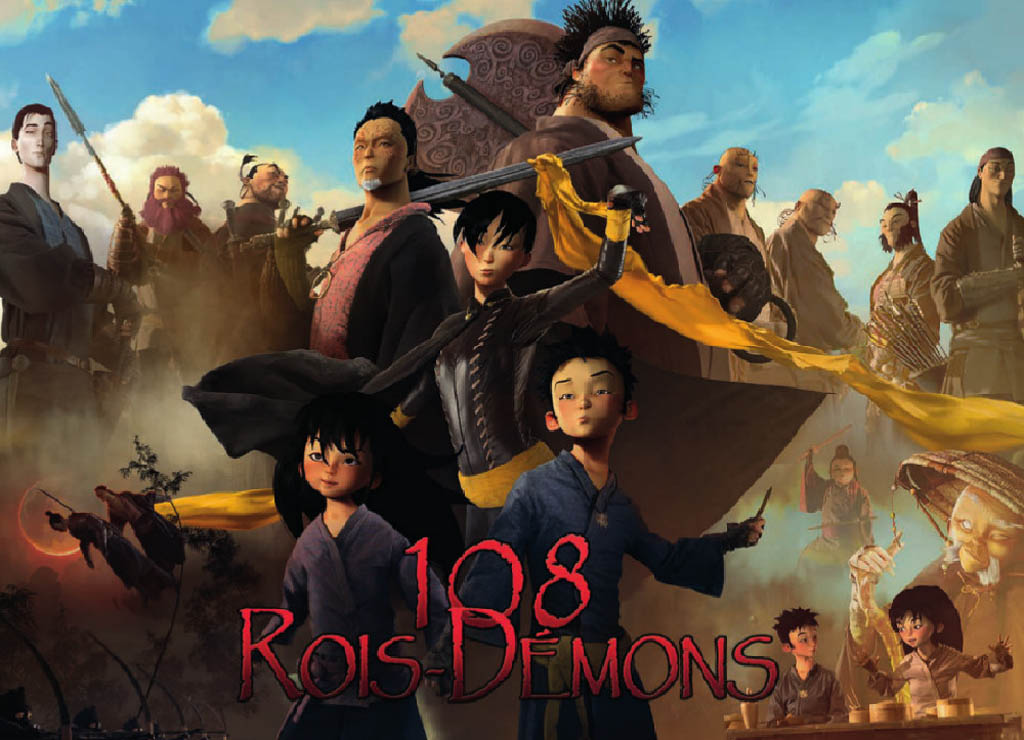
The feature film is 108 Demon Kings. That film takes elements from the Chinese classic novel Shuihui Zhuan (known in English as The Water Margin, Outlaws of the Marsh, or All Men Are Brothers) which is based on 12th century events and first published around 1368, and adds a young prince to make it even more appealing to a young audience. (Though, what with good guys and bad guys, demons, monsters, battles, etc., it ought tobe pretty appealing already!)

Image from the animated film 108 Demon Kings.

The The Water Margin is sometimes compared to Robin Hood to give Westerners an idea of the flavour.

The last minute addition of two shorts emphasizes the heroic theme. They are both Canadian and one is local, too!

High school dance, circa 1972, in The Chaperone.

The local one, The Chaperone, is based on a memorable event that took place at Rosemount High School, in east end Montreal, back in the 1970s (though I don’t think the school is named in the film.) One teacher and one DJ are the only adults at a high school dance. (In a recent radio interview, one of the filmmakers said that these days there’d be 10 teachers and eight parents or something like that.)

Anyway, scary-looking members of a motorcycle gang crash the dance. Oh, oh! Teacher Ralph Whims tells DJ Stefan to lock the doors and then proceeds to teach the bikers a lesson, so to speak, using chairs, fists, feet, etc. Just like in the movies! But it really happened! The film uses thousands of crayon drawings, puppets, stop-motion animation scenes showing the outside of the school, passing traffic, and the eventual arrival of police cars, shreds of paper from the explosions of dozens of pinatas, an hilarious live-action segment inspired by B-movies, AND a cheesy (in a good way) soundtrack inspired by blaxploitation films. There are some 3D parts, too. In other words, a bit of everything. It’s truly quite amazing. I watched it at home without the benefit of the 3D aspect, I’m sure it will be even more mind-blowing on the big screen. The film is made by Fraser Munden and Neil Rathbone. Fraser Munden knew the story well, because his father had been one of Ralph Whims’s students.Here’s a link to an article in Spectacular Optical about The Chaperone.


mynarski crop

Mynarski

The other Canadian short is Mynarski Death Plummet. It’s about Andrew Mynarski of Winnipeg, a gunner with the Royal Canadian Air Force in World War II. On June 12, 1944 his plane was badly damaged by gunfire and everyone was ordered to don their parachutes and jump from the burning plane. But Mynarski struggled through the flames to try to free tail gunner Pat Brophy, who was trapped at the back of the plane. This film blends live action and animation and ends with a fantastic creation unlike anything else I have ever seen before. The film contains 21,000 hand-painted 35 mm frames!

Here’s a quote from Greg Klymkiw’s Film Corner:

“This is such a great film. I could have watched all seven minutes of it if they’d somehow been elongated to a Dreyer-like pace and spread out over 90 minutes. That said, it’s perfect as it is. The fact that you don’t want it to end is a testament to director Matthew Rankin one of the young torchbearers (along with Astron-6) of the prairie post-modernist movement which hatched out of Winnipeg via the brilliantly demented minds of John Paizs and Guy Maddin. Blending gorgeously arcane techniques from old Hollywood, ancient government propaganda films with dollops of staggeringly, heart-achingly beautiful animation – bursting with colour and blended with superbly art-directed and costumed live action. . .”

108 Demon Kings, The Chaperone, and Mynarski Death Plummet are part of the Closing Ceremony and Awards Presentation of 2015 Montreal Animated Film Festival.
The event begins at 7 p.m., Sunday April 19, 2015 in H-110 of the Hall Building of Concordia University, 1455 de Maisonneuve W.
Visit the website lemiaff.com for prices and more information.

Montreal International Animated Film Festival – lots to see in four days

108 Demon Kings is based on the classic Chinese novel The Water Margin.

Montreal has dozens of film festivals, but it seems that there’s always room to squeeze in another one.

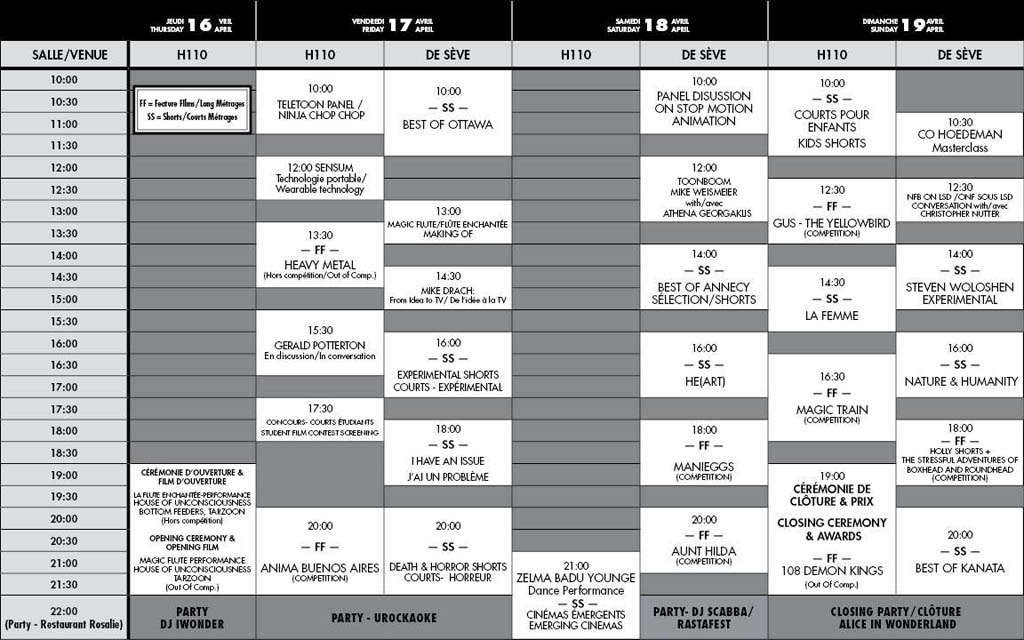
The Montreal International Animation Film Festival starts tonight, Thursday, April 16 and will run until Sunday, April 19, 2015. The festival will include animated features, shorts, panel discussions, a masterclass, a market AND time for partying.

The screenings and discussions will take place at the downtown campus of Concordia University; the partying will be at Restaurant Rosalie, a short walk away at 1232 de la Montagne.

The films come from Australia, Brazil, Bulgaria, Canada, China, Colombia, France, Germany, Hungary, India, Iran, Israel, Japan, Luxembourg, Poland, Portugal, Romania, Singapore, Slovenia, South Africa, South Korea, Switzerland, Taiwan, Turkey and the U.S.

Local animators taking part include Gerald Potterton, Co Hoedeman and Steven Woloshen.
The opening night film is described this way on the MIAFF web site: “The Land of the Magic Flute is a captivating browser-experience produced by the Interactive Media Foundation in Berlin. . . .sound-artist Philippe Lambert will be performing an intuitive and impressionistic rendition of his soundtrack composition. Playing with elements of Mozart’s original composition recorded by the Vienna Symphonic Orchestra, Lambert creates a soundscape that takes the opera into new spheres.”

Descriptions of some of the other feature films on the program are below.
108 Demon Kings is set in12th century China and based on the classic novel The Water Margin. It’s directed by Pascal Morelli who also directed Corto Maltese, which was a popular selection at the Fantasia Film Festival several years ago.

108 Demon Kings is set in 12th century China and based on the classic novel The Water Margin.

Aunt Hilda! (Tante Hilda!) is the botanist heroine of an ecological fable from France/Luxembourg that has genetically-modified organisms running rampant over the planet.

Giant plants run amok in Aunt Hilda!

Hungarian film Manieggs: Revenge of The Hard Egg is about a guy who’s seeking revenge after spending two weeks in prison for a crime he didn’t commit. All the characters are said to be eggs, though they also remind me of Minions and mini-Lego characters, too. The film looks like bizarre fun, at any rate.

Manieggs: Revenge of The Hard Egg.

According to its trailer, Anima Buenos Aires is “full of art, magic and humour.” Tango music, too.

On Friday afternoon there will be a screening of Gerald Potterton’s Heavy Metal (1981). The six episodes within the film feature an evil green orb, swords and sorcery, sci-fi, stoners, zombies, and giant breasts, with music from Black Sabbath, Blue Oyster Cult, Cheap Trick, Devo, Donald Fagen, DonFelder, Grand Funk Railroad, Journey, Nazareh, Sammy Hagar, and Stevie Nicks, and voice work provided by SCTV guys John Candy, Eugene Levy, Al Flaherty, Harold Ramis, Al Waxman, John Vernon, and former Lovin’ Spoonful member Zal Yanovsky.

There are several short film programs arranged by theme: Death & Horror, Emerging Cinema, ExPeRimEnTal, He(art), I Have an Issue, Offspring Kid Program and La femme.

“Best of Ottawa” has nine shorts “Recommended For Mature Audiences Only” from the Ottawa International Animation Festival, “Best of Annecy”  has eight shorts from the famous festival in France, while “Best of Kanata” is a selection of 12 films by Canadian Aboriginal filmmakers.
Visit the website lemiaff.com for prices and more information.

MIAFF schedule 1024


Cinema Politica Mondays: Discover Grace Lee Boggs, an exceptional American

Philosopher, writer and activist Grace Lee Boggs in her Detroit home.


There aren’t any dull moments in the documentary American Revolutionary: The Evolution of Grace Lee Boggs.

The philosopher, writer and activist Grace Lee Boggs will turn 100 in June, but in this film, which was released in 2013, she still has all her wits about her. Even more impressive, she still talks about revolution and social change, and does so in Detroit, her home since the 1950s. She has so many stories to share and hasn’t given up hope that people can work together to make a better world. She warns against placing too many expectations on political messiahs, though. She suggests that “We are the leaders we are looking for.”

Grace Lee’s father owned a big Chinese restaurant on Broadway in New York. She tells us that this gave her a comfortable home life, but she also reveals that her mother had never gone to school, and that she could not read or write. Grace Lee herself earned a BA from Barnard College and a PhD in philosophy from Bryn Mawr. Despite those qualifications, cracking the job market was not easy. In those days, she says, even department stores would not hire “Orientals.” She got a job at a library at the University of Chicago that paid $10 per week. She lived in a rat-infested basement and came into contact with the black community when she joined the struggle for better housing.

By the 1940s the Depression was over for whites but not for blacks. The U.S. was gearing up for war but the owners of defense plants would not hire black Americans. Activists began planning a July 1 protest march on Washington. An estimated 100,000 people would take part. To keep the march from happening, President Franklin Delano Roosevelt signed Executive Order 8802, banning discrimination in the defense industry. Grace Lee was very impressed by this example of people power in action. As she later told Bill Moyers: “When I saw what a movement could do I said, ‘Boy that’s what I wanna do with my life.’ ”

She went to Detroit because that’s “where the workers were.” She married James (Jimmy) Boggs, who was an auto worker, writer and activist. Until his death in 1993, they worked together in the labour movement and the Black Power movement; they knew Malcolm X and Martin Luther King. Their home was a meeting place for thinkers and organizers.

The film includes the derelict buildings we’re used to seeing in reports on present-day Detroit, along with scenes from the past – the prosperous past and the violent one, too. Some parts of the city look a bit like Montreal, with the same kind of buses we used to have; there’s a dark stone building with arches, kind of like The Bay department store on Ste. Catherine St. And then there’s the snow, Detroit seems to get quite a lot of snow, too.

There’s evidence that Detroit’s downhill spiral began much longer ago than one might think. Back in the 1930s as many as 95,000 people were working in one of the plants belonging to the Ford Motor Co., but by the late 1950s automation was already leading to layoffs.

The soundtrack includes “Run, Charlie, Run” a tune by The Temptations about white flight from the city to the ‘burbs. I count myself as a Motown fan, but I can’t remember ever hearing that one before. I wonder if it’s ever played on any “oldies” radio stations?

Philosopher, writer and activist Grace Lee Boggs, left, and filmmaker Grace Lee.

The film is directed by Grace Lee, who is no relation to Grace Lee Boggs. They have stayed in touch since 2000 when the filmmaker began work on The Grace Lee Project, a film about several Asian-American women who share the same name. (The Village Voice review of The Grace Lee Project says that Grace Lee Boggs is called Grace X by her neighbours.)

To learn more about Grace Lee Boggs, check out this book list; it includes books that she wrote and books that influenced her.

American Revolutionary: The Evolution of Grace Lee Boggs will be presented by Cinema Politica on Monday, April 13, 2015 at 7 p.m. in H 110 of the Hall Building at Concordia University, 1455 de Maisonneuve Blvd. W.
Admission is by voluntary donation.

For more information, visit the Facebook page about the screening.

Cinema Political will show films at various outdoor locations during the summer, but American Revolutionary: The Evolution of Grace Lee Boggs is the last presentation at the Hall Building for the 2014-2015 academic year.


Cinema Politica Mondays: Regarding Susan Sontag


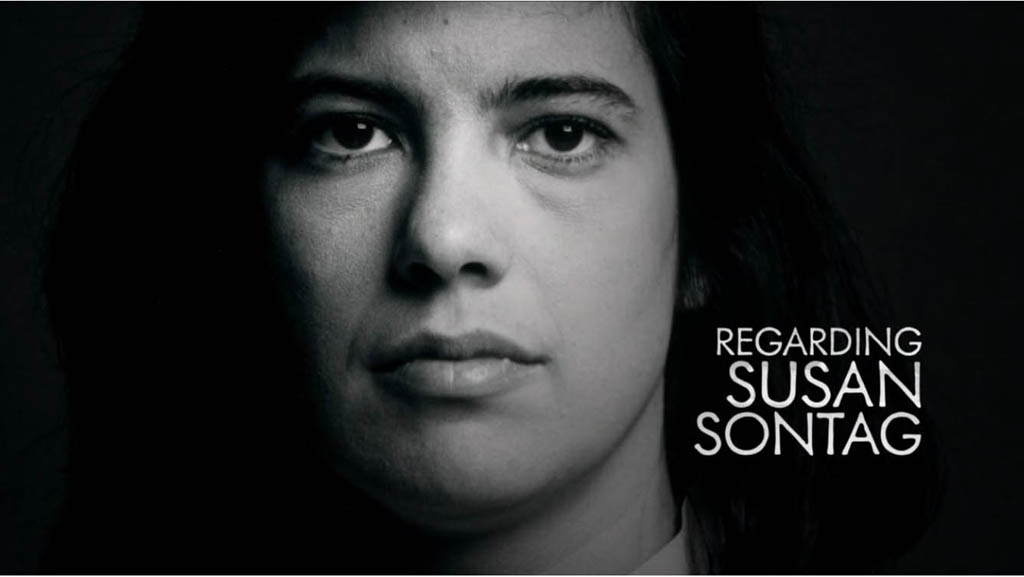
Regarding Susan Sontag, a documentary about the U.S. writer and intellectual, will be shown in Montreal on Monday, March 30, 2015, by Cinema Politica.

We can rely on Cinema Politica to bring us interesting documentaries throughout the school year. Tonight’s selection is Regarding Susan Sontag. Sontag was once one of the more visible intellectuals in the U.S.

I haven’t seen the film, but I certainly want to, based on several very enthusiastic reviews that I found. How often is a documentary film reviewed by newspapers, and Vogue and The Economist? Interesting company!

Nathan Heller in Vogue:   “She saw writing as a personal act that bore global responsibility. ‘I didn’t feel that I was expressing myself,’ she’s quoted as saying in Regarding Susan Sontag. . . ‘I felt that I was taking part in a noble activity.’ ”
In Vancouver’s Georgia Straight, Ken Eisner writes:
“this (film) should be seen by anyone with an interest in language and history.”

He also says that it “looks at how the great essayist (and not-so-great novelist) was viewed before the role of public intellectual became obsolete.”

But, but. . . don’t we still need “public intellectuals?” What do you think? On with info about the film.

Robert Lloyd In The Los Angeles Times: “Sontag’s best writing gives one permission to see things in a new way — or makes it impossible to continue to see them in the old one.” “Among American intellectuals, she was the rare rock star, and though her work stands on its own with allowance made for any writer’s ups and downs, her personal magnetism is very much part of the story; she was a thinking person’s pinup, friendly and formidable, impish and intense, bright-eyed, wide-smiled, with a head of hair that amounted almost to a signature.”

Susan Sontag wrote a lot of books! Regarding Susan Sontag, a documentary about the U.S. writer and intellectual, will be shown in Montreal on Monday, March 30, 2015, by Cinema Politica.

J. Bryan Lowder in Slate:  “Ten years after her death, Sontag’s supreme writerly confidence remains both an inspiration and a terror to would-be critics and public intellectuals, and for good reason—she was the embodiment of a certain school of serious, morally committed, iconoclastic, and often deliciously haughty 20th-century criticism.”  “. . .what this film provides, is an honest introduction to the person—in this case, a person who comprised qualities both deeply admirable and terribly off-putting in equal measure. Watching Regarding Susan Sontag, I felt awash in that person, carried aloft on the waves of her exquisite curiosities and pulled by the undertow of her messy personal life, suspended in the trough between the figure she wanted to be and the human being she was. . . I thoroughly enjoyed Kates’ attempt to do justice to that package—the whole package—sex, uncertainty, hubris, and brilliance, all mixed up together.”

BTW: Lowder’s review reveals that there is such a things as a master’s degree in criticism. Go ahead, call me naive, but I had no idea! Learn something everyday!

More details about this screening and Cinema Politica can be found on the Cinema Politica web site. According to the web site the “screening will be followed by a Skype Q&A with director Nancy Kates. Venue is wheelchair accessible.”

REGARDING SUSAN SONTAG, directed by Nancy Kates, / United States / 2014 / 100 ‘ / in English
Monday, March 30, 7 p.m.
Concordia University
1455 de Maisonneuve Blvd., W., H-110
Montreal

Admission: Pay what you can – $5 to $10 are suggested amounts.

FIFA 2015: See Escape From Moominvalley for beautiful paintings by Tove Jansson

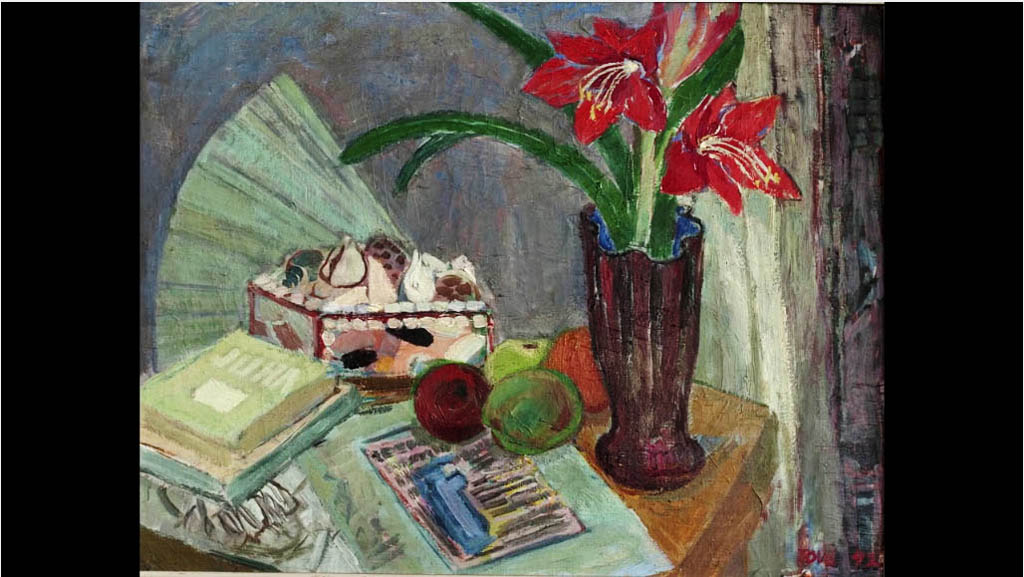
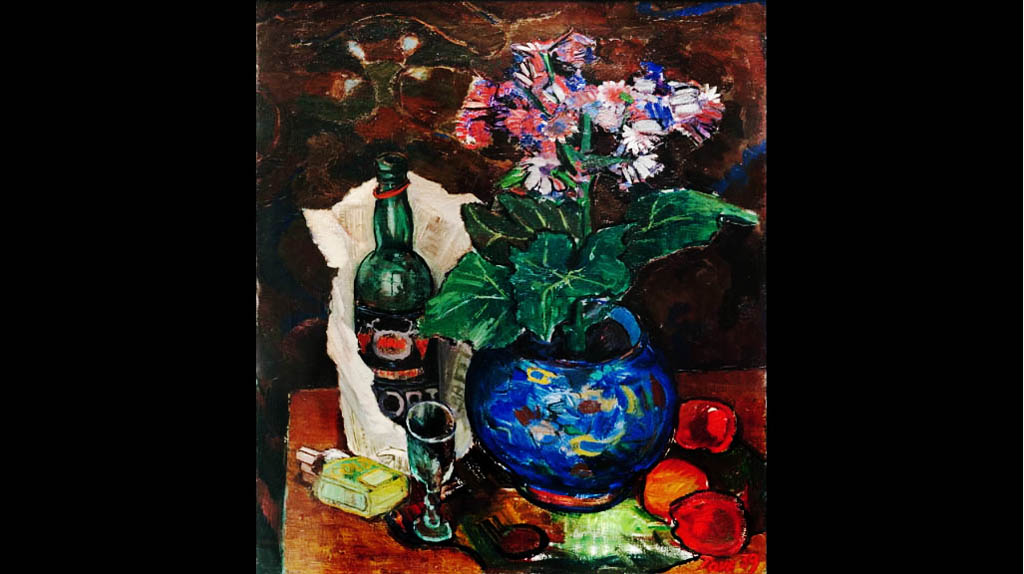
A still life by Tove Jansson, from the documentary film Escape From Moominville.

No need to be a Tove Jansson fan, or to know anything about her to enjoy Escape From Moomin Valley, it’s such a visual pleasure.

Tove Jansson (1914-2001) a member of Finland’s Swedish minority, achieved fame and presumably, fortune, through Moomins, creatures of her own invention who look vaguely like upright hippos. Moomins appeared in children’s books and a long-running comic strip; they are available as figurines, plush toys and printed on assorted bags, mugs, aprons, pencil cases, notebooks, etc. (Local publisher Drawn & Quarterly printed a large volume of her work in 2006.)

Artist and author Tove Jansson as a young adult, from the documentary film Escape From Moominville.

Jansson wrote short stories for adults and plays, as well, but she always considered herself a painter first and foremost. That’s what she wrote on her tax return, according to Escape From Moomin Valley.

Jansson came from an arty family; her father was a sculptor, her mother a graphic artist. She was expected to be an artist and a good one, too.

The film uses lots of photos, sketches, paintings and extracts read from Jansson’s letters and diaries to fill us in on her family life (she often argued with her father) her friends, her art classes and her travels. She studied in Stockholm and Paris, and visited Dresden, Brittany and Florence. Probably many other places, too. She was a forceful character and her art is wonderful to look at. Her studio is quite impressive, too. You might be jealous!

A still life by Tove Jansson, from the documentary film Escape From Moominville.

Jansson speaks briefly in the film and there are many remarks from her brothers, niece, and childhood friends.

Escape From Moominvalley is being shown as part of a double bill with the 55-minute film J.R.R. Tolkien: des mots, des mondes. A review of that is coming up! There’s a connection, too – while I don’t remember it in Escape From Moominvalley, Jansson illustrated a Swedish edition of The Hobbit.

Sunday, March 29, 2015, 1:30 pm, J.A. de Sève Theatre, McConnell Library Building, Concordia University, 1400 de Maisonneuve Blvd. W.

Escape From Moominvalley
Finland, Denmark, Sweden / 2014 / Color / 58 Min / Finnish S.T. English

A still life by Tove Jansson, from the documentary film Escape From Moominville.

Escape From Moominvalley
Realisation: Charlotte Airas
Script: Charlotte Airas, Kimmo Kohtamäki
Cinematography: Timo Peltonen
Sound: Pietari Koskinen
Editing: Kimmo Kohtamäki
Music: Pessi Levanto
Narration: Ylva Ekblad
Participation(s): Sophia Jansson, Per Olof Jansson, Boel Westin, Erik Kruskopf, Boris Konickoff, Tuula Karjalainen
Producer(s): Kaarle Aho
Production: Making Movies
Distribution: Making Movies
The Festival International du Film sur l’Art, known as FIFA, runs until Sunday, March 29, 2015. Visit the web site www.artfifa.com for more information

FIFA 2015 Review: Microtopia, a film about tiny homes, gets an extra Sunday screening

Ana Rewakowicz's Sleeping Bag Dress expands to become a kind of cocoon, in the documentary film Microtopia.
Ana Rewakowicz’s Sleeping Bag Dress expands to become a kind of cocoon, in the documentary film Microtopia.

Previous screenings of Microtopia at the Festival International du Film sur l’Art (FIFA) were sold out; an extra screening has been added for Sunday March 29, 2015. Another film, Strange and Familiar: Home and Architecture on Fogo Island, will be shown with it, as part of a double bill.

Microtopia is about possibilities, news ways of thinking and living. It features tiny houses, micro dwellings, and a VERY portable shelter – the Sleeping Bag Dress.

Montreal artist Ana Rewakowicz arranges her Sleeping Bag Dress, in the documentary film Microtopia. Note the Farine Five Roses sign in the background.

In northern California, Jay Shafer is living in his fourth tiny (and tidy) house. He built it himself. It’s made of dark wood and from the outside it looks like something a surbanite might put in the backyard as a place to store the lawnmower or where children can play house. The exposed wood on the inside gives it a warm and cosy look. Burners for cooking hang on the wall when not in use, to free up counter space.

Shafer explains that in the U.S., there are regulations that specify a minimum size for rooms in a house. He got around this restriction by putting his dwelling on wheels; strictly speaking, it is no longer a house.

Jay Shafer's tiny house in the documentary film Microtopia. It is being shown on Sunday, March 29, at FIFA, Montreal's Festival of Films on Art.
Jay Shafer’s tiny house in the documentary film Microtopia. It is being shown on Sunday, March 29, at FIFA, Montreal’s Festival of Films on Art.

Jennifer Siegel makes homes from former shipping containers, or long-haul trucks. These look relatively spacious compared to Shafer’s home.

In Mexico, Richart Sowa built his own floating island on a base of wooden pallets and reclaimed plastic bottles. (“Boats rock but island roll,” he says.) It is quite ramshackle, compared to Shafer’s construction.


Richart Sowa built his own island in Mexico, using wooden pallets and plastic bottles, lots of plastic bottles. Sowa is one of several participants in the documentary film Microtopia.

Greek architect Aristide Antonas proposes making a home from old tanker trucks, though he admits living in one might feel like being in prison.

In Denmark, Ion Sorvin shows a sort of plastic igloo that one call roll along the sidewalk and then “park” on the road, between cars. He’s also made a more spacious creation – a “walking house.”

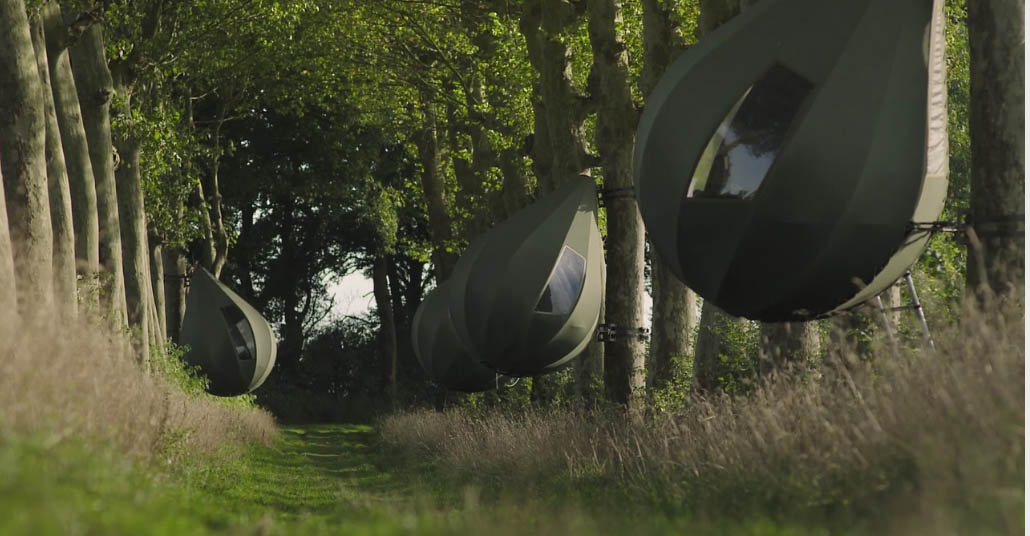
Dre Wapenaar of the Netherlands hangs pod-like tents from trees. He had designed them with the thought that eco-activists could use them while carrying out “actions” to save forests, but before he could contact any such activists, a campsite owner offered to buy them.

Dre Wapenaar of the Netherlands designed these tree tents. Rockabye baby!


There’s even a Montreal segment! Artist Ana Rewakowickz, who’s originally from Poland, demonstrates the Sleeping Bag Dress within sight of the famous Five Roses Flour sign.

And that brings me to one of my quibbles about the film. During the opening credits, we see the names faces and dwellings of the participants while they say a few words. That’s the last time we see their names.

They rarely say where they are, either. Three people were obviously in the U.S., and two of them were in deserts, though it was not clear if it was the same desert, or what state they were in. I had to Google Sowa to find out where his island was. Maybe I should recognize Copenhagen when I see it, but I had to Google Sorvin, too.

The artists and architects in the film talk about reusing and recycling, shrinking their environmental footprints, and ask how much stuff and how much space do we really need, etc?

A fascinating topic, though one size would definitely not fit all. Claustrophobics need not apply! It’s interesting to note that, the occasional drawing aside, we never see more than one person at a time in these dwellings. Few of these people could tell their friends “Drop by anytime!”

I cannot agree with Jennifer Siegel’s statement that we can keep all our memories on our hard drives now, and therefore we can get by with very few physical things. Speak for yourself, lady! There must be a happy medium, no?
Microtopia
Sweden / 2013 / Color / 52 min / English

Strange and Familiar: Home and Architecture on Fogo Island
Canada⎢ Katherine Knight, Marcia Connolly⎢ 2014 ⎢ 52 min
Cinquième Salle of Place des Arts, 175 Ste. Catherine St. W.

Microtopia
Realisation: Jesper Wachtmeister
Cinematography: Kenneth Svedlund
Sound: Jesper Wachtmeister, Kenneth Svedlund
Editing: Jesper Wachtmeister, Oscar Willey
Music: Benny Nilsen
Producer(s): Jesper Wachtmeister, Jonas Kellagher
Production: Solaris Filmproduktion, Eight Millimetres AB
Distribution: Autlook Filmsales

The Festival International du Film sur l’Art, known as FIFA, runs until Sunday, March 29, 2015. Visit the web site www.artfifa.com for more information.

FIFA 2015 Review: Donald Duck documentary is really two films in one


Image from the documentary film Donald Duck Ð Le Vilain Petit Canard En Nous, which is being shown in Montreal at FIFA, the Festival International du Film sur l'Art.
Image from the documentary film Donald Duck Ð Le Vilain Petit Canard En Nous, which is being shown in Montreal at FIFA, the Festival International du Film sur l’Art.

Ninety minutes devoted to Walt Disney’s film and comic book character Donald Duck? Yessireebob!

In truth, Donald Duck – Le Vilain Petit Canard En Nous, is more like two films, awkwardly cobbled together. For about the first 30 minutes, it’s all about The Donald. Apparently, he is really big in Europe. Every week, to this very day, in some European countries, one person in four reads about Donald Duck. Who knew?

Asssorted people from France, Germany and Scandinavia talk about their first encounter with the cranky fowl and what he means to them.

After World War II, Donald Duck was part of an effort to de-Nazify German children. In translating the comics into German Erika Fuchs made them more literary, witty and thoughtful than the originals.

Gottfried Helnwein of Germany is one of the many artists who appears in the documentary film Donald Duck Ð Le Vilain Petit Canard En Nous, which is being shown in Montreal at FIFA, the Festival International du Film sur l'Art.
Gottfried Helnwein of Germany is one of the many artists who appears in the documentary film Donald Duck Ð Le Vilain Petit Canard En Nous, which is being shown in Montreal at FIFA, the Festival International du Film sur l’Art.

Donald Duck fans (Donaldistes in French, if I heard correctly) have yearly conferences where they present serious papers about him.

Among the statements made by assorted talking heads: Donald Duck is never satisfied, he always wants more. He wants fame and recognition. He is ordinary, naive, but not an idiot. We can all identify with him; he can be a clown, evil or generous. He never wins, but he never gives up. Okay then.

Then, the film turns to winners and losers and success, with segments about the Razzie Awards (it’s a rather long segment), the Funny or Die comedy-video website, life coaches, the tradition of the village idiot, and an excerpt from the German version of the TV show The Office. To be honest, this second part was not that interesting for me.

Donald Duck - always full of big dreams! Image from the documentary film Donald Duck Ð Le Vilain Petit Canard En Nous, which is being shown in Montreal at FIFA, the Festival International du Film sur l'Art.
Donald Duck – always full of big dreams! Image from the documentary film Donald Duck Ð Le Vilain Petit Canard En Nous, which is being shown in Montreal at FIFA, the Festival International du Film sur l’Art.

Pet peeve: This film is made for French audience. When anyone is speaking a language other than French, a translator talks on top of them. No subtitles. Two people talking at once. Annoying in the extreme. There should be a law, I say!
Donald Duck – Le Vilain Petit Canard En Nous (Germany / 2014 / Color / 90 Min / French, English, German with French translation), Friday, March 27, 2015 at 6:30 pm at the Cinematheque Québecoise, 335 de Maisonneuve Blvd. E,

Donald Duck – Le Vilain Petit Canard En Nous
Realisation: Edda Baumann-Von Broen
Script: Edda Baumann-von Broen
Cinematography: Edda Baumann-von Broen
Participation(s): Jean-Pierre Dionnet, Gottfried Helnwein, Øyvind Holen
Producer(s): Hasko Baumann
Production: Avanti Media Plus
Distribution: Avanti Media Plus
The Festival International du Film sur l’Art, known as FIFA, runs until Sunday, March 29, 2015. Visit the web site www.artfifa.com for more information.

FIFA 2015: Looking at Gustave Courbet’s The Painter’s Studio as a puzzle and a history lesson

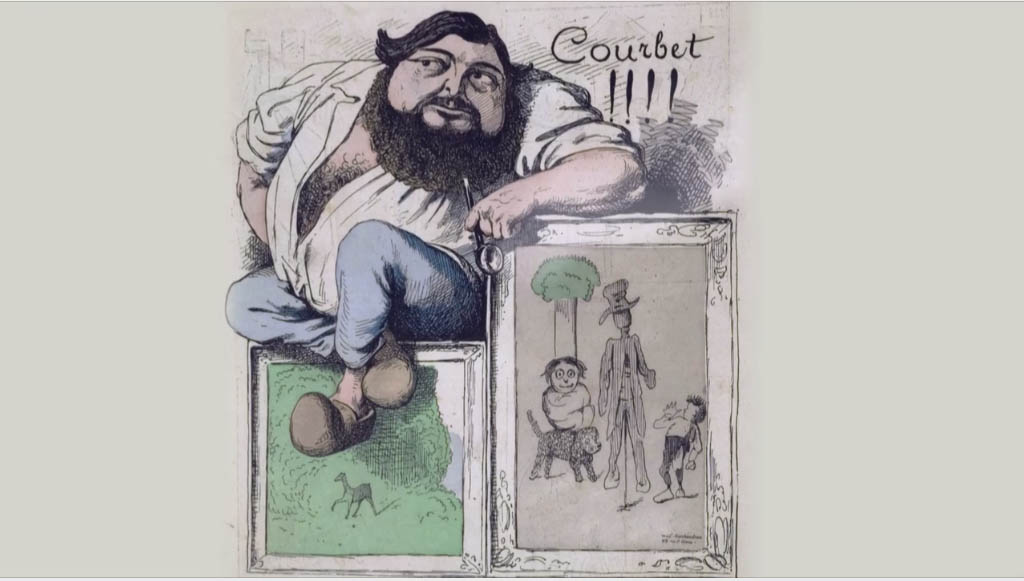
Caricature of painter Gustave Courbet from the documentary film Les Petits Secrets Des Grands Tableaux – Courbet, L’atelier Du Peintre


French painter Gustave Courbet (1819-1877) was admired by some and mocked by others. He was self taught, which earned him the scorn of academicians. He hobnobbed with the rich and powerful though he sided with workers and disadvantaged.

The 26 minute film takes a quick look at Courbet’s life and works before turning to his large and crowded work with the long name – The Painter’s Studio: A Real Allegory of a Seven Year Phase in my Artistic and Moral Life.

The Painter's Studio: A Real Allegory of a Seven Year Phase in my Artistic and Moral Life, by Gustave Courbet.
The Painter’s Studio: A Real Allegory of a Seven Year Phase in my Artistic and Moral Life, by Gustave Courbet.

Courbet created it for a salon at the 1855 Paris World Fair (or Exposition Universelle des produits de l’Agriculture, de l’Industrie et des Beaux-Arts de Paris 1855 to give its full name). The jury refused to accept this painting, though eleven of his other works were shown. (These days, the painting hangs in the Musée d’Orsay.)

In examining the many possible reasons for this refusal, the filmmakers tell us about the many styles that appear in the painting – portraits, still life, history painting – and the people in it, who include George Sand, Charles Baudelaire, Pierre-Joseph Proudhon, and the Emperor Napoleon III himself. He had been elected president of France but later staged a coup d’etat and declared himself emperor. In the painting he is portrayed as a hunter wearing tall leather boots. Censorship was so strong at this time that the mere mention of “boots” could result in a prison sentence.

This film is filled with a wealth of detail and historical information.

Les Petits Secrets Des Grands Tableaux – Courbet, L’atelier Du Peintre will be shown as part of a double bill with Beatus: The Spanish Apocalypse, which is 90 minutes long, on Friday, March 27, 2015 at 1:30 p.m. at the Musée des beaux-arts de Montréal – Maxwell-Cummings Auditorium, 1379 Sherbrooke St. W.

Les Petits Secrets Des Grands Tableaux – Courbet, L’atelier Du Peintre
France / 2014 / Color / 26 Min / French
Realisation: Clément Cogitore
Script: Thomas Cheysson, Elisabeth Couturier
Editing: Erwann Chabot, Julien Ngo Trong
Music: Roque Rivas
Narration: Clémentine Célarié
Producer(s): Sophie Goupil, Daniel Khamdamov
Production: Les Poissons Volants, ARTE France, Les petits secrets des grands tableaux
Distribution: ARTE France

The Festival International du Film sur l’Art, known as FIFA, runs until Sunday, March 29, 2015. Visit the web site www.artfifa.com for more information.

FIFA 2015 Review: Ian Rankin – My Edinburgh

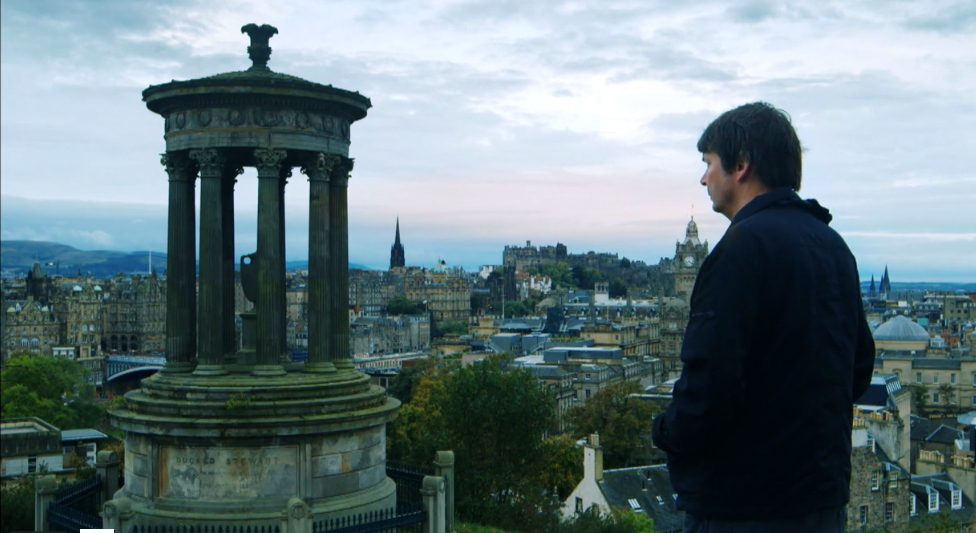
Crime novelist Ian Rankin looks at the city of Edinburgh.

Popular Scottish crime novelist Ian Rankin shares stories about his early days, (he wrote 16 books before he had a bestseller – such persistence!) talks about his creation police inspector John Rebus and takes us on a tour of “hidden Edinburgh” where there are “always new crime scenes to be discovered.” He says Edinburgh has all of the amenities of a large city while being conveniently compact. And it’s really the main character of his books, more than Rebus himself.

Tiny wooden dolls inisde tiny wooden coffins might be connected to notorious Edinburgh grave robbers and murderers Burke and Hare.

This tour includes a visit to an underground street, several graveyards, the Scottish Parliament, tales of cannibalism and bodysnatchers, the murderers Burke and Hare, the continuing mystery of 17 tiny coffins that date back to the 1830s, and the story of Deacon Brodie, the Edinburgh city councillor and cabinet-maker who was the inspiration for Robert Louis Stevenson’s novel The Strange Case of Dr. Jekyll and Mr. Hyde. (Stevenson set his story in London, though.) Sherlock Holmes author Arthur Conon Doyle was from Edinburgh, too, and he also set most of his stories in London.

Rankin reveals that in the first few Rebus books he set events in unnamed, fictional streets. Later he decided he might as well use real places, so he had Rebus working in a real police station, drinking in real pubs and living in the neighbourhood Rankin had lived in while attending university.


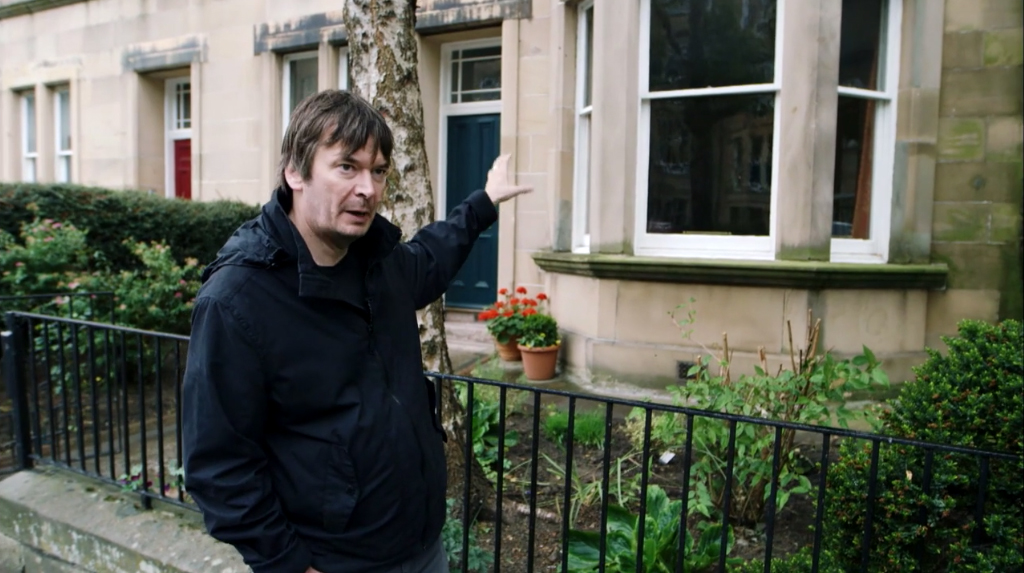
"That was my bedroom window," says writer Ian Rankin, pointing at the apartment he lived in during his student days. He decided that his character, police inspector John Rebus, would live across the street.
“That was my bedroom window,” says writer Ian Rankin, pointing at the apartment he lived in during his student days. He decided that his character, police inspector John Rebus, would live across the street.

Actor and historian Colin Brown runs Rebustours.com, which gives tourists a chance to visit the places mentioned in Rankin’s books. He mugs a bit while reading passages from the books. Rankin himself tags along with Brown for a while. Did the tourists even recognize him? I wasn’t certain. But I was sold on the attractions of Ediburgh. I’d be willing to check it out!
Wednesday, March 25, 2015, 6:30 p.m., at Grande Bibliothèque de BAnQ – Auditorium, 475 de Maisonneuve Blvd E.

Ian Rankin – My Edinburgh, Austria / 2013 / Color / 44 Min / English

Realisation: Günter Schilhan
Script: Günter Schilhan
Cinematography: Erhard Seidl
Sound: Albrecht Klinger
Editing: Günter Schilhan, Raimund Sivetz
Music: Franz Sommer
Narration: August Schmölzer, Stefan Suske, Günter Schilhan
Participation(s): Ian Rankin
Producer(s): Rosemarie Prasek
Production: ORF, 3sat
Distribution: 3sat

http://www.artfifa.com/en
The Festival International du Film sur l’Art, known as FIFA, runs until Sunday, March 29, 2015. Visit the web site http://www.artfifa.com for more information.